Umelecké dielo zobrazené na tejto stránke je chránené autorským zákonom, čo znamená, že nemôžeme legálne vytvárať ani predávať jeho identickú reprodukciu. Táto ochrana je vymáhaná na základe medzinárodných dohôd, ako napríklad Bernská konvencia a národnými zákonmi, vrátane tých, ktoré sú stanovené v Autorské právo USA – Title 17. Všetky práva vyhradené.
Táto metóda plne dodržiava autorské práva, pretože nezahŕňa kopírovanie ani duplikovanie chráneného diela. Ide skôr o kreatívnu reinterpretáciu – nový obraz, ktorý je ovplybnený originálom, no nie je s ním identický.
Giclée tlač alebo plátno múzeálnej kvality s rýchlou výrobou a rôznymi možnosťami povrchovej úpravy. ( Objednať ručne maľovanú reprodukciu
Prepnúť na digitálnu verziu obrazu)
Vyberte si z našich preddefinovaných rozmerov, ktoré zodpovedajú pôvodným pomeroḿ diela.
Môžete zadať vlastné rozmery, aby sa reprodukcia prispôsobila konkrétnemu rámu alebo priestoru. Ak zvolená veľkosť nebude zodpovedať proporciám originálu, dielo buď orežeme, alebo obraz rozšírime pomocou zrkadlenia či farebného doplnenia okrajov. Pred začatím výroby vám pošleme digitálnu ukážku na schválenie.
Máte na vedomí, že náhľad na obrazovke neodzrkadľuje skutočné orezanie alebo rozšírenie. Len digitálna ukážka presne zobrazí finálnu kompozíciu.
Hoci sú k dispozícii vlastné rozmery, pre zachovanie pôvodných proporcií odporúčame vybrať si rozmer z vopred definovaného zoznamu.
Celosvetová doprava () do 2 týždňov namiesto štandardných 4 až 5 týždňov. (10 október)
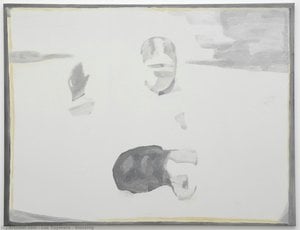
Three Figures
Veľkosť reprodukcie
Lorna Simpson’s 'Three Figures' invites the viewer into a deeply contemplative space, presenting not a clear portrait, but an evocative meditation on connection itself. The overall impression is one of beautiful rupture—a gathering of forms that are simultaneously present and dissolving. Displayed against a muted gallery backdrop, the work immediately commands attention with its ambiguous narrative. It speaks to those moments in human experience where relationships feel both profoundly supportive and inherently fragile, captured here through an almost dreamlike, surreal lens.
Technically, the piece operates at a fascinating intersection between figuration and pure abstraction. While three distinct figures are discernible—seemingly linked by the gesture of holding hands—they are rendered not with solid outlines, but through loose, gestural brushstrokes that bleed across the canvas. The palette is dominated by a sophisticated grayscale symphony: varying shades of black, white, and gray that allow light and shadow to become primary subjects. This monochromatic restraint forces the eye to focus entirely on texture and movement. The visible layering of paint suggests an accumulation of memory or experience, giving the surface a rich, tactile history.
To understand 'Three Figures' is to appreciate Simpson’s lifelong interrogation of representation. While her early work often focused on the photographic documentation of race and gender, this painting translates that critical impulse into paint. The fragmentation of the human form echoes her broader artistic concern: that identity, like memory, is rarely whole or easily captured. Instead, it exists in these beautiful, incomplete fragments—the gestures, the partial outlines, the moments caught between one thought and the next. It challenges the viewer to look past what they expect to see and instead feel the underlying currents of connection.
For the collector or designer seeking a piece that transcends mere decoration, 'Three Figures' offers profound emotional depth. Its ambiguity means it will converse with any interior setting, absorbing the light and mood of its surroundings while simultaneously injecting a sense of intellectual poetry. The feeling evoked is one of poignant support—the quiet understanding shared between people who know each other deeply, yet whose individual selves remain beautifully undefined. It is art that whispers rather than shouts, perfect for a sophisticated living area or an artistic study where contemplation is encouraged.
Vďaka svojmu tvaru Portrait je reprodukcia diela „Three Figures“ ideálnou voľbou do Living Room.
Dielo „Three Figures“ od Lorna Simpson si môžete pozrieť ako diaporama na stránke Diaporama daného diela.
Dielo „Three Figures“ pochádza z roku 2015. Toto datum zaraduje prácu do kariéry umelca Lorna Simpson aj do jeho éry.
Dielo „Three Figures“ sa pripisuje autorovi Lorna Simpson.
Dielo „Three Figures“ od Lorna Simpson je vystavené v múzeu La Biennale di Venezia, Venice, Italy. Uvedená informácia o múzeu sa vzťahuje na originál, nie na reprodukcie.
Lorna Simpson mal 55 rokov, keď v roku 2015 vytvoril/a dielo „Three Figures“. Vek bol vypočítaný na základe roku narodenia umelca, 1960.
„Three Figures“ má Calm atmosféru.
Born in Brooklyn, New York, in 1960, Lorna Simpson stands as a towering figure in contemporary American art—a photographer and multimedia artist whose work has profoundly interrogated the complexities of identity, gender, race, and history. Her career, blossoming in the late 1980s and early 1990s, quickly established her as a vital voice challenging conventional representations within photography and broader cultural discourse. Simpson’s journey is one of persistent questioning, innovative techniques, and a commitment to revealing the often-hidden narratives embedded within seemingly straightforward images.
Simpson's formative years were steeped in artistic exposure. Her parents, a Jamaican-Cuban father and an African-American mother, fostered a deep appreciation for the arts from a young age, taking her regularly to plays, museums, concerts, and dance performances. This early immersion profoundly shaped her perspective and fueled a desire to explore themes of representation and social commentary through her own creative lens. She honed her skills at the High School of Art and Design before pursuing formal education at the School of Visual Arts in New York City and later earning an MFA from the University of California, San Diego. It was during this period that she began experimenting with combining photography with text—a signature technique that would become central to her artistic practice. Early influences included conceptual art pioneers like Allan Kaprow and the work of filmmakers Jean-Pierre Gorin, whose strategies for manipulating image and narrative resonated deeply with Simpson’s own ambitions.
Simpson's breakthrough came with photo-text installations such as Guarded Conditions (1987) and Square Deal (1988). These works, often featuring photographs of unidentified Black figures accompanied by carefully chosen words, directly confronted stereotypes surrounding African American women in American culture. By decoupling the image from a singular, fixed meaning through the addition of text, she forced viewers to confront their own biases and the ways in which language can both construct and deconstruct identity. This method of interrogating the gaze became her hallmark, turning the act of looking into an analytical process.
Her practice expanded far beyond the confines of traditional photography, embracing film, sculpture, and installation to create immersive environments. In these works, the interplay between what is seen and what is read creates a tension that mirrors the fragmented nature of memory and history. Through her use of silence and absence, she invites the audience to fill in the gaps, making the viewer an active participant in the construction of meaning.
The historical significance of Lorna Simpson's contribution to the art world cannot be overstated. She broke significant barriers, notably becoming the first African-American woman to represent the United States at the Venice Biennale in 1990. This milestone marked a pivotal moment in the recognition of Black female perspectives within the global contemporary art canon.
Her enduring impact can be seen through several key achievements:
Today, Simpson's work continues to resonate as a profound meditation on the human condition. Her ability to weave together the visceral impact of the image with the intellectual weight of the word ensures that her art remains not just a reflection of history, but an active force in shaping our understanding of it.
1960 - , United States of America