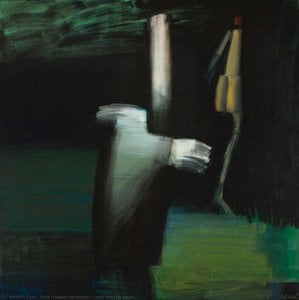
Klaudia Kosziba: A World of Psychological Drama and Fantastical Allegory
Born in Bratislava, Slovakia, in 1971, Klaudia Kosziba’s artistic journey is one defined by a profound engagement with the human psyche, interwoven with elements of natural fantasy and philosophical contemplation. Her work, characterized by a distinctive blend of figurative and abstract approaches, often explores themes of tragedy, melodrama, and the unsettling beauty found within moments of transformation and decay. Kosziba's evolution as an artist has been shaped by her formal training at the Academy of Fine Arts and Design in Bratislava, where she studied under the guidance of Jan Berger, a lineage that undoubtedly informs her meticulous technique and considered composition.
From 2008 onward, she has held the position of Painting Studio Leader at the same institution, demonstrating a commitment to nurturing emerging talent while simultaneously refining her own artistic vision. Kosziba’s exhibitions – including those at the Šopa Gallery and Bratislava City Gallery – have steadily garnered attention for their arresting imagery and layered narratives. Her paintings are predominantly executed in acrylic on canvas, utilizing a rich palette and a dynamic interplay of form and color to create scenes that resonate with both emotional intensity and symbolic depth.
Early Influences and Artistic Development
Kosziba’s artistic sensibilities appear to have been shaped by a confluence of influences. Her studies under Jan Berger provided a solid foundation in traditional painting techniques, while her broader intellectual interests likely contributed to the philosophical and allegorical dimensions that permeate her work. The evocative imagery of classical mythology – particularly the story of Diana and Actaeon, frequently referenced in her art – suggests a deep fascination with archetypal narratives and their enduring relevance to the human experience. The artist’s exploration of themes like metamorphosis, decay, and the interplay between life and death reflects a sensitivity to the darker aspects of existence, yet simultaneously reveals an appreciation for the inherent beauty within these processes.
Her work frequently draws upon unsettling imagery – decaying tombstones overtaken by phosphorescent fungi, figures caught in moments of profound emotional distress – creating a visual language that is both haunting and captivating. This deliberate use of dramatic lighting and symbolic detail invites viewers to contemplate the complexities of human psychology and the mysteries of the natural world.
Key Themes and Techniques
Kosziba’s paintings are distinguished by their skillful manipulation of space, color, and texture. She masterfully employs a combination of figurative and abstract elements, creating compositions that are simultaneously recognizable and enigmatic. The recurring motif of transformation—often depicted through the lens of decay or rebirth—serves as a central theme, reflecting a broader exploration of human vulnerability and resilience. Her use of acrylic on canvas allows for both bold, expressive brushstrokes and subtle gradations of color, contributing to the overall richness and depth of her work.
The artist’s engagement with allegory is particularly noteworthy. Her paintings frequently function as visual metaphors, inviting viewers to interpret their meaning through a process of symbolic decoding. This deliberate ambiguity encourages multiple readings and fosters a deeper connection between the artwork and the viewer's own experiences and perspectives. Her work often feels like a carefully constructed dreamscape—a realm where familiar forms are distorted and rearranged to reveal hidden truths.
Recent Exhibitions and Recognition
Kosziba’s work has been showcased in prominent galleries across Slovakia, including the Šopa Gallery and the Bratislava City Gallery. Her 2023 exhibition “Before Metamorphosis” at the Bratislava City Gallery, held within the historic Pálffy Palace, further solidified her reputation as a compelling voice in contemporary Slovak art. This exhibition, exploring themes of transformation and the cyclical nature of life and death, demonstrated her continued ability to create visually arresting and intellectually stimulating works.
Beyond gallery exhibitions, Kosziba’s work has been featured in online databases such as ArtFacts, providing a valuable resource for researchers and art enthusiasts. Her dedication to her craft and her willingness to engage with complex themes have established her as a significant figure within the Slovak art scene, and her future contributions are undoubtedly anticipated with great interest.



 Zobraziť v interiéri
 Prepnúť na tlač
 Odoslať
 Zdieľať
 Podrobnosti
 Príručkovo

 Stiahnuť
 Podobné položky
 RTG skúška
 Prehliadanie diapo\]
 Štatistiky

 Prečítať si viac






































 Možnosť skla je dostupná len pri rozmeroch pod 110 cm