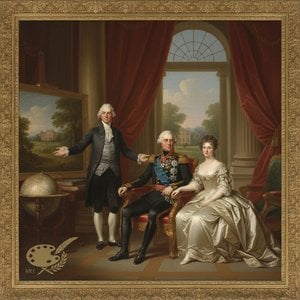
A Moment Frozen in Time: John Hoppner’s “Richard Humphreys, the Boxer”
John Hoppner's "Richard Humphreys, the Boxer," painted circa 1785, isn’t merely a depiction of a sporting contest; it’s a carefully constructed tableau brimming with Victorian fascination for both spectacle and the human form. The painting captures a pivotal moment – not necessarily a victory, but a poised readiness – within the brutal world of bare-knuckle boxing, a pastime that held a strange allure for artists and audiences alike during the late eighteenth century. Hoppner masterfully blends the physicality of combat with an almost sculptural elegance, elevating the scene beyond simple documentation to become a study in tension, power, and vulnerability.
The subject himself, Richard Humphreys, is presented as a young man, radiating a controlled intensity. His stance, honed by years of training, is both defensive and threatening; his arms extended, fists clenched, he embodies the coiled energy of a predator. The detail in his attire – the meticulously rendered breeches, silk stockings, and polished pumps – speaks to the status afforded to boxers at this time, suggesting they were not simply rough men but performers worthy of admiration. Hoppner’s use of light is particularly striking; it highlights Humphreys' musculature, emphasizing the strength beneath the surface while simultaneously casting shadows that hint at the potential for violence.
The Victorian Obsession with Combat and the Body
Hoppner’s painting exists within a broader cultural context. Bare-knuckle boxing was immensely popular in England during this period, offering a thrilling spectacle that combined elements of sport, theatre, and even ritualistic combat. The public flocked to these matches, drawn by the raw energy and the perceived drama of witnessing human strength pitted against human strength. Artists like Hoppner were captivated by the physicality of the boxers – their powerful bodies, their expressive faces, and the inherent beauty in their struggle. This fascination extended beyond mere representation; it reflected a Victorian interest in exploring themes of masculinity, power, and the darker aspects of human nature.
Furthermore, the painting’s circulation through printed reproductions—a relatively new medium at the time—amplified its impact. The image was disseminated widely, transforming the boxing match into a public spectacle accessible to those who couldn't attend in person. This mass reproduction contributed to the growing fascination with the subject and cemented Hoppner’s reputation as a skilled portraitist capable of capturing both the drama and the aesthetic qualities of this unusual subject matter.
Technique and Artistic Style
Hoppner’s technical skill is evident in every brushstroke. He employs a loose, expressive style reminiscent of Reynolds, utilizing broad washes of color and dynamic compositions to convey movement and emotion. The painting's palette is rich and vibrant, dominated by earthy tones – browns, ochres, and reds – which ground the scene while simultaneously highlighting the textures of the boxer’s clothing and skin. Noticeably, Hoppner avoids overly detailed rendering; instead, he focuses on capturing the essence of the moment, prioritizing atmosphere and psychological impact over photographic accuracy.
The background, a simple depiction of a tree, serves not as a distraction but as a subtle framing device, drawing attention to the central figure. The use of atmospheric perspective – softening distant elements – further enhances the sense of depth and immediacy. Hoppner’s ability to create such a compelling image with relatively few details speaks volumes about his artistic mastery.
Symbolism and Emotional Resonance
"Richard Humphreys, the Boxer" transcends its subject matter to offer a poignant meditation on human potential and the precarious nature of triumph. The boxer's poised stance suggests not just readiness for battle but also a moment of intense self-awareness – a recognition of his own strength and vulnerability. The painting’s ambiguity—we don’t know if he has won or lost—adds to its emotional resonance, inviting viewers to contemplate the complexities of competition and the human condition.
Ultimately, Hoppner's work is more than just a sporting portrait; it’s a captivating glimpse into a bygone era, a testament to the enduring appeal of spectacle and the power of art to capture fleeting moments of intense emotion. Reproductions of this iconic painting continue to resonate with audiences today, offering a window into the Victorian fascination with combat, beauty, and the human spirit.



 Zobraziť v interiéri
 Objednať ručne maľovanú reprodukciu
 Odoslať
 Zdieľať
 Podrobnosti
 Príručkovo

 Stiahnuť
 Podobné položky
 RTG skúška
 Prehliadanie diapo\]
 Štatistiky


 Prečítať si viac






































 Možnosť skla je dostupná len pri rozmeroch pod 110 cm