A Life of Artistry and Royal Patronage
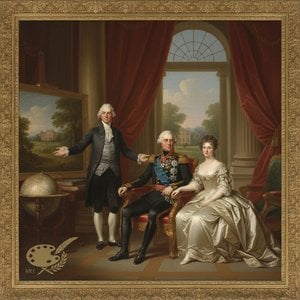
John Hoppner (1758–1810) was a celebrated English portrait painter, renowned for his masterful use of color and his depictions of British royalty, women, and children. Born in Whitechapel, London, to German immigrant parents who worked at the court of George II., Hoppner’s life unfolded amidst artistic brilliance and influential patronage.
Early Life and Training
At a young age, Hoppner's musical inclinations led him to become a chorister at the Royal Chapel, St James’s Palace – an experience that instilled in him a profound appreciation for harmony and precision. However, his true passion lay within visual arts, propelling him to enroll in the Royal Academy in 1775. This formative step provided him with invaluable training under luminaries like Joshua Reynolds, shaping his artistic sensibilities and establishing a foundation for his future endeavors. In 1778, he secured a prestigious silver medal for drawing from life, demonstrating exceptional talent and dedication. Furthermore, in 1782, Hoppner achieved the gold medal for historical painting with his ambitious undertaking on King Lear – a testament to his ambition and artistic vision.
Rise to Fame and Notable Works
Hoppner’s portraits of women and children captivated discerning judges and cemented his reputation as one of England's foremost artists. His distinctive style, characterized by breadth and freedom, subtly echoed Reynolds’s approach, capturing the essence of human emotion with remarkable sensitivity. Among his most iconic creations are:
- Mrs. Jordan as Viola in ‘Twelfth Night’: Currently housed at English Heritage (London), this masterpiece exemplifies Hoppner's mastery of portraiture, showcasing a luminous palette and nuanced portrayal of character.
- Portraits of the Prince of Wales, Duke of York, Lord Rodney, and Lord Nelson – these regal commissions adorned the State Apartments at St James’s Palace, reflecting Hoppner’s elevated social standing and securing his place in British history.
Legacy and Later Life
Despite facing challenges with chronic liver disease, John Hoppner persevered in his artistic pursuits until his untimely death on January 23, 1810. Nevertheless, his enduring legacy resides in the vibrant canvases that continue to inspire admiration and scholarly interest. His work stands as a cornerstone of British Romanticism, embodying the spirit of innovation and emotional depth that defined the era.
Exploring Further
Discover more about John Hoppner’s artistic influences at
https://artuk.org/discover/artists/hoppner-john-17581810. Gain insight into the broader context of British art by visiting
https://en.wikipedia.org/wiki/art_of_the-united-kingdom. Consider exploring the artworks of Dyrham Park, United Kingdom – a stunning example of landscape painting and architectural grandeur. Also, delve into the work of Sir Edwin Landseer Lutyens, an English architect renowned for his imaginative adaptations of classical designs.



 Objednať reprodukciu
 Odoslať
 Zdieľať
 Podrobnosti

 Stiahnuť
 Podobné diela
 RTG skúška
 Prezentácia
 Zobraziť viac






































 Možnosť skla je dostupná len pri rozmeroch pod 110 cm