Zobraziť v interiéri Náhľad v AR Objednať ručne maľovanú reprodukciu Prepnúť na digitálnu verziu obrazu Odoslať
Podrobnosti Príručka Pridať do obľúbených Stiahnuť Podobné položky RTG skúška Prehliadanie diapo\] Štatistiky

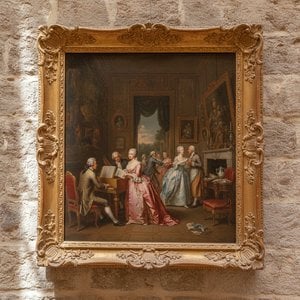
Study

Discover Jean-Baptiste Madou’s "Study," a vibrant 1845 genre painting of tavern life in Brussels. Realistic detail & theatrical flair – a captivating glimpse into 19th-century social scenes.

Explore the captivating world of Jean-Baptiste Madou! Belgian painter famed for realistic village & city scenes, capturing daily life in oils & lithography. Discover his masterpieces!

Giclée / Umenotlač

Giclée tlač alebo plátno múzeálnej kvality s rýchlou výrobou a rôznymi možnosťami povrchovej úpravy. ( Objednať ručne maľovanú reprodukciu Prepnúť na digitálnu verziu obrazu)

Corner sample of the P118B picture frame: lisovaný polystyrén, 5 cm wide and 3 cm thick
P118B €10
Corner sample of the P118H picture frame: lisovaný polystyrén, 5 cm wide and 3 cm thick
P118H €10
Corner sample of the P118W picture frame: lisovaný polystyrén, 5 cm wide and 3 cm thick
P118W €10
Corner sample of the P438Z picture frame: lisovaný polystyrén, 5.5 cm wide and 3.5 cm thick
P438Z €10
Corner sample of the P508JH picture frame: lisovaný polystyrén, 7 cm wide and 3.5 cm thick
P508JH €12
Corner sample of the P508YH picture frame: lisovaný polystyrén, 7 cm wide and 3.5 cm thick
P508YH €12
Corner sample of the P805H picture frame: lisovaný polystyrén, 5 cm wide and 3.5 cm thick
P805H €10
Corner sample of the P805Z picture frame: lisovaný polystyrén, 5 cm wide and 3.5 cm thick
P805Z €10
Corner sample of the P919BZ picture frame: lisovaný polystyrén, 7 cm wide and 3.5 cm thick
P919BZ €10
Corner sample of the P919G picture frame: lisovaný polystyrén, 7 cm wide and 3.5 cm thick
P919G €10
Corner sample of the P919XJ picture frame: lisovaný polystyrén, 7 cm wide and 3.5 cm thick
P919XJ €10
Corner sample of the P959ZH picture frame: lisovaný polystyrén, 5 cm wide and 3 cm thick
P959ZH €10
Corner sample of the P968JZ picture frame: lisovaný polystyrén, 6 cm wide and 4 cm thick
P968JZ €12
Corner sample of the W106C picture frame: masívne drevo, 5 cm wide and 3 cm thick
W106C €8
Corner sample of the W218G picture frame: masívne drevo, 5 cm wide and 3 cm thick
W218G €10
Corner sample of the W218JH picture frame: masívne drevo, 5 cm wide and 3 cm thick
W218JH €8
Corner sample of the W218Y picture frame: masívne drevo, 5 cm wide and 3 cm thick
W218Y €10
Corner sample of the W307PJ picture frame: masívne drevo, 6 cm wide and 3 cm thick
W307PJ €10
Corner sample of the W316G picture frame: masívne drevo, 6 cm wide and 3 cm thick
W316G €10
Corner sample of the W316PJ picture frame: masívne drevo, 6 cm wide and 3 cm thick
W316PJ €8
Corner sample of the W316Y picture frame: masívne drevo, 6 cm wide and 3 cm thick
W316Y €10
Corner sample of the W398PJ picture frame: masívne drevo, 5 cm wide and 3 cm thick
W398PJ €8
Corner sample of the W4111J picture frame: masívne drevo, 6.5 cm wide and 3.5 cm thick
W4111J €10
Corner sample of the W500HY picture frame: masívne drevo, 7 cm wide and 5 cm thick
W500HY €15
Corner sample of the W500JH picture frame: masívne drevo, 7 cm wide and 5 cm thick
W500JH €15
Corner sample of the W692G picture frame: masívne drevo, 8 cm wide and 4 cm thick
W692G €12
Corner sample of the W849H picture frame: masívne drevo, 5 cm wide and 3 cm thick
W849H €8
Corner sample of the W940BG picture frame: masívne drevo, 7.5 cm wide and 4.5 cm thick
W940BG €15
Corner sample of the W953PJ picture frame: masívne drevo, 6 cm wide and 3.5 cm thick
W953PJ €8

Štandardné rozmery
na mieru
CM
INCH

Vyberte si z našich preddefinovaných rozmerov, ktoré zodpovedajú pôvodným pomeroḿ diela.

šírka
výška

Zadajte šírku a výšku, ktoré potrebujete, aby sa reprodukcia hodila k vášmu rámu alebo stene. Print možno len orezávať, nikdy však nemennú veľkosť zvětšiť oproti pôvodnému obrázku, preto pri inom formáte stráca časť obrazu. Pred samotným vytlačiacím procesom vám pošleme digitálny náhľad na schválenie. Obrázok zobrazený na tejto stránke nezobrazuje reálny rez — len digitálny náhľad ukazuje presný výsledok.

Celosvetová doprava () do 2 týždňov namiesto štandardných 4 až 5 týždňov. (23 október)

Bezplatná expresná doprava po celom svete
Vysokokvalitné lnianske plátno
Úplné poistenie prepravy
Záruka vrátenia colného poplatku
Záruka presného farebného zhodnutia
100-dená politika vrátenia tovaru (iba pri vadách)
100% záruka vrátenia peňazí
Ponuka množstevnej zľavy

Celková cena

€ 60

Study

Giclée / Umenotlač

Veľkosť reprodukcie

-

Celková cena

€ 60

Rýchle fakty

  • Year: 1845
  • Notable elements: Detailed figures
  • Title: Study
  • Medium: Oil on canvas
  • Artistic style: Realism, Dutch Golden Age
  • Location: Hermitage, St. Petersburg

Kvíz o umení

Pri každej otázke je iba jedna správna odpoveď.

Otázka 1:
What is the primary subject matter depicted in Jean-Baptiste Madou’s ‘Study’?
Otázka 2:
In what century was Jean-Baptiste Madou’s ‘Study’ created?
Otázka 3:
The painting 'Study' exemplifies which artistic movement’s characteristics?
Otázka 4:
What is a prominent feature of Madou's technique as seen in 'Study'?
Otázka 5:
The presence of children in ‘Study’ suggests what thematic element?

A Snapshot of a Vibrant Era: The Essence of Jean-Baptiste Madou's "Study"

Jean-Baptiste Madou, a pivotal figure in the history of Belgian art, possessed an extraordinary ability to capture the essence of everyday life. His paintings weren’t grand historical narratives or mythological scenes; instead, he focused on the bustling realities of his time – the social interactions, labors, and simple pleasures of ordinary people. “Study,” painted in 1845, offers a remarkably intimate glimpse into this world, transporting us to a lively tavern interior brimming with activity and conversation. It’s more than just a depiction of a room; it's a carefully constructed tableau vivant, a frozen moment of communal life that speaks volumes about the values and rhythms of 19th-century Belgium.

The painting immediately draws the eye into a crowded space, meticulously rendered with a keen observational eye. Madou’s composition is deliberately dense, layering figures across multiple levels – men standing at tables, women seated, children playing on the floor. This creates a powerful sense of depth and movement, as if we are stepping directly into the heart of the scene. The artist skillfully employs overlapping forms and receding planes to achieve this effect, mimicking the visual experience of navigating a busy public space. The perspective is subtly flattened, a common technique in genre paintings designed to accommodate the numerous figures within a confined setting, prioritizing the overall narrative over strict realism.

Realism Infused with Dramatic Light: Technique and Style

Madou’s style leans heavily towards realism, yet it's far from a purely objective representation. He imbues his scenes with a theatrical quality, suggesting an underlying story or event unfolding before our eyes. The figures are not simply posed; they are engaged in animated conversation, drinking, eating, and playing – typical activities for such a space. A man reading aloud to the group adds a layer of narrative complexity, hinting at shared stories and communal bonds. The brushwork is visible, adding texture and character to the scene, reflecting Madou’s commitment to capturing the materiality of his subjects. Notice how he uses short, broken strokes to define the rough plaster walls and wooden furniture, contrasting with smoother, blended techniques for rendering the clothing and faces.

The lighting is particularly striking, emanating from an unseen source above and slightly in front of the scene. This creates a dramatic interplay of light and shadow, defining the forms of the figures and adding volume to the space. The darker areas suggest intimacy and enclosure, while the brighter patches highlight moments of interaction and activity. Madou’s masterful use of chiaroscuro – the contrast between light and dark – not only enhances the visual impact but also contributes to the painting's overall mood, creating a sense of warmth and conviviality.

Symbolism and Social Commentary: A Reflection of Belgian Society

Beyond its immediate depiction of tavern life, “Study” offers subtle insights into 19th-century Belgian society. The abundance of food and drink – overflowing platters, brimming tankards – symbolizes prosperity and hospitality, reflecting the relative economic stability of the period. The presence of children adds a touch of innocence and playfulness, reminding us of the future generations within this community. However, there’s also an element of social observation; Madou subtly captures the dynamics of power and interaction within the group, hinting at hierarchies and unspoken rules. The scene is not simply celebratory; it's a carefully observed portrait of a complex social fabric.

A Timeless Masterpiece: Reproduction and Legacy

“Study” by Jean-Baptiste Madou stands as a testament to his remarkable talent for capturing the spirit of his time. Reproductions, such as those offered by WahooArt.com, allow us to appreciate the painting’s intricate details and vibrant atmosphere in our own homes. Whether adorning a living room wall or serving as a focal point in an office space, this artwork evokes a sense of warmth, community, and timeless charm. It's a window into a bygone era, inviting viewers to contemplate the enduring values of social connection and shared experience.

Otázky a odpovede

Možno sa legálne reprodukovať dielo „Study“ od Jean Baptiste Madou, ktoré sa nachádza v múzeu Ermitáž?

Dielo „Study“ od Jean Baptiste Madou, ktoré sa nachádza v múzeu Ermitáž, je v v verejnom vlastníctve – autorské práva vypršali. Tento stav určuje, či je možné vytvárať reprodukcie tohto obrazu.

Kde sa dielo „Study“ zaradí do doterajšieho tvoru umelca Jean Baptiste Madou?

Dielo „Study“ zdieľa s ostatnými prácami umelca Jean Baptiste Madou jeho štýl v rámci smeru Realism a zachytené témy: realistic village scenes, documenting daily life, belgian artistic legacy, dutch golden age realism, genre painting tradition, detailed observation, social customs of 1845, everyday life portrait.

Aká veľkosť a orientácia sa odporúčajú pre tlač diela „Study“ od Jean Baptiste Madou?

Veľkosť Large, orientácia Landscape: toto je odporúčaná konfigurácia tlače pre dielo „Study“ od Jean Baptiste Madou.


Biografia umelca

The Dawn of a Belgian Visionary

Born in the heart of Brussels in 1796, Jean Baptiste Madou emerged as a vital voice in the rich tapestry of nineteenth-century Belgian art. His artistic journey began within the hallowed halls of the prestigious Brussels Academy of Fine Arts, where he studied under the disciplined guidance of Pierre Joseph Célestin François. While his early training was steeped in the formal traditions of Neoclassicism, Madou possessed a restless, observant spirit that sought something far more profound than idealized mythologies or grand historical narratives. He found his true calling not in the distant legends of antiquity, but in the breathing, bustling realities of the world around him, paving the way for a career defined by an unwavering commitment to the beauty of the everyday.

From Lithographic Precision to National Chronicles

In the early decades of the nineteenth century, Madou harnessed the burgeoning power of lithography to document the very soul of his homeland. His tenure as a draftsman for the topographical military division at Kortrijk provided him with a unique and intimate vantage point, allowing him to traverse the Belgian landscape with a keen, almost scientific eye. This period was marked by an extraordinary technical evolution, as he translated the textures of rural life and the intricate customs of society into exquisite prints. Through collaborative projects such as Les vues pittoresques de la Belgique, Madou became more than just an artist; he became a visual historian, capturing the essence of Belgian heritage through a medium that could reach the hands of the many, documenting landscapes and societal nuances with unparalleled accuracy.

The Parisian Transition and the Art of the Genre

As the mid-century approached, Madou’s artistic ambitions underwent a transformative shift that would redefine his legacy. Around 1840, he transitioned from the graphic precision of lithography to the rich, emotive depths of oil painting, establishing himself within the vibrant and competitive artistic circles of Paris. This move propelled him into the vanguard of Belgian Realism, where he could explore the interplay of light and shadow in much more intimate, human settings. His works from this era, such as his evocative Study (1s45), transport viewers into the heart of communal life—crowded taverns, lively interiors, and the simple, shared pleasures of the working class.

  • Mastery of Composition: He utilized dense, layered figures to create a profound sense of movement and spatial depth.
  • Theatrical Realism: His scenes were imbued with a dramatic light that suggested unfolding narratives and hidden stories.
  • Observational Depth: Every detail, from the placement of a child on a floor to the warm glow of a candle, served to ground his work in a palpable reality.


A Lasting Legacy of Everyday Splendor

The true significance of Jean Baptiste Madou lies in his ability to elevate the mundane to the level of high art. By eschewing the grandiosity of traditional historical painting for the authentic, rhythmic pulse of village and city life, he resonated deeply with the sensibilities of a changing era. His legacy is etched into the very geography of Brussels, where the Madou metro station stands as a permanent tribute to his enduring influence. Through his meticulous observation and technical versatility, Madou ensured that the fleeting, vibrant moments of nineteenth-century Belgian life would be preserved forever in a glow of painterly brilliance.
Jean Baptiste Madou

Jean Baptiste Madou

1796 - 1877 , Belgium

Rýchle fakty

  • Full Name: Jean Baptiste Madou
  • Nationality: Belgian
  • Date Of Birth: 1796
  • Date Of Death: 1877
  • Place Of Birth: Brussels, Belgium
  • Notable Artworks:
    • The Fiddler
    • The Jewel Merchant
    • Generally regarded as his masterpiece
  • Artistic Movement Or Style: Realist Painting
  • Artists Who Influenced This Artist: ['Pierre Joseph Célestin François']
  • Artists Or Movements Influenced By This Artist: ['European Genre Art']