NáhľadNáhľad AR náhľadAR náhľad Kúpiť tlač Kúpiť tlačKúpiť ručne maľovaný obraz Kúpiť ručne maľovaný obraz OdoslaťOdoslať
Podrobnosti o dieloPodrobnosti o dielo Pridať do obľúbených Pridať do obľúbených StiahnuťStiahnuť Podobné dielaPodobné diela RTG skúškaRTG skúška PrezentáciaPrezentácia

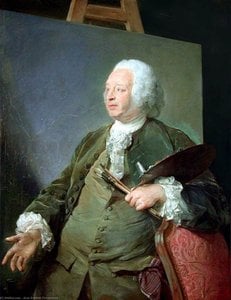
Self-Portrait

Explore Jean-Baptiste Greuze's captivating Self-Portrait (1785), housed in the Louvre. Discover neoclassical elegance, subtle symbolism & masterful technique.

Slovenská Meta Popis: Jean-Baptiste Greuze bol francúzsky maliar známy svojimi emotívne nabitými žánrovými scenami a portrétmi, ktoré zachytávajú každodenný život a morálne ponuky. Jeho diela sú charakteristické pre obdobie Rococó a predstavujú významný prínos k francúzskej umeniu.

Kúpte si digitálnu snímku vo vysokom rozlíšení s vylepšenými detailmi, ktorá je oveľa kvalitnejšia než online náhľad.

Každý súbor starostlivo pripravujú naši interní špecialisti pomocou pokročilých nástrojov a odborného manuálneho retušovania. Zabezpečujeme, aby každý obrázok disponoval výnimočnou čistotou, presnou farebnou vernosťou a jemnými detailmi.

Konečný súbor vám bude doručený e-mailom do 72 hodín, optimalizovaný pre okamžité použitie v profesionálnom, redakčnom aj tlačovom prostredí. Ide o rovnakú kvalitu, ktorej dôverajú špičkové dizajnérske štúdiá, vydavateľstvá a galérie.

Digitálny obraz

Stiahnite si vysokorozlíšený súbor na osobné zobrazovanie, tlačenie a kreatívne projekty. (Kúpiť tlač Kúpiť tlačKúpiť ručne maľovaný obraz Kúpiť ručne maľovaný obraz)

Celková cena

$ 24,90

Súčasťou každej objednávky digitálneho obrazu

Expetórne digitálne doručenie, garantované

Keď si vyberiete WahooArt.com, nedostávate len obrázok – získate profesionálne upravené digitálne umenie, vytvorené s precíznosťou a so zárukou vašej maximálnej spokojnosti. Tu je všetko, čo je súčasťou vašej objednávky automaticky:

shipping_icon
Rýchle doručenie e-mailom

Vaša vysokorozlíšená digitálna súprava obrázkov vám bude zaslaná e-mailom do 72 hodín od objednávky – pripravená na okamžité použitie.

canvas_icon
Digitálny súbor s vylepšením AI

Vaše dielo je profesionálne optimalizované pomocou pokročilých nástrojov umelej inteligencie a manuálnej editácie, čo zaručuje maximálnu úroveň detailov, čistotu a presnosť farieb.

insurance_icon
Bezplatné celoživotné opätovné doručenie

Náhodou ste zmazali alebo ste stratili svoj súbor? Nebavžte sa – pošleme vám ho kedykoľvek znova, úplne bez poplatkov.

tax_icon
Bez poplatkov za dovoz – navždy

Užite si svoje umelodelo okamžite bez colných poplatkov, daní alebo nákladov na dopravu – digitálne stiahnutia sú vždy oslobodené od dane.

color_icon
Garantovaná presnosť farieb

Pomocou profesionálnych nástrojov a farebného manažmentu zabezpečujeme, aby vaša digitálna fotografia čo najpresnejšie odrážala pôvodné farby.

return_icon
100-dňová záruka spokojnosti

Ak nebudete spokojní so svojou digitálnou fotografiou, upravíme ju alebo vám vrátime 100% v priebehu 100 dní – bez zbytočných otázok.

guarantee_icon
100% Záruka vrátenia peňazí

Nie ste spokojní? Získajte plnú náhradu peňazí do 100 dní od prijatia vášho digitálneho súboru – bez zbytočných otázok.

discount_icon
Zľavy pri veľkom odbere

Kúpte si 3 obrazy, ušetrite 10% - Kúpte si 5, ušetrite 15% - Kúpte si 10+, ušetrite 20%. Ideálne pre kreatívne projekty, galérie a agentúry.

Základné informácie

  • Influences:
    • Jacques-Louis David
    • George Romney
  • Notable elements or techniques:
    • Chiaroscuro
    • Texture
  • Title: Self-Portrait
  • Artistic style: Elegant and sophisticated
  • Medium: Oil on canvas
  • Movement: Neoclassicism
  • Subject or theme: Self-portrait of the artist

Kvíz o umení

Pri každej otázke je iba jedna správna odpoveď.

Otázka 1:
In what year was Jean-Baptiste Greuze’s ‘Self-Portrait’ created?
Otázka 2:
Where is the 'Self-Portrait' by Jean-Baptiste Greuze currently housed?
Otázka 3:
Which artistic movement significantly influenced Greuze's style, as reflected in his use of light and detail?
Otázka 4:
What is a key feature used by Greuze to create depth and volume in the portrait?
Otázka 5:
The background of the 'Self-Portrait' is described as what color, providing a contrast to the subject’s clothing?

Self-Portrait by Jean-Baptiste Greuze: A Glimpse into an Artist's Soul

The Self-Portrait by Jean-Baptiste Greuze, a renowned French painter, offers an intimate and compelling view of the artist himself. Created in 1785, this oil on canvas painting (measuring 73 x 59 cm) resides within the esteemed Musée du Louvre in Paris, France. More than just a likeness, it's a study of character and introspection, reflecting the artistic sensibilities of its time.

Greuze’s Artistic Style and Neoclassical Influences

Jean-Baptiste Greuze was a pivotal figure in French painting during the late 18th century. His style is characterized by a delicate balance between Rococo elegance and emerging Neoclassical ideals. While he initially gained recognition for his genre scenes depicting everyday life, this self-portrait showcases a more formal approach, influenced by the clarity and precision of Neoclassicism. You can see echoes of artists like Jacques-Louis David in the composition's structure and attention to detail. Greuze’s mastery lies in his ability to render textures with remarkable realism, using soft, golden light to create a sense of warmth and intimacy while maintaining a dignified composure.

Detailed Description and Technical Aspects

The self-portrait depicts Greuze dressed in a dark coat with a high collar, paired with a crisp white shirt and a neatly tied cravat. His expression is serious, almost contemplative, conveying an air of quiet confidence and perhaps a touch of melancholy. The background is deliberately muted – a soft brown hue that doesn't distract from the subject but rather serves to highlight Greuze’s figure. The painting demonstrates a skillful use of chiaroscuro, the dramatic interplay of light and shadow, which adds depth and volume to his face and clothing. Notice the meticulous attention paid to the texture of the fabric – the subtle sheen of the shirt, the rich weave of the coat – all rendered with impressive accuracy. The artist’s hand is evident in the smooth blending of colors and the careful modeling of forms.

Symbolism and Historical Context

Beyond a simple portrait, Greuze's self-portrait offers insights into the artistic climate of late 18th-century France. The formal attire suggests a desire to be recognized as a serious artist, aligning himself with the established traditions of portraiture while subtly hinting at his evolving style. The era was one of significant social and political change, leading up to the French Revolution. While this painting doesn't explicitly depict revolutionary themes, it reflects a sense of introspection and quiet dignity that characterized many artists during this period. The choice to portray himself in a moment of contemplation suggests an artist deeply engaged with his craft and aware of his place within art history. The influence of other portraitists like George Romney is also apparent in the focus on capturing the essence and character of the sitter.

A Timeless Masterpiece

Greuze’s Self-Portrait remains a compelling testament to his skill as an artist and provides a fascinating glimpse into the life of one of France's most important painters. It is a work that continues to resonate with viewers today, offering a moment of quiet reflection on artistry, identity, and the passage of time. For those interested in exploring more of Greuze’s works or learning about other artists, Jean-Baptiste Greuze's Self-Portrait is an excellent starting point. The Musée du Louvre also houses an impressive collection of artworks, including pieces by Peter Paul Rubens.


Životopis umelca

A Life Etched in Sentiment: The World of Jean-Baptiste Greuze

Jean-Baptiste Greuze, a name synonymous with the intimate and emotionally charged world of 18th-century French painting, was born in Tournus, a small Burgundian town steeped in history, on August 21st, 1725. His early life, far from the grand salons and aristocratic circles that typically shaped artistic careers, was marked by a modest upbringing – his father a roofer, instilling in him a practical understanding of the world’s realities. Yet, even as a young boy, Greuze possessed an undeniable spark, a sensitivity to human emotion that would later become the hallmark of his art. This nascent talent wasn't immediately nurtured; societal expectations and his father’s reservations initially discouraged artistic pursuits. However, a pivotal encounter with Grandon, a Lyon-based artist who recognized Greuze’s potential, proved transformative. Grandon became a mentor, providing guidance and encouragement that ignited the young painter’s passion and set him on a path toward realizing his extraordinary gift. This early influence, coupled with subsequent studies in both Lyon and, crucially, Paris under the tutelage of Charles-Joseph Natoire at the prestigious Royal Academy, laid the foundation for Greuze's distinctive style and approach to art.

The Rise of a Genre Painter

Greuze’s artistic breakthrough arrived in 1755 with *Le Père de famille expliquant la Bible à ses enfants* (The Father Explaining the Bible to His Children). This wasn’t merely a depiction of domestic life; it was an embodiment of the Enlightenment's core values, a powerful statement on familial piety and moral instruction. The painting resonated profoundly with contemporary audiences, capturing a spirit of bourgeois virtue – a burgeoning sense of morality and social responsibility that was rapidly gaining traction in French society. The discerning collector Ange-Laurent de La Live de Jully recognized the work’s significance and acquired it, catapulting Greuze to immediate fame. He swiftly followed this success with a series of further genre scenes—intimate glimpses into everyday life imbued with an extraordinary depth of emotional resonance and subtle moral undertones. A journey to Italy in 1755, undertaken alongside Abbé Louis Gougenot, broadened his artistic horizons, exposing him to classical models and influencing his compositional techniques. However, Greuze ultimately found a deeper wellspring of inspiration in the realities of French society than in the idealized world of ancient Greece and Rome. His ability to capture genuine feeling—joy, sorrow, remorse—set him apart from many of his contemporaries and firmly established him as a leading figure in the emerging Rococo style, albeit one distinguished by its profound moralizing quality.

Mastering Emotion and Moral Narrative

Greuze’s artistic strength resided in his unparalleled ability to tell stories through paint. His works weren't simply representations of scenes; they were carefully constructed narratives designed to evoke empathy and provoke reflection. Paintings like *La Jeune Fille qui pleure son oiseau mort* (The Young Girl Weeping for Her Dead Bird) and *Savoyard with a Dancing Doll* exemplify this skill, demonstrating his mastery of emotional expression and poignant storytelling. He possessed an extraordinary talent for capturing subtle nuances of facial expression—a fleeting glance, a delicate tremor—conveying inner turmoil with remarkable sensitivity. His compositions were often meticulously staged, utilizing dramatic lighting and expressive gestures to heighten the emotional impact of each scene. The influence of Dutch genre painters is evident in his work, particularly in their focus on everyday life and their ability to capture the complexities of human relationships. However, Greuze infused this tradition with a distinctly French sensibility, imbuing his scenes with a heightened sense of drama and moral urgency. Denis Diderot, the influential philosopher and art critic of the Enlightenment, became a fervent champion of Greuze’s work, praising his ability to “endow art with morality” – a sentiment that perfectly encapsulated the artist's core mission.

Key Works & Their Significance

  • Le Père de famille expliquant la Bible à ses enfants (1755): A cornerstone of his early success, embodying Enlightenment ideals of familial piety and setting the tone for much of his subsequent work.
  • La Jeune Fille qui pleure son oiseau mort (c. 1765): Demonstrates Greuze’s mastery of emotional expression and poignant storytelling, capturing a universal experience of grief with heartbreaking detail.
  • Savoyard with a Dancing Doll (c. 1763): Captures the spirit and vulnerability of childhood, showcasing his skill in portraiture and his ability to convey innocence and melancholy.
  • Septimius Severus Reproaching Caracalla (1769): A failed attempt at historical painting that highlighted his strengths lay elsewhere – he was a master of genre, not grand narratives.
  • The Broken Pitcher (c. 1770s): Represents a shift towards more sensual and morally ambiguous themes in his later work, exploring the complexities of human relationships with greater frankness.

Later Years and Lasting Legacy

Despite achieving considerable success during his lifetime, Greuze’s career took a dramatic turn when he was rejected by the Académie Royale de Peinture et de Sculpture in 1769. His ambitious attempt to be recognized as a history painter – the most prestigious category within the Academy – resulted in a harsh critique and ultimately led to his exclusion from official exhibitions. This rejection, coupled with personal difficulties—including a failed marriage—plunged Greuze into a period of isolation and poverty. He continued to paint privately, producing works that often explored themes of seduction and moral transgression, sometimes venturing into territory that was overtly sensual. These later paintings, while technically proficient, lacked the emotional depth and moral clarity of his earlier masterpieces. He died in 1805, impoverished and largely forgotten, within the Louvre itself – a poignant irony for an artist who had once been celebrated as a leading figure in French art. However, Jean-Baptiste Greuze’s influence endures to this day. He pioneered a new form of genre painting that focused on contemporary life and explored universal human emotions—a style that profoundly impacted subsequent generations of artists. His work remains a testament to the power of art to evoke empathy, provoke reflection, and capture the complexities of the human experience.
Jean-Baptiste Greuze

Jean-Baptiste Greuze

1725 - 1805 , Francúzsko

Základné informácie

  • Artistic Movement Or Style: Rococo, Žánrová malba
  • Artists Or Movements Influenced By This Artist: ['Holandská žánrová malba']
  • Artists Who Influenced This Artist: ['Grandon (Grondom)']
  • Date Of Birth: 1725
  • Date Of Death: 1805
  • Full Name: Jean-Baptiste Greuze
  • Nationality: Francúzsky
  • Notable Artworks:
    • Le Père de famille...
    • Dievča s mŕtvym vtákom
    • Savoyard s tancujúcou pančierkou
  • Place Of Birth: Tournus, Francúzsko