Zobraziť v interiéri Náhľad v AR Objednať ručne maľovanú reprodukciu Prepnúť na digitálnu verziu obrazu Odoslať
Podrobnosti Príručka Pridať do obľúbených Stiahnuť Podobné položky RTG skúška Prehliadanie diapo\] Štatistiky

Squelettes a l' atelie

James Ensor’s ‘Squelettes a l’atelier’ – a haunting Symbolist/Expressionist scene of death & creation. Explore this chaotic, impastoed artwork's unsettling beauty & symbolic depth.

James Ensor (1860-1949) bol belgický maliar, pionier expresionizmu a surrealizmu. Poznáte jeho znepokojivé obrazy s maskami, karnevalmi a kostlivcami? Objevte jeho svetla!

Giclée / Umenotlač

Giclée tlač alebo plátno múzeálnej kvality s rýchlou výrobou a rôznymi možnosťami povrchovej úpravy. ( Objednať ručne maľovanú reprodukciu Prepnúť na digitálnu verziu obrazu)

Corner sample of the P118B picture frame: lisovaný polystyrén, 5 cm wide and 3 cm thick
P118B €10
Corner sample of the P118H picture frame: lisovaný polystyrén, 5 cm wide and 3 cm thick
P118H €10
Corner sample of the P118W picture frame: lisovaný polystyrén, 5 cm wide and 3 cm thick
P118W €10
Corner sample of the P438Z picture frame: lisovaný polystyrén, 5.5 cm wide and 3.5 cm thick
P438Z €10
Corner sample of the P508JH picture frame: lisovaný polystyrén, 7 cm wide and 3.5 cm thick
P508JH €12
Corner sample of the P508YH picture frame: lisovaný polystyrén, 7 cm wide and 3.5 cm thick
P508YH €12
Corner sample of the P805H picture frame: lisovaný polystyrén, 5 cm wide and 3.5 cm thick
P805H €10
Corner sample of the P805Z picture frame: lisovaný polystyrén, 5 cm wide and 3.5 cm thick
P805Z €10
Corner sample of the P919BZ picture frame: lisovaný polystyrén, 7 cm wide and 3.5 cm thick
P919BZ €10
Corner sample of the P919G picture frame: lisovaný polystyrén, 7 cm wide and 3.5 cm thick
P919G €10
Corner sample of the P919XJ picture frame: lisovaný polystyrén, 7 cm wide and 3.5 cm thick
P919XJ €10
Corner sample of the P959ZH picture frame: lisovaný polystyrén, 5 cm wide and 3 cm thick
P959ZH €10
Corner sample of the P968JZ picture frame: lisovaný polystyrén, 6 cm wide and 4 cm thick
P968JZ €12
Corner sample of the W106C picture frame: masívne drevo, 5 cm wide and 3 cm thick
W106C €8
Corner sample of the W218G picture frame: masívne drevo, 5 cm wide and 3 cm thick
W218G €10
Corner sample of the W218JH picture frame: masívne drevo, 5 cm wide and 3 cm thick
W218JH €8
Corner sample of the W218Y picture frame: masívne drevo, 5 cm wide and 3 cm thick
W218Y €10
Corner sample of the W307PJ picture frame: masívne drevo, 6 cm wide and 3 cm thick
W307PJ €10
Corner sample of the W316G picture frame: masívne drevo, 6 cm wide and 3 cm thick
W316G €10
Corner sample of the W316PJ picture frame: masívne drevo, 6 cm wide and 3 cm thick
W316PJ €8
Corner sample of the W316Y picture frame: masívne drevo, 6 cm wide and 3 cm thick
W316Y €10
Corner sample of the W398PJ picture frame: masívne drevo, 5 cm wide and 3 cm thick
W398PJ €8
Corner sample of the W4111J picture frame: masívne drevo, 6.5 cm wide and 3.5 cm thick
W4111J €10
Corner sample of the W500HY picture frame: masívne drevo, 7 cm wide and 5 cm thick
W500HY €15
Corner sample of the W500JH picture frame: masívne drevo, 7 cm wide and 5 cm thick
W500JH €15
Corner sample of the W692G picture frame: masívne drevo, 8 cm wide and 4 cm thick
W692G €12
Corner sample of the W849H picture frame: masívne drevo, 5 cm wide and 3 cm thick
W849H €8
Corner sample of the W940BG picture frame: masívne drevo, 7.5 cm wide and 4.5 cm thick
W940BG €15
Corner sample of the W953PJ picture frame: masívne drevo, 6 cm wide and 3.5 cm thick
W953PJ €8

Štandardné rozmery
na mieru
CM
INCH

Vyberte si z našich preddefinovaných rozmerov, ktoré zodpovedajú pôvodným pomeroḿ diela.

šírka
výška

Zadajte šírku a výšku, ktoré potrebujete, aby sa reprodukcia hodila k vášmu rámu alebo stene. Print možno len orezávať, nikdy však nemennú veľkosť zvětšiť oproti pôvodnému obrázku, preto pri inom formáte stráca časť obrazu. Pred samotným vytlačiacím procesom vám pošleme digitálny náhľad na schválenie. Obrázok zobrazený na tejto stránke nezobrazuje reálny rez — len digitálny náhľad ukazuje presný výsledok.

Celosvetová doprava () do 2 týždňov namiesto štandardných 4 až 5 týždňov. (26 október)

Bezplatná expresná doprava po celom svete
Vysokokvalitné lnianske plátno
Úplné poistenie prepravy
Záruka vrátenia colného poplatku
Záruka presného farebného zhodnutia
100-dená politika vrátenia tovaru (iba pri vadách)
100% záruka vrátenia peňazí
Ponuka množstevnej zľavy

Celková cena

€ 60

Squelettes a l' atelie

Giclée / Umenotlač

Veľkosť reprodukcie

-

Celková cena

€ 60

Rýchle fakty

  • title: Squelettes a l' atelie
  • subject: Intersection of art, death, and the creative process
  • artist: James Ensor
  • medium: Oil on canvas (likely)

Kvíz o umení

Pri každej otázke je iba jedna správna odpoveď.

Otázka 1:
What is a prominent recurring motif in 'Squelettes à l'atelier', directly reflecting themes of mortality and the transient nature of life?
Otázka 2:
Which artistic movements heavily influenced James Ensor's style, as seen in 'Squelettes à l'atelier'?
Otázka 3:
The composition of 'Squelettes à l'atelier' is best described as…
Otázka 4:
What does the setting of an artist's studio in 'Squelettes à l'atelier' likely symbolize?
Otázka 5:
Based on the description, what can be inferred about Ensor's painting technique in this work?

A Glimpse into the Artist’s Soul: Decoding Ensor's ‘Squelettes à l'Atelier’

James Ensor’s ‘Squelettes à l'Atelier’ (Skeletons in the Studio) is a powerfully unsettling and deeply symbolic work, offering a rare glimpse into the anxieties and creative processes of one of Belgium’s most important artists. Painted at an unknown date, this piece encapsulates Ensor’s unique vision – a blend of macabre humor, social critique, and introspective exploration of mortality and artistic creation.

Subject Matter & Composition

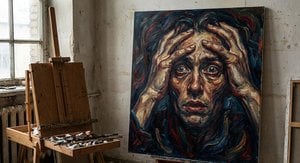
The artwork presents a chaotic scene within what is clearly an artist's studio. The space is crammed with the tools of the trade—paint tubes, brushes, canvases—scattered amongst skeletal figures. A central skeleton, draped in red fabric, dominates the foreground, reclining as if posing for a portrait or perhaps even *as* the artist himself. This isn’t a scene of horror in the traditional sense; rather, it's an intensely personal and theatrical tableau. The composition is deliberately cluttered, creating a claustrophobic atmosphere that draws the viewer into the heart of Ensor’s world. A window offers limited illumination, casting dramatic shadows and emphasizing the contrast between life (represented by the potential for creation) and death.

Style & Technique

‘Squelettes à l'Atelier’ is a prime example of Ensor’s distinctive style, heavily influenced by Symbolism and early Expressionism. The loose, gestural brushstrokes and impasto textures convey a sense of urgency and emotional intensity. Ensor eschews precise detail in favor of expressive form and color. Warm, earthy tones dominate the palette, punctuated by the striking red of the central skeleton’s garment. This painterly approach—evident in the visible brushwork—emphasizes the act of painting itself, blurring the line between subject and process.

Symbolism & Interpretation

The symbolism within this work is rich and multi-layered:
  • Skeletons: Represent mortality, decay, and the ever-present awareness of death that haunted Ensor throughout his life.
  • Masks (implied): Though not explicitly present in all interpretations, masks are a recurring motif in Ensor’s work, symbolizing hidden identities, societal hypocrisy, and the performative nature of existence. Their absence here could suggest a stripping away of pretense, revealing the raw reality of artistic struggle.
  • The Studio: Represents both the sanctuary of creative expression and the site of intense psychological turmoil.
  • Red Fabric: The color red often symbolizes passion, vitality, but also blood and sacrifice – hinting at the cost of artistic creation.
The overall scene can be interpreted as a meditation on the artist’s role in confronting mortality through their work. It suggests that art is born from a confrontation with death, a process of transforming decay into something meaningful.

Historical Context & Ensor's Legacy

Born in 1860, James Ensor experienced a period of significant social and artistic change. He rejected the academic traditions of his time, forging his own path through experimentation and introspection. His work anticipated many of the themes that would later define Expressionism and Surrealism. Ensor’s fascination with grotesque imagery and psychological depth set him apart from his contemporaries and profoundly influenced generations of artists to come. ‘Squelettes à l'Atelier’ is a testament to his unique vision, offering a powerful commentary on the human condition and the enduring power of art.

Emotional Impact & Aesthetic Appeal

This artwork evokes a complex range of emotions – unease, fascination, melancholy, and even a strange sense of humor. It's not a piece that offers easy answers; instead, it invites viewers to contemplate their own mortality and the mysteries of the creative process. Its dramatic composition, expressive brushwork, and symbolic depth make it a compelling focal point for any collection or interior space. A reproduction of ‘Squelettes à l'Atelier’ would add a touch of intellectual intrigue and artistic sophistication to a home or office, sparking conversation and inspiring contemplation.

Otázky a odpovede

Ako možno využiť „Squelettes a l' atelie“ od James Ensor pri dekorovaní domácnosti?

„Squelettes a l' atelie“ od James Ensor sa odporúča pre Conversation, ideálne do Living Room. Spojenie použitia a priestoru vám pomôže určiť, kde sa reprodukcia hodí.

Je dielo „Squelettes a l' atelie“ od James Ensor svetlé alebo tmavé?

„Squelettes a l' atelie“ má celkovú jasnosť balanced a jeho luminanciu predstavuje Soft Shadow.

Kde si môžem pozrieť náhľad diela „Squelettes a l' atelie"?

Náhľad diela „Squelettes a l' atelie“ od James Ensor si môžete pozrieť na stránke Náhľad daného diela.


Biografia umelca

A Life Immersed in Masks and Shadows: The World of James Ensor

James Sidney Edouard Ensor, Baron Ensor, sa narodil v Ostende, Belgii, v roku 1860. Jeho život bol fascinujúca symbióza dvoch kultúr – jeho otec bol Angličan, matka Belgičanka. Táto dvojitá identita mohla byť predzvěstou neustáleho záujmu umelca o masky a kostýmy, témy, ktoré sa stali základom jeho znepokojivého, no zároveň fascinujúceho diela. Rástol v živom prístavnom mestečku, obklopený atmosférou karnevalov a zvláštnych záležitostí. Jeho rodičia vlastnili obchod s suvenírmi, plný mušlí, karnevalskej masky a neobyčajných predmetov – takmer ako skanzen divných artefaktov, ktorý podnietil jeho predstavivú vôľu a poskytol mu bohatý vizuálny slovník pre budúce diela. Hoci sa na začiatku zdráhal prijímať tradičné akademické vzdelanie, Ensor nakoniec nastúpil do Kráľovskej akadémie umení v Bruseli, ale jeho rozvíhajúca sa umelecká videnie našla štruktúru Akadémie príliš oštepujúcu. Rýchlo si uvedomil, že potrebuje vytvoriť vlastnú cestu, ktorá ho prevedie za hranice konvencií.

From Somber Realism to Grotesque Visions

Ensorove prvé maľby odrážali tradičnejší prístup, zobrazujúc každodenné scény v temných tónoch. Diály ako *Ruská hudba* (1881) a *Pijanisti* (1883) ukazujú mladého talentu, ktorý sa snaží o realizmus, ale aj v týchto skorých dielach sú prítomné náznaky znepokojivých obrazov, ktoré prichádzajú. Zásadný posun nastal, keď sa Ensorova paleta rozjasnila a jeho témy sa stávajú čoraz bizarnými. Začal povoľovať svoje plátna karnevalmi, kostlivcami, figúrami z marioniet a alegórickými postavami – svetom plným fantázie a často až groteskných javov. Toto nebolo len stylistické zmeny; bolo to úmyselnou skúsenosťou s tmavšími aspektmi ľudského existencie, odmietanie spoločenských noriem a prijatie iracionálneho. Jeho štýl sa okamžite stal rozpoznateľným svojimi výraznými postými, bohatými farbami a divadelnou atmosférou – vizuálna reč, ktorá bola jedinečná pre neho. Vplyv detských zážitkov v prístave bol nespochybniteľný: masky neboli len dekoratívne prvky; boli to symboly skrytých identít, sociálneho kritického postoja a zraniteľnosti vzhľadu.

Masterpieces of Disquiet: Key Works and Recurring Themes

Počas svojich rokov tvorby Ensor vytvoril sériu diel, ktoré dodnes fascinujú a znepokojujú divákov. *Zúrivé masky* (1883) predstavuje skorý dôkaz jeho záujmu o skrytý vzhľad a jeho schopnosť odhaľovať skryté emócie. Jeho najkontroverznejšie dielo, *Vstup Krista do Bruselu* (1888-1889), zostáva silnou satyrou na náboženskú hybnosť a spoločenské bezstarostné správanie – obraz, ktorý bol po prvýkrát kritizovaný, ale dnes je oslavovaný ako majstrovské dielo. Zobrazenie Krista vstupujúceho do mesta plného groteskných maskovaných postáv je silným komentárom na rozpor medzi duchovnými ideálmi a ľudským správaním. *Kostlivci bojujú o upusteného muža* (1891) ponúka znepokojivú meditáciu o smrti, rozklade a absurdite života, zatiaľ čo *Tribulácie svätého Antona* (1887) skúma komplexné alegorické témy pokušenia, hriechu a duchovného zápasu. Opakujúce sa motívy v jeho dielach zahŕňajú tematu smrti, sociálnu kritiku, náboženskú satiru a nekonečnú moc predstavivosti – témy, ktoré rezonujú s univerzálnou relevanciou.

A Pioneer of Modernism: Influences and Legacy

Hoci Ensor odmietol byť ľahko kategorizovaný, jeho umelecká linia je komplexná a fascinujúca. Uznával vplyvy majstrov ako Pieter Bruegel the Elder, ktorých preplnené scény a morálne ponuky rezonovali s jeho vlastným videním, ako aj Francisco Goya, ktorého temné humor a bezúhľadné zobrazenie ľudskej bolesti zanechali trvalý odkaz. Vplyv Jamesa Abbott McNeilla Whistlera na zdôrazňovanie estetiky tiež ovplyvnil jeho umelecké vedomie. Avšak Ensor nebol len napodobiteľom; syntetizoval tieto vplyvy do niečoho úplne nového a originálneho. Je dnes široko uznávaný ako kľúčová postava pri prelome z 19. storočia Symbolizmu na raný 20. stôrocie Expressionizmus a Surrealizmus – skutočný pionier modernej umeleckej tvorby. Jeho odvážna skúmanie podvedomia, prijatie groteskných obrazov a odmietanie akademických konvencií pripravili cestu pre budúce generácie umelcov, ktorí sa odvážili zpochybniť umelecké normy. Hoci čelil počiatkovej opoveď, Ensor nakoniec získal uznanie v neskorších rokoch, keď bol menovaný barónom kráľom Albertom I. v roku 1929 a ocenený Légion d’honneur v roku 1933. Zomrel v Ostende v roku 1949, zanechávajúc dielo, ktoré dodnes fascinuje, znepokojuje a inšpiruje.
James Ensor

James Ensor

1860 - 1949 , Belgie

Rýchle fakty

  • Artistic Movement Or Style: Výrazoizmus, Surrealizmus
  • Artists Or Movements Influenced By This Artist:
    • Výrazoizmus
    • Surrealizmus
  • Artists Who Influenced This Artist:
    • Bruegel mlýnský
    • Goya
    • Whistler
  • Date Of Birth: 13 apríla 1860
  • Date Of Death: 19 novembra 1949
  • Full Name: James Sidney Edouard Ensor
  • Nationality: Belgík
  • Notable Artworks:
    • Masky zúrivosti
    • Kostoly a mŕtví
    • Vstup Krista do Bruselu
  • Place Of Birth: Ostend, Belgicko
Preskúmajte umelecká diela usporiadané podľa tém, štýlov a charakteristík.