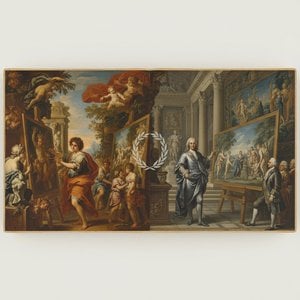
A Poetic Symphony of Sensation and Nature
In the quiet mastery of Jacques Linard’s 1627 masterpiece, The Five Senses and the Four Elements, we are invited into a world where the physical and the metaphysical dance in perfect equilibrium. This exquisite work serves as more than a mere collection of objects; it is a profound meditation on the human experience and the fundamental building blocks of our universe. As one gazes upon the canvas, the eye is immediately drawn to the intricate arrangement of symbols that bridge the gap between the tangible world and the abstract concepts of perception. Linard, a pioneer of French still life, utilizes a delicate, almost lyrical composition to guide the viewer through a sensory journey, making each element feel like a vital note in a grand, silent symphony.
The painting is a marvel of allegorical storytelling, where every object serves a dual purpose. On the left, a bird takes flight, its presence acting as a window to the sense of sight, while the center of the composition holds two elegant vases—vessels that breathe life into the senses of smell and taste. To the right, the tactile reality of an apple offers a grounded connection to the sense of touch. Yet, Linard’s genius lies in how he weaves the four classical elements into this sensory tapestry. A flickering flame represents fire, a fish glides through the suggestion of water, a potted plant anchors the earth, and the very air is captured by the movement of a bird soaring above. This layering of meaning creates a rich, intellectual depth that rewards repeated viewing, offering a complex puzzle of beauty and science.
The Artistry of the Baroque Still Life
Technically, this work exemplifies the burgeoning sophistication of 17th-century French painting. Linard moves away from simple documentation, instead employing a technique that emphasizes texture, light, and shadow to create a sense of three-dimensional reality. The interplay of light upon the glass of a wine glass—which perhaps hints at both taste and the heat of fire—demonstrates a remarkable command over luminosity. His ability to render the soft feathers of a bird alongside the smooth skin of an apple showcases a versatility that was ahead of its time, blending the scientific curiosity of the age with a deeply emotive aesthetic.
For the discerning collector or interior designer, this piece offers an unparalleled opportunity to introduce a sense of historical grandeur and intellectual intrigue into a space. A high-quality reproduction of this work does not merely decorate a wall; it anchors a room with a conversation piece that speaks of heritage, philosophy, and the timeless beauty of the natural world. Whether placed in a sunlit library or a sophisticated contemporary gallery, The Five Senses and the Four Elements brings an atmosphere of contemplative elegance, inviting all who encounter it to pause, reflect, and reconnect with the profound wonders of existence.



 Náhľad
 Prepnúť na tlač
 Odoslať
 Zdieľať
 Podrobnosti o dielo

 Stiahnuť
 Podobné diela
 RTG skúška
 Prezentácia
 Štatistiky


 Zobraziť viac






































 Možnosť skla je dostupná len pri rozmeroch pod 110 cm