Ito Jakuchu: A Kyoto Eccentric Shaping Japanese Art History
Ito Jakuchu (1716 – 1800) stands as a singular figure in Edo period art, an artist whose unconventional approach and profound connection to Zen Buddhism irrevocably altered the trajectory of Japanese painting. Unlike many of his contemporaries who adhered rigidly to established artistic lineages—primarily those associated with the Kano school—Jakuchu forged his own path, prioritizing direct observation of nature and rejecting traditional conventions that prioritized idealized representations over truthful depictions. His legacy continues to inspire artists today, cementing his place as one of Japan’s most influential masters.
- Early Life and Family Background
- The Kano School Influence and Initial Artistic Training
- Breaking Tradition: Style and Subject Matter – Birds, Flowers, and Zen Philosophy
- Notable Works and Recognition During His Lifetime
- Rediscovery in the 20th Century and Lasting Impact on Art History
Early Life and Family Background
Ito Jakuchu was born in Kyoto’s Nishiki market district, a vibrant hub of commerce and culture—a location that would profoundly shape his worldview. His father, Ito Genzaemon, operated Masuya, a sizable wholesaler specializing in vegetables, providing young Jakuchu with a comfortable upbringing rooted in the practical realities of Edo society. This familial environment instilled in him an awareness of societal shifts and the growing influence of Kyoto’s merchant class—a perspective that subtly permeated his artistic vision. While expected to eventually inherit the family business, Jakuchu harbored a deep passion for painting from childhood, demonstrating exceptional talent early on.
The Kano School Influence and Initial Artistic Training
Jakuchu initially studied under Ōoka Shunboku, a prominent Kano school artist known for his masterful depictions of birds and flowers—a stylistic choice that reflects the prevailing artistic sensibilities of the time. However, recognizing the limitations of formal training, Jakuchu swiftly transcended conventional expectations, prioritizing independent exploration and developing an idiosyncratic style characterized by bold experimentation with perspective and color. This divergence from established norms aligned him with a burgeoning movement championed by Nobuo Tsuji—the “Lineage of Eccentrics”—which celebrated artists who challenged artistic conventions.
Breaking Tradition: Style and Subject Matter – Birds, Flowers, and Zen Philosophy
Jakuchu’s artistic style distinguishes itself through its unwavering commitment to capturing the essence of nature with unparalleled accuracy—a hallmark of Zen Buddhist philosophy. Rejecting idealized representations favored by many Kano school artists, he focused on meticulous observation, meticulously rendering details that conveyed a sense of immediacy and vitality. His fascination with birds—particularly chickens—became a recurring motif in his oeuvre, elevating them from humble farm animals to subjects worthy of profound artistic contemplation. Beyond mere imitation of nature, Jakuchu sought to embody Zen principles—a contemplative stillness, an appreciation for impermanence, and reverence for the natural world—as evidenced by masterpieces like “Bean Vine,” which transcends visual representation to express a deeper spiritual truth.
Notable Works and Recognition During His Lifetime
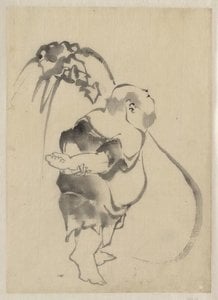
Despite his artistic brilliance, Jakuchu remained largely unrecognized during his lifetime—a poignant irony considering his enduring influence on subsequent generations of artists. However, Tsuji’s groundbreaking scholarship in 1970 revolutionized perceptions of Edo period painting, elevating Jakuchu's status as a pivotal figure and sparking renewed interest in his work. His paintings, particularly “Five Hundred Arhats” and “Hanshan and Shide,” are celebrated for their monumental scale and breathtaking artistry—testaments to Jakuchu’s extraordinary skill and dedication.
Rediscovery in the 20th Century and Lasting Impact on Art History
The rediscovery of Ito Jakuchu's art in the 20th century marked a watershed moment in Japanese art history—a testament to the enduring power of an artist who dared to defy convention and capture the spirit of his time with unparalleled originality. His influence can be seen in the development of Ukiyo-e, the popular genre of woodblock prints, demonstrating a broader impact on Japanese artistic culture. Today, Ito Jakuchu is revered not only for his technical prowess but also for his visionary aesthetic—a beacon of innovation and contemplation that continues to inspire artists worldwide.



 Zobraziť v interiéri
 Objednať ručne maľovanú reprodukciu
 Odoslať
 Zdieľať
 Podrobnosti
 Príručka

 Stiahnuť
 Podobné položky
 RTG skúška
 Prehliadanie diapo\]
 Štatistiky


 Prečítať si viac






































 Možnosť skla je dostupná len pri rozmeroch pod 110 cm