x
NáhľadNáhľad AR náhľadAR náhľad Kúpiť tlač Kúpiť tlačKúpiť obrázok Kúpiť obrázok OdoslaťOdoslať
Podrobnosti o dieloPodrobnosti o dielo Pridať do obľúbených Pridať do obľúbených StiahnuťStiahnuť Podobné dielaPodobné diela RTG skúškaRTG skúška PrezentáciaPrezentácia

Not Clever

  • Dátum vytvorenia1425
  • Rozmery92.0 x 36.0 cm

Discover ichidon shōzui, a renowned Muromachi period Japanese artist known for exquisite ink on paper works. Trained in Kikuchi Yosai style, he captures traditional themes with masterful brushwork and cultural significance.

Ručne maľovaná olejová reprodukcia

Ručne maľovaný olej na plátne vo vašej zvolenej veľkosti a v ráme, vyrobený na mieru našimi umelcami. (Kúpiť tlač Kúpiť tlačKúpiť obrázok Kúpiť obrázok)

Štandardné
na mieru
CM
INCH

Vyberte si z našich preddefinovaných rozmerov, ktoré zodpovedajú pôvodným pomeroḿ diela.

šírka
výška

Môžete zadať vlastné rozmery tak, aby sa hodili do konkrétneho rámu alebo priestoru. Ak sa váš zvolený rozmer nezhoduje s pôvodnými proporciami obrazu, dielo buď orezáme, alebo ho doplníme ručne maľovanými prvkami. Pred začiatkom výroby vám zašleme digitálny náhľad na schválenie.
Upozorňujeme, že ukážka na obrazovke neodráža skutočné orezanie alebo doplnenie. Skutočnú finálnu kompozíciu zobrazuje iba digitálny náhľad.
Hoci sú k dispozícii vlastné rozmery, odporúčame vybrať rozmer z preddefinovaného zoznamu, aby sme zachovali pôvodné proporcie.

Príklady možných zmien: nahradiť tvár fotografiou zákazníka; pridať domáce zviera (napr. nahradiť mačku psom); vložiť skryté posolstvo do pozadia; zmeniť krajinu alebo prvky pozadia.
Po odoslaní objednávky vám tím WahooArt.com pošle e-mail s pokynmi a poskytne náhľad na návrh.

Celosvetová doprava () za 3 až 4 týždne namiesto štandardných 5 týždňov. (2 september). Bez kompromisov v kvalite.

why_choose_icon
Bezplatná expresná doprava po celom svete
why_choose_icon
Prémiové lnianske plátno
why_choose_icon
Kompletné poistenie prepravy
why_choose_icon
Záruka vrátenia colného poplatku
why_choose_icon
Záruka presného farebného zhodnutia
why_choose_icon
60-dňá politika vrátenia (iba pri defektoch)
why_choose_icon
100% záruka vrátenia peňazí
why_choose_icon
Výhodná množstevná zľava

Celková cena

$ 272

reproduction

Not Clever

Technika reprodukcie

Veľkosť reprodukcie

-

Celková cena za vybrané možnosti

$ 272

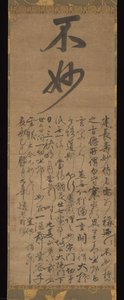
Two brusquely brushed large characters reading Fumyō 不妙, or “Not Clever”—extracted from the text below—are placed above a transcription of a missive in smaller but equally dynamic Chinese characters. The use of the phrase Fumyō (Chinese: Bumiao)—with its entirely negative connotations of “not clever,” “unremarkable,” or even “no good,”—strikes the viewer as odd at first glance, especially for a calligraphy brushed by an eminent Zen master. But upon reading the missive below, it becomes clear that it was written to pointedly criticize Monk Jūmyō Jisha 壽妙侍者 from Kenchōji Temple in Kamakura, whose name, rather grandiosely, includes the character 妙, which suggests something or someone clever, remarkable, mysterious, or sublime. In short, Ichidon is stating that Jūmyō is anything but clever or remarkable, and unworthy to use that character in his name. Ichidon cites various Buddhist sources to make the point about proper moral and spiritual behavior. The monk-calligrapher Ichidon brushed certain characters that ended with a sweeping stroke to the left with special exuberance. Note especially how the final stroke of the character myō 妙 – meaning both “cleverness” or “mysterious” depending on the context was stretched out extra long, to give a visual rhythm and excitement. This work is an especially fine example of a bokuseki, a calligraphy by a Zen monk of the medieval period. The brusque, rule-breaking calligraphy style conveys a message of spiritual transcendence or enlightenment so central to the Zen experience, and the brush writing style is meant to convey that message on a visual level.The monk Ichidon Shōzui trained in Rinzai Zen at Hōunji Temple in Hitachi, Ibaraki prefecture, under the prominent master Fukuan Sōki 復庵宗己 (1280–1358), who had trained in China and who had achieved a wide following in Japan. Shōzui achieved fame in his own right, and subsequently served as head abbot at prominent Rinzai sect temples such as Engakuji in Kamakura and at Nanzenji in Kyoto. He also used the name Kyūka Sanjin 九華山人, referred to in the signature here. Shōzui, who earned a reputation as a master of Chinese prose and poetry, also wrote an inscription on a precious painting of White-Robed Kannon by the Chinese artist Mokuan Reien.

Biografia umelca

Ichidon Shōzui (1394–1428): A Master of Zen Brushwork

Ichidon Shōzui, born around 1394 in Hitachi Prefecture, Ibaraki, Japan, stands as a pivotal figure within the Muromachi period’s artistic landscape—a time marked by profound cultural transformation and burgeoning Zen Buddhism. His legacy resides primarily in his exceptional ink paintings on paper, particularly “Not Clever,” which exemplifies the stylistic innovations of Kikuchi Yosai and embodies the core tenets of Zen aesthetics. Little is known about Shōzui's early life beyond his training under Fukuan Sōki at Hōunji Temple, a formative experience that instilled in him the disciplined rigor characteristic of Rinzai Zen practice. This dedication to meditation profoundly shaped his artistic vision—a vision rooted in spontaneity and aimed at capturing the essence of enlightenment itself.
  • Training & Patronage: Shōzui’s apprenticeship under Fukuan Sōki provided him with invaluable instruction in calligraphy and Zen philosophy, establishing a connection to influential figures who championed artistic excellence within the context of Buddhist ideals.
  • Style & Technique: Shōzui's distinctive style—often termed bokuseki—characterized by bold brushstrokes and deliberate asymmetry—was a conscious rejection of prevailing conventions. He sought to convey spiritual transcendence through visual form, prioritizing expressive energy over meticulous detail.

The Significance of “Not Clever”

“Not Clever,” created around 1425, is arguably Shōzui’s most celebrated work and serves as a compelling illustration of his artistic philosophy. The composition—featuring two large characters reading 不妙 (Fumyō)—represents a pointed critique of Monk Jūmyō Jisha, whose name deliberately incorporates the character 妙 (“marvelous”), symbolizing enlightenment. This juxtaposition underscores Shōzui’s belief that true wisdom transcends superficial brilliance and demands an honest confrontation with one's own limitations—a concept central to Zen meditation. The brushwork itself is masterful: a sweeping stroke of ink on paper conveys rhythm and dynamism, reflecting the artist’s intention to capture not merely visual beauty but also the profound spiritual experience associated with Zen practice.
  • Symbolism & Critique: The deliberate use of Fumyō—a term laden with negative connotations—highlights Shōzui's critique of conventional notions of achievement and virtue.
  • Zen Aesthetics: The bokuseki style embodies the Zen ideal of spontaneity and effortless expression, prioritizing intuitive understanding over intellectual analysis.

Influence & Legacy

Ichidon Shōzui’s work exerted considerable influence on subsequent generations of Japanese artists, establishing a precedent for stylistic innovation within Rinzai Zen calligraphy. His embrace of bold brushstrokes and asymmetrical compositions challenged established artistic norms—promoting a visual language that prioritized spiritual depth over decorative embellishment. Furthermore, his inscription on Mokuan Reien's painting exemplifies the broader cultural context of Muromachi art—a period characterized by patronage from powerful samurai clans and a fervent devotion to Buddhist principles. Shōzui’s legacy continues to inspire artists today who strive to capture the elusive essence of enlightenment through artistic expression.

Further Exploration

To delve deeper into Ichidon Shōzui's artistic contributions, consider examining his oeuvre alongside works by other prominent Zen masters of the Muromachi period—particularly Kikuchi Yosai—whose stylistic innovations profoundly shaped Japanese calligraphy and visual culture. Research resources available at The Metropolitan Museum of Art offer invaluable insights into Shōzui’s life and work, furthering our understanding of this remarkable artist's enduring impact on Japanese art history.

Základné informácie

  • Artistic Movement Or Style: Kikuchi Yosai Style
  • Artists Who Influenced This Artist: ['Kikuchi Yosai']
  • Date Of Birth: Living
  • Full Name: Ichidon Shōzui
  • Nationality: Japanese
  • Notable Artworks: ['Not Clever']
  • Place Of Birth: Japan