Biografia umelca
A Netherlandish Enigma: The Life and Art of Hieronymus Bosch
Hieronymus Bosch, známy aj ako Jheronimus van Aken, je jednou z najzaujímavejších a zároveň najmenejpochopených postáv v dejinách umenia. Jeho svet bol hlboko zakorennený v neskorovesmediakovom náboženskom fervorizme, folklóre a rastúcom pocite spoločenského napätia – všetko, čo výrazne ovplyvnilo jeho jedinečný a znepokojujúci umelecký zrak. Pochádzal zo rodiny s dlhšou tradíciou maľby – jeho otec Anthonius van Aken a dedek Jan van Aken boli obaja umelci, čo pravdepodobne znamenalo, že sa najskôr učil v rodinnom ateliéri. Aj včasných rokoch však začal divergovat’ od zavedených konvencií, naznačujúc tak výnimočnú fantáziu, ktorá definovala jeho kariéru. Biografické informácie sú frustrujúco nedostatkové; záznamy sú fragmentované, čo zanecháva veľa otvoreného na špekulácie a interpretáciu, čím sa pridá aura záhady obklopujúca samotného muža a jeho diela. Zväz bol s Aleyt Goyaerts van den Meerveen okolo roku 1481, čo poskytlo finančnú istotu prostredníctvom jej rodinných majetkov, ale o ich osobnom živote sa toho veľa nevie.
Fantastické Vize a Symbolická Hlbina
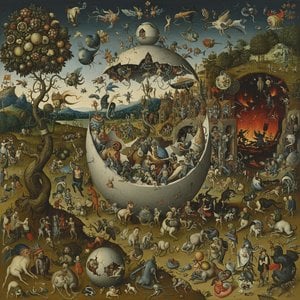
Boschov umelecký štýl je okamžite rozpoznateľný – fascinujúca kombinácia detailnej precíznosti a šialene imaginatívnych obrazov. Predovšetkým pracoval s olejom na brezových doskách, čo dokazovalo jeho mistrovské ovládanie média a dosahoval luminózne farby a zložitú textúru. Hoci jeho skoré diela ukazujú vplyvy tradičnej holandskej maľby – najmä ich realizmus a pozornosť k detailom – rýchlo sa posunul za hranice jednoduchého napodobňovania, vyvíjajúc tak hlboko originálny zrak. Jeho obrazy nie sú len reprezentáciou reality; sú alegorickými krajinami osídlenými bizarnými tvormi, hybridnými bytosťami a znepokojujúcimi scénami, ktoré sa zdajú byť vytrhnuté zo snov – alebo nočnej moru. Náboženské témy sú základom mnohých jeho diel, ale často nie sú priamejšie zobrazovanie biblických príbehov. Bosch namiesto toho používa symboliku na skúmanie komplexných morálnych a teologických konceptov, často zameraných na nebezpečenstvá hriechu, krehkosť hmotných potešení a nevyhnutnosť božskej súdnictva. Jeho tvory – groteskné démoni, fantastické zviera a zvláštne ľudské postavy – nie sú len dekoratívne prvky; sú prejavmi zla, pokušania a duchovnej rozkladavosti. Spájanie svätého a posmievateľného, krásneho a groteskného vytvára jedinečný znepokojujúci efekt, ktorý stále fascinuje divákov stotožnených s jeho dielom.
Kľúčové Diela a Symbolika
Medzi Boschovými najvýznamnejšími dosiahnutiami patrí Záhrada Zemských Potešení (c. 1490-1510), triptych, ktorý je dodnes jednou z najmenejpochopených a najväčšieho záujmu diel v dejinách umenia. Keď sa otvorí, zobrazuje panoramatickú viziu raja, hmotného života a pekla – komplexnú alegorickú reprezentáciu hľadaného pádu z grace. Vľavo je znázornený Eden, plný fantastických bytostí a bujnej zelenej vegetácie; stredná časť zobrazuje svet pohltnutý smiešnymi potešeniami a nekontrolovaným túžobou; a pravá časť ponúka strašlivý pohľad do pekle. Triptych posledného súdu (c. 1480-1490) je ďalším príkladom jeho zručnosti v zobrazovaní nebeskej radosťou a pekla, zatiaľ čo Vzostup Spravodivých (c. 1480-1490) demonštruje jeho schopnosť vytvárať éterické a snové scény. Aj menšie diela, ako napríklad Epifánia (c. 1495), ukazujú jeho inovatívny prístup k oleju na brezovej doske a komplexnú symboliku, odhaľujúc tak myseľ neustále skúmajúcu hlboké otázky o viere, morálke a ľudskej podstate.
Vplyvy a Trvalý Vplyv
Identifikovať priamo Boschove vplyvy je ťažké vzhľadom na originalitu jeho videnia. Študenti umenia naznačujú možné spojenia s neskorovesmediakovým folklórom, náboženskými textami – najmä týkajúcimi sa apokalyptických tém – a rastúcou spoločenskou obavou, vrátane strachov z heretiky a spoločenského nepokoja. Avšak je jasné, že ich spájal do niečoho úplne nového a jedinečného pre seba. Jeho vplyv na neskorších umelcov je nepopierateľný. Pieter Bruegel mladší priamo nasledoval jeho cestu, adoptujúc podobné témy a kompozičné techniky, zatiaľ čo neskoršie trendy, ako napríklad Surrealizmus, tiež čerpali inšpiráciu z jeho znepokojivých obrazov. Umelci ako Salvador Dalí a Max Ernst otvorene vyjadrovali svoju vďaku za jeho snové obrazy a skúmanie podvedomia. Aj dnes diela Bosch stále fascinujú a vyvolávajú debaty, čím si zabezpečili svoje miesto ako majstra holandskej maľby a vizionára umelca, ktorého vplyv presahuje čas. Jeho diela ponúkajú cenné poznatky o náboženskom, spoločenskom a psychologickom prostredí neskorého 15. a skorého 16. storočia, zpochybňujú konvenčné normy a otvárajú cestu pre nové formy umeleckej tvorby.
Záver
Hieronymus Bosch je umelcom, ktorého diela sa neustále skúmajú a interpretujú. Jeho komplexná symbolika a znepokojivé obrazy zanechali trvalý odkaz na dejiny umenia a dodnes vyvolávajú otázky o ľudskej podstate, viere a morálke.



 Náhľad
 Prepnúť na tlač
 Odoslať
 Zdieľať
 Podrobnosti o dielo

 Stiahnuť
 Podobné diela
 RTG skúška
 Prezentácia
 Štatistiky

 Zobraziť viac






































 Možnosť skla je dostupná len pri rozmeroch pod 110 cm