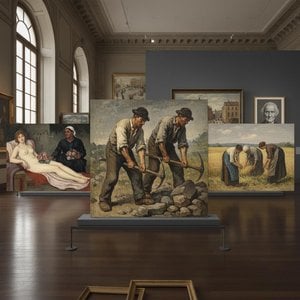
Zobraziť v interiéri Náhľad v AR Objednať ručne maľovanú reprodukciu Prepnúť na digitálnu verziu obrazu Odoslať
Podrobnosti Príručkovo Pridať do obľúbených Stiahnuť Podobné položky RTG skúška Prehliadanie diapo\] Štatistiky

Self-Portrait (Man with Pipe)

Gustave Courbet

Gustave Courbet - Hráči Draughts (1844). Realistické dielo zobrazuje dve mužské postavy zahrané v šachách. Obraz zachycuje pokojný moment a jednoduchý život. Pozrite si detailné reprodukcie!

Giclée / Umenotlač

Giclée tlač alebo plátno múzeálnej kvality s rýchlou výrobou a rôznymi možnosťami povrchovej úpravy. ( Objednať ručne maľovanú reprodukciu Prepnúť na digitálnu verziu obrazu)

P118B $10
P118H $10
P118W $10
P438Z $10
P508JH $12
P508YH $12
P805H $10
P805Z $10
P919BZ $10
P919G $10
P919XJ $10
P959ZH $10
P968JZ $12
W106C $8
W218G $10
W218JH $8
W218Y $10
W307PJ $10
W316G $10
W316PJ $8
W316Y $10
W398PJ $8
W4111J $10
W500HY $15
W500JH $15
W692G $12
W849H $8
W940BG $15
W953PJ $8

Štandardné rozmery
na mieru
CM
INCH

Vyberte si z našich preddefinovaných rozmerov, ktoré zodpovedajú pôvodným pomeroḿ diela.

šírka
výška

Môžete zadať vlastné rozmery, aby sa reprodukcia prispôsobila konkrétnemu rámu alebo priestoru. Ak zvolená veľkosť nebude zodpovedať proporciám originálu, dielo buď orežeme, alebo obraz rozšírime pomocou zrkadlenia či farebného doplnenia okrajov. Pred začatím výroby vám pošleme digitálnu ukážku na schválenie.
Máte na vedomí, že náhľad na obrazovke neodzrkadľuje skutočné orezanie alebo rozšírenie. Len digitálna ukážka presne zobrazí finálnu kompozíciu.
Hoci sú k dispozícii vlastné rozmery, pre zachovanie pôvodných proporcií odporúčame vybrať si rozmer z vopred definovaného zoznamu.

Celosvetová doprava () do 2 týždňov namiesto štandardných 4 až 5 týždňov. (22 september)

why_choose_icon
Bezplatná expresná doprava po celom svete
why_choose_icon
Vysokokvalitné lnianske plátno
why_choose_icon
Úplné poistenie prepravy
why_choose_icon
Záruka vrátenia colného poplatku
why_choose_icon
Záruka presného farebného zhodnutia
why_choose_icon
100-dená politika vrátenia tovaru (iba pri vadách)
why_choose_icon
100% záruka vrátenia peňazí
why_choose_icon
Ponuka množstevnej zľavy

Celková cena

$ 68

reproduction

Self-Portrait (Man with Pipe)

Giclée / Umenotlač

Veľkosť reprodukcie

-

Celková cena

$ 68

Rýchle fakty

  • Year: 1848
  • Influences: Romanticism
  • Title: Self-Portrait (Man with Pipe)
  • Medium: Oil on canvas
  • Artist: Gustave Courbet
  • Artistic style: Fragmented composition
  • Location: Musée Fabre

Kvíz o umení

Pri každej otázke je iba jedna správna odpoveď.

Otázka 1:
What artistic movement is Gustave Courbet primarily associated with?
Otázka 2:
Where is <a href="https://ArtsDot.com/ADC/Art.nsf/Art_EN?Open&amp;Query=self+portrait,self,portrait,man+with+pipe,with,pipe&amp;">Self-Portrait (Man with Pipe)</a> housed?", "choices": ["Louvre Museum", "Musée Fabre", "National Gallery"]
Otázka 3:
What is a notable characteristic of Courbet's approach to depicting himself in this painting?
Otázka 4:
Who influenced Gustave Courbet’s artistic style and vision?
Otázka 5:
What is the primary significance of Courbet's use of dark backgrounds in <a href="https://ArtsDot.com/ADC/Art.nsf/Art_EN?Open&amp;Query=self+portrait,self,portrait,man+with+pipe,with,pipe&amp;">Self-Portrait (Man with Pipe)</a>?", "choices": ["To create a sense of depth", "To enhance the vibrancy of the colors", "To mimic the style of Renaissance painters"]

Self-Portrait (Man with Pipe)

Gustave Courbet, a pioneering French painter, is renowned for his contributions to the Realist movement in 19th-century art. His works often depicted everyday life and challenged traditional artistic conventions. One of his notable pieces is Self-Portrait (Man with Pipe), created in 1848.

The Painting

Self-Portrait (Man with Pipe) measures 45 x 37 cm and is executed in oil on canvas. It is housed at the Musée Fabre in Montpellier, France. The painting features Courbet himself, sporting a beard and wearing a blue shirt. His gaze is directed downward, suggesting deep contemplation or melancholy. In the background, another figure is visible, though their identity remains unclear. Courbet’s approach to portraying reality was revolutionary for its time. Rejecting the idealized depictions favored by Romantic artists, he insisted on capturing the world as it appeared – unvarnished and honest. The meticulous detail with which Courbet rendered his facial features and expression underscores this commitment to truthful representation. This wasn't merely about depicting a likeness; it was about conveying the inner life of the subject, mirroring the artist’s own psychological state.

Artistic Significance

This self-portrait exemplifies Courbet’s unwavering dedication to Realism. By eschewing embellishment and focusing on observable details, he dismantled the conventions of academic painting and paved the way for subsequent artistic movements like Impressionism and Cubism. The subdued palette—dominated by earthy browns and blues—further reinforces this stylistic choice, reflecting the artist's desire to capture the essence of his surroundings without resorting to theatrical color schemes.

Courbet’s Influence

Gustave Courbet played a pivotal role in shaping modern art movements. His independence and willingness to challenge established norms profoundly impacted artists who followed him, fostering a spirit of experimentation and rejecting artistic dogma. He championed the depiction of ordinary subjects—laborers, peasants, landscapes—transforming the visual arts into a vehicle for social commentary and elevating the status of vernacular life.

Other Notable Works

- Man with Pipe (56 x 47 cm, Museu Nacional de Arte Antiga, Lisbon, Portugal) - Burial at Ornans (315 x 668 cm, Musée d’Orsay, Paris, France) - Portrait of the Artist (also known as Man with a Pipe) (45 x 37 cm, Musée Fabre, Montpellier, France)

For those interested in exploring more of Courbet’s works, Self-Portrait (Man with Pipe) and other paintings by Gustave Courbet can be found on WahooArt. The museum collection at Musée Fabre also offers a rich experience for art enthusiasts.


Biografia umelca

A Rebel’s Brush: The Life and Legacy of Gustave Courbet

Gustave Courbet (1819-1877) – Pioneer of Realism. Explore paintings depicting everyday life & working class subjects like ‘A Burial at Ornans’. Discover his revolutionary impact on 19th-century art. Born in the quiet village of Ornans, France, Jean Désiré Gustave Courbet emerged as a defiant force against the established artistic norms of his time. His story isn't simply one of paint and canvas; it’s a narrative woven with threads of social commentary, political conviction, and an unwavering commitment to portraying the world exactly as he saw it – unidealized, raw, and profoundly real. Growing up in a relatively prosperous bourgeois family, Courbet received encouragement from his mother to pursue his artistic inclinations, a nurturing that would ultimately fuel a revolution in the art world. His formal training began at the École des Beaux-Arts in Paris in 1839, but he quickly found himself chafing against the academic conventions and Romantic idealism prevalent there. While acknowledging influences like Eugène Delacroix and Théodore Géricault, Courbet forged his own path, one that prioritized observation over imagination and truth over tradition.

The Birth of Realism: Challenging Artistic Conventions

Courbet’s artistic development was marked by a deliberate rejection of the prevailing aesthetic standards. He wasn't interested in mythological narratives or heroic allegories; his gaze was fixed on the everyday lives of ordinary people, particularly those engaged in labor and rural existence. This commitment to depicting the world without embellishment – what would become known as Realism – initially met with scorn and derision from critics accustomed to more polished and idealized representations. Early works explored landscapes and portraits, but soon shifted towards scenes of working-class life, rendered on a monumental scale traditionally reserved for historical or religious paintings. This deliberate choice wasn’t merely stylistic; it was a statement about the inherent dignity and importance of these often-overlooked subjects. The Stone Breakers, completed in 1849 but tragically destroyed during World War II, exemplified this approach – a stark depiction of two laborers toiling away, their faces obscured by exhaustion and hardship. This painting, along with others like A Burial at Ornans (1850), challenged the very definition of what constituted “worthy” subject matter for high art. He sought to capture the essence of human experience as it unfolded in the mundane realities of daily life, rejecting the sentimentalism and moralizing tendencies that characterized much Romantic painting.

Major Works and Artistic Philosophy

Courbet’s artistic philosophy extended beyond subject matter to encompass technique. He favored a direct, impasto style – applying paint thickly onto the canvas – that emphasized the materiality of the medium itself. This method allowed him to convey texture and surface detail with remarkable accuracy, mirroring the physicality of the subjects he depicted. His monumental canvases weren't merely representations; they were explorations of form and color, driven by a desire to capture the immediacy of perception. Consider *The Painter’s Studio* (1855), an ambitious allegorical work reflecting his artistic beliefs and engagement with contemporary social issues. The painting depicts Courbet himself surrounded by symbols representing art, intellect, and morality – a deliberate defiance of academic conventions and a proclamation of artistic independence. He believed that art should serve as a mirror to society, confronting viewers with uncomfortable truths about human existence.

Influence and Legacy

Courbet’s influence on subsequent generations of artists is undeniable. He liberated Impressionists and Post-Impressionists from the constraints of traditional representation, encouraging them to experiment with new approaches to color and light. Artists like Monet, Renoir, Cézanne, and Van Gogh recognized Courbet's pioneering spirit and embraced his commitment to portraying the world as he saw it – unidealized and authentically observed. His unwavering conviction in artistic freedom resonated across Europe and beyond, inspiring artists to challenge societal norms and express their own perspectives with boldness and integrity. Gustave Courbet remains a pivotal figure in art history—a testament to the transformative power of confronting reality head-on and refusing to compromise artistic vision for the sake of convention. He died in 1877, leaving behind a legacy that continues to inspire artists and scholars alike.
Gustáv Courbet

Gustáv Courbet

1819 - 1877 , Francúzsko

Rýchle fakty

  • Artistic Movement Or Style: Realizmus
  • Artists Or Movements Influenced By This Artist:
    • Impressionizmus
    • Postimpressionizmus
  • Artists Who Influenced This Artist:
    • Eugène Delacroix
    • Théodore Géricault
    • Caravaggio
  • Date Of Birth: 10. júna 1819
  • Date Of Death: 31. decembra 1877
  • Full Name: Gustave Courbet
  • Nationality: Francúzsky
  • Notable Artworks:
    • A Burial at Ornans
    • The Stone Breakers
    • The Painter’s Studio
  • Place Of Birth: Orléans, Francúzsko
Preskúmajte umelecká diela usporiadané podľa tém, štýlov a charakteristík.