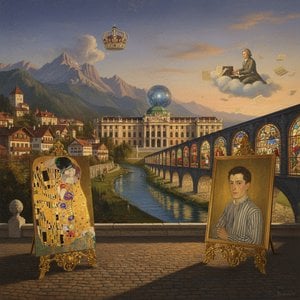
Rané roky a umelecké začiatky
Gustav Klimt, rodený 14. júla 1862 v Baumgartene neďaleko Viedne, pochádzal z rodiny s umeleckými predispozíciami, no zároveň poznačenej finančnými ťažkosťami. Jeho otec, Ernst Klimt, bol zlatník, remeslo, ktoré nenápadne, ale hlboko ovplyvnilo estetické cítenie mladého Gustava – lákavosť zlatej farby, precízny detail, samotná opulentnosť. Rodinné peripetie viedli k častým sťahovaniam vo Viedni, nestála výchova možno posilnila Klimtov bystrý postreh a citlivosť na ľudské skúsenosti. Už ako dieťa prejavoval výnimočný kresliarsky talent, podporovaný otcovou prácou a vrodeným nadaním. V roku 1876 vstúpil do viedenskej Kunstgewerbeschule (Školy úžitkového umenia), kde sa formálne vzdelával v architektonickom maliarstve pod vedením Ferdinanda Laufbergera. Získal tak pevné technické základy, no zároveň bol vystavený panujúcim akademickým štýlom – štýlom, ktoré neskôr Klimt spochybnil a prekonal. Práve tu vzniklo dôležité umelecké partnerstvo s bratom Ernstom a Franzom von Matschom, spolupráca, ktorá zabezpečila prvé verejné zákazky na dekoratívne murály a stropy, čím sa položili základy jeho budúceho úspechu.
Vzostup viedenskej secesie
V 90. rokoch 19. storočia Klimt začal byť sklamaný konzervatívnym umeleckým establishmentom vo Viedni. Túžil po väčšej tvorivej slobode, priestore, kde by mohla prosperovať inovácia bez obmedzení tradície. Táto snaha vyvrcholila vznikom viedenskej secesie v roku 1897, kľúčového momentu v rakúskom umení. Klimt bol zvolený za prvého prezidenta, stal sa predstaviteľom hnutia, ktoré sa snažilo oslobodiť od rigidných akademických noriem a prijať nové umelecké prúdy šíriace sa Európou – Art Nouveau, Symbolizmus a Japonizmus. Vlastná výstavisko secesie, navrhnutá Josephom Mariom Olbrichom, sa stala symbolom tohto povstania, chrám venovaným modernému umeniu. Klimtova tvorba bola ústredným bodom etosu secesie, zosobňovala jeho odmietanie konvenčnej estetiky a prijímanie dekoratívnych prvkov, výrazných farieb a symbolickej ikonografie. Jeho obrazy začali skúmať témy lásky, smrti a sexuality s nebývalou priamosťou, spochybňujúc spoločenské normy a vyvolávajúc obdiv aj pobúrenie.
Zlaté obdobie a umelecká zrelosť
Okolo roku 1900 vstúpil Klimt do tzv. „zlatého obdobia“, obdobia charakterizovaného hojným používaním zlatej farby inšpirované byzantskými mozaikami a stredovekými iluminovanými rukopismi. Táto technika premenila jeho obrazy na žiarivé, éterické vízie, presiaknuté duchovnou hĺbkou a zmyselnou príťažlivosťou.
Polibok (1907-1908), možno jeho najikonickejšie dielo, exemplifikuje tento štýl – pár zamknutý v objatí, zahalený zlatým aurou, ich telá zdobené zložité vzormi. V tomto období Klimt vytvoril sériu úžasných portrétov, vrátane *Portrétu Adele Bloch-Bauer I* (1907), ktorý ukázal jeho schopnosť zachytiť nielen fyzickú podobnosť, ale aj psychologickú komplexitu svojich modelov. Stále viac stieral hranice medzi maľbou a ornamentom, integroval dekoratívne prvky do kompozícií a vytváral harmonickú fúziu formy a obsahu. Vplyv japonského umenia – Japonizmu – bol obzvlášť zjavný v jeho sploštenej perspektíve, dôraze na líniu a použití dekoratívnych vzorov.
Kontroverzie, inšpirácie a trvalý odkaz
Klimtova kariéra nebola bez kontroverzií. V roku 1900 dostal prestížnu zákazku na maľbu stropných fresiek do Veľkej sály Univerzity vo Viedni, reprezentujúce Filozofiu, Jurisprudenciu a Teológiu. Tieto diela – najmä *Filozofia* – však boli konzervatívnymi kritikmi označené za provokatívne a dokonca pornografické, čo viedlo k verejnému pobúreniu a nakoniec Klimta prinútilo odmietnuť ďalšie verejné zákazky. Tento incident znamenal zlomový bod v jeho kariére, posunul ho smerom k súkromným mecenášom a umožnil mu väčšiu umeleckú slobodu. Počas celého života bol Klimt ovplyvnený rôznorodými umelcami a štýlmi – od historických obrazov Hansa Makarta po dekoratívne umenie Byzancie a Japonska. Inšpiroval ho aj symbolistický pohyb, skúmal témy mytológie, alegórie a podvedomia. Gustav Klimt usilovne maľoval až do svojej smrti 6. februára 1918 na následky mŕtvice počas pandémie španielskej chrípky. Jeho neskoršie práce skúmali abstraktnejšie formy a krajiny, čo demonštrovalo pokračujúci umelecký vývoj. Dnes je uznávaný ako jedna z najvýznamnejších postáv rakúskeho umenia, popredný predstaviteľ viedenskej secesie a trvalý symbol elegancie Art Nouveau.
Jeho obrazy dosahujú vysoké ceny na aukciách a jeho vplyv stále rezonuje v súčasnom umení a dizajne.
Kľúčové charakteristiky & umelecký štýl
- Symbolizmus: Klimtova tvorba je hlboko symbolická, často skúma témy lásky, smrti, sexuality a ľudskej existencie.
- Art Nouveau: Bol poprednou postavou hnutia Art Nouveau, charakterizovaného organickými líniami, dekoratívnymi vzormi a dôrazom na krásu.
- Zlaté obdobie: Jeho používanie zlatej farby vytvorilo žiarivé, opulentné povrchy, ktoré sa stali jeho charakteristickým štýlom.
- Dekoratívne prvky: Klimt integroval dekoratívne prvky do svojich kompozícií, stierajúc hranice medzi maľbou a ornamentom.
- Ženská postava: Ženské telo bolo ústredným motívom jeho tvorby, často zobrazené so zmyselnosťou a psychologickou hĺbkou.



 Náhľad
 Kúpiť ručne maľovaný obraz
 Odoslať
 Zdieľať
 Podrobnosti o dielo

 Stiahnuť
 Podobné diela
 RTG skúška
 Prezentácia
 Štatistiky

 Zobraziť viac






































 Možnosť skla je dostupná len pri rozmeroch pod 110 cm