


 Oil On CanvasWallArtBaroque Dutch Painting
 1660Renaissance
 76.0 x 68.0 cm
 The National Trust
Ručne maľovaný olej na plátne vo vašej zvolenej veľkosti a v ráme, vyrobený na mieru našimi umelcami. ( Kúpiť tlač Kúpiť obrázok)





























Vyberte si z našich preddefinovaných rozmerov, ktoré zodpovedajú pôvodným pomeroḿ diela.

Môžete zadať vlastné rozmery tak, aby sa hodili do konkrétneho rámu alebo priestoru. Ak sa váš zvolený rozmer nezhoduje s pôvodnými proporciami obrazu, dielo buď orezáme, alebo ho doplníme ručne maľovanými prvkami. Pred začiatkom výroby vám zašleme digitálny náhľad na schválenie.
Upozorňujeme, že ukážka na obrazovke neodráža skutočné orezanie alebo doplnenie. Skutočnú finálnu kompozíciu zobrazuje iba digitálny náhľad.
Hoci sú k dispozícii vlastné rozmery, odporúčame vybrať rozmer z preddefinovaného zoznamu, aby sme zachovali pôvodné proporcie.
Celosvetová doprava () za 3 až 4 týždne namiesto štandardných 5 týždňov. (6 september). Bez kompromisov v kvalite.


The Dancing Couple
Veľkosť reprodukcie
Gerard ter Borch's "The Dancing Couple," painted circa 1660, offers a rare and intimate glimpse into the social life of the Dutch Republic during its golden age. Measuring a modest 76 x 68 cm, this seemingly simple portrait belies a profound depth of observation and technical mastery that firmly establishes ter Borch as a pioneer of Dutch genre painting – a movement dedicated to depicting everyday scenes and human interactions with unprecedented realism.
The scene unfolds within the confines of a richly furnished room, dominated by a dining table and several figures engaged in what appears to be a lively gathering. The central couple, a man impeccably dressed in a dark suit and the woman radiant in a flowing white gown, are caught in a moment of poised movement, suggesting an impromptu dance or perhaps a sophisticated conversation. Their proximity speaks volumes about social status and the carefully cultivated etiquette of the era. The inclusion of other figures – one on the left, two near the center, and another to the right – adds layers of narrative complexity, hinting at relationships, conversations, and the subtle dynamics of group interaction that were central to ter Borch’s artistic concerns.
Ter Borch’s skill lies not merely in depicting a scene but in rendering it with an almost photographic precision. His technique, honed through extensive travels across Europe – including London, Germany, France, Spain, and Italy – is characterized by meticulous attention to detail and a profound understanding of light and shadow. Note the subtle variations in texture: the worn fabric of the chair, the polished surface of the table, the delicate folds of the woman’s dress. These details are not mere decorative flourishes; they contribute significantly to the painting's overall sense of realism and immediacy.
The artist employs a muted palette – predominantly browns, grays, and creams – which further enhances the scene’s atmosphere of quiet contemplation. Light plays a crucial role, illuminating key elements while casting deep shadows that add depth and volume to the figures. This masterful manipulation of light is characteristic of ter Borch's approach and elevates the painting beyond a simple portrait into a study of form and perception.
"The Dancing Couple" transcends a mere depiction of social activity; it offers subtle commentary on the values and conventions of 17th-century Dutch society. The couple’s attire, particularly the man's formal suit, signifies wealth and status – hallmarks of the burgeoning merchant class that dominated the Dutch economy at the time. The act of dancing itself was a popular pastime among the upper classes, representing leisure, social connection, and refined taste.
Furthermore, ter Borch’s focus on capturing fleeting moments of human interaction reflects a broader trend in Dutch art during this period – a shift away from grand historical or mythological subjects towards more intimate and relatable scenes of everyday life. This emphasis on realism and psychological depth cemented ter Borch's legacy as one of the most important figures in the development of genre painting, influencing generations of artists to come.
WahooArt offers a meticulously crafted hand-painted reproduction of Gerard ter Borch’s “The Dancing Couple,” allowing you to bring this remarkable work of art into your home or office. Each reproduction is created using the highest quality materials and techniques, ensuring that it faithfully captures the original's beauty and detail. This artwork is more than just a decoration; it’s an investment in artistic heritage and a testament to the enduring power of ter Borch’s vision.

Gerard ter Borch (1617-1681), ook bekend als Gerard Terburg, was een invloedrijke en baanbrekende Nederlandse genre schilder die woonde tijdens de Gouden Eeuw van Nederland. Hij beïnvloedde zijn tijdgenoten Gabriel Metsu, Gerrit Dou, Eglon van der Neer en Johannes Vermeer.
Zijn geboorte vond plaats in december 1617 in Zwolle, provincie Overijssel, het huidige Nederlands Koninkrijk. Hij ontving een uitstekende opleiding van zijn vader Gerard ter Borch sr., ook een kunstenaar, en ontwikkelde zijn talent zeer vroeg.
De exacte omstandigheden rondom zijn jeugd zijn weinig gedocumenteerd, maar het staat vast dat hij uitgebreid reisde door Europa, waaronder Londen, Duitsland, Frankrijk, Spanje en Italië. Deze ervaring gaf hem een brede kijk op kunst en cultuur, wat zich terugvond in zijn stijl.
Gerard ter Borch sr., een bekroonde kunstenaar zelf, zorgde ervoor dat zijn zoon een goede opleiding kreeg. Een belangrijke gebeurtenis was de studie van het hoofd bij Willem Cornelisz Duyster en Pieter Codde in Amsterdam in 1632. Deze invloedrijke leraren legden de basis voor Ter Borch’s artistieke ontwikkeling.
Hij studeerde verder onder Pieter de Molijn in Haarlem in 1634, waar hij een belangrijke stijlvorming doormaakte. Zijn zus Gesina volgde ook een carrière als kunstenaar en draagde bij aan het kunsthistorische bewustzijn van het gezin.
Ter Borch’s stijl werd gekenmerkt door een combinatie van realisme en aandacht voor licht en schaduw. Hij gebruikte vaak een gedetailleerde techniek om de atmosfeer en emoties binnen zijn composities weer te geven.
Een van zijn meest bekende werken is “De Brief” (1634), een meesterwerk dat laat zien hoe Ter Borch het licht en de textuur beheerst. Ook “Het elegante gesprek” (1646), uitgevoerd door Johann Georg Wille, illustreert zijn vermogen om complexe emoties op een subtiele manier weer te geven.
Hij schilderde onder andere het portret van Adrian Pauw bij aankomst in Münster en verschillende andere belangrijke historische gebeurtenissen. Zijn werk wordt vaak beschouwd als een voorbeeld van Nederlandse genre kunst uit de Gouden Eeuw.
Ter Borch’s werken bevinden zich nu in verschillende musea wereldwijd, waaronder het Hermitage Paleis in Sint Petersburg, Rusland; het Gemäldegalerie Alte Meister in Berlijn, Duitsland; en het Getty Center voor de Kunst in Los Angeles, Verenigde Staten.
Deze musea bieden bezoekers een prachtige kans om zijn kunstwerken te bewonderen en kennis te maken met zijn stijl en historische context. Een belangrijke verzameling vindt je ook in het Mauritshuis te Den Haag.
Gerard ter Borch wordt beschouwd als een pionier van Nederlandse genre schilderkunst en hij oefende grote invloed uit op zijn tijdgenoten. Zijn stijl werd gekopieerd door andere kunstenaars, zoals Gabriel Metsu, Gerrit Dou en Johannes Vermeer.
Hij staat bekend om zijn innovatieve manier van werken en zijn aandacht voor het weergeven van het dagelijks leven met een hoog niveau van detail en emotionele expressie. Ter Borch’s werk blijft een belangrijk onderdeel van de kunstgeschiedenis en wordt nog steeds gewaardeerd door kunsthistorici en verzamelaars wereldwijd.

1617 - 1681 , Nemecko

Explore the captivating world of Gerard ter Borch, a master of Dutch Golden Age genre painting. Discover his intimate scenes, masterful light, and lasting influence on art history. Learn more at WahooArt.

Explore the Dutch Golden Age of painting! Discover key artists like Vermeer & ter Borch, their innovative techniques, and the rich cultural context behind these Baroque masterpieces. Learn about collecting & appreciating this iconic art period.
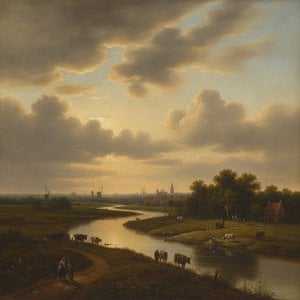
Discover the breathtaking beauty of Dutch Golden Age landscapes. Explore the mastery of light, chiaroscuro, and 17th-century realism through an expert art history lens, celebrating the enduring legacy of the Dutch Masters for discerning collectors and art lovers.

Ponorte sa do sveta holandskej Zlatej éry s WahooArt.com! Objavte príbehy Rembrandta, Vermeera a ďalších majstrov baroka. Reprodukcie obrazov pre váš domov – inšpirujte sa nadčasnými dielami. Preskúmajte kolekciu online!

Embark on a cultural journey through the Dutch Golden Age. Explore the masterful interplay of light and shadow in 17th-century masterpieces, from Rembrandt to Vermeer, and discover how this era of profound realism continues to inspire fine art collectors today.

 Náhľad
 Odoslať
 Zdieľať
 Podrobnosti o dielo

 Stiahnuť
 Podobné diela
 RTG skúška
 Prezentácia
 Zobraziť viac







 Možnosť skla je dostupná len pri rozmeroch pod 110 cm


