


 Oil On CanvasWallArtDutch Golden Age
 1654
1654 70.0 x 60.0 cm
 Staatliche Museen zu Berlin
Kúpte si digitálnu snímku vo vysokom rozlíšení s vylepšenými detailmi, ktorá je oveľa kvalitnejšia než online náhľad.
Každý súbor starostlivo pripravujú naši interní špecialisti pomocou pokročilých nástrojov a odborného manuálneho retušovania. Zabezpečujeme, aby každý obrázok disponoval výnimočnou čistotou, presnou farebnou vernosťou a jemnými detailmi.
Konečný súbor vám bude doručený e-mailom do 72 hodín, optimalizovaný pre okamžité použitie v profesionálnom, redakčnom aj tlačovom prostredí. Ide o rovnakú kvalitu, ktorej dôverajú špičkové dizajnérske štúdiá, vydavateľstvá a galérie.
Stiahnite si vysokorozlíšený súbor na osobné zobrazovanie, tlačenie a kreatívne projekty. ( Kúpiť tlač Kúpiť ručne maľovaný obraz)
Keď si vyberiete WahooArt.com, nedostávate len obrázok – získate profesionálne upravené digitálne umenie, vytvorené s precíznosťou a so zárukou vašej maximálnej spokojnosti. Tu je všetko, čo je súčasťou vašej objednávky automaticky:

Vaša vysokorozlíšená digitálna súprava obrázkov vám bude zaslaná e-mailom do 72 hodín od objednávky – pripravená na okamžité použitie.

Vaše dielo je profesionálne optimalizované pomocou pokročilých nástrojov umelej inteligencie a manuálnej editácie, čo zaručuje maximálnu úroveň detailov, čistotu a presnosť farieb.

Náhodou ste zmazali alebo ste stratili svoj súbor? Nebavžte sa – pošleme vám ho kedykoľvek znova, úplne bez poplatkov.

Užite si svoje umelodelo okamžite bez colných poplatkov, daní alebo nákladov na dopravu – digitálne stiahnutia sú vždy oslobodené od dane.

Pomocou profesionálnych nástrojov a farebného manažmentu zabezpečujeme, aby vaša digitálna fotografia čo najpresnejšie odrážala pôvodné farby.

Ak nebudete spokojní so svojou digitálnou fotografiou, upravíme ju alebo vám vrátime 100% v priebehu 100 dní – bez zbytočných otázok.

Nie ste spokojní? Získajte plnú náhradu peňazí do 100 dní od prijatia vášho digitálneho súboru – bez zbytočných otázok.

Kúpte si 3 obrazy, ušetrite 10% - Kúpte si 5, ušetrite 15% - Kúpte si 10+, ušetrite 20%. Ideálne pre kreatívne projekty, galérie a agentúry.
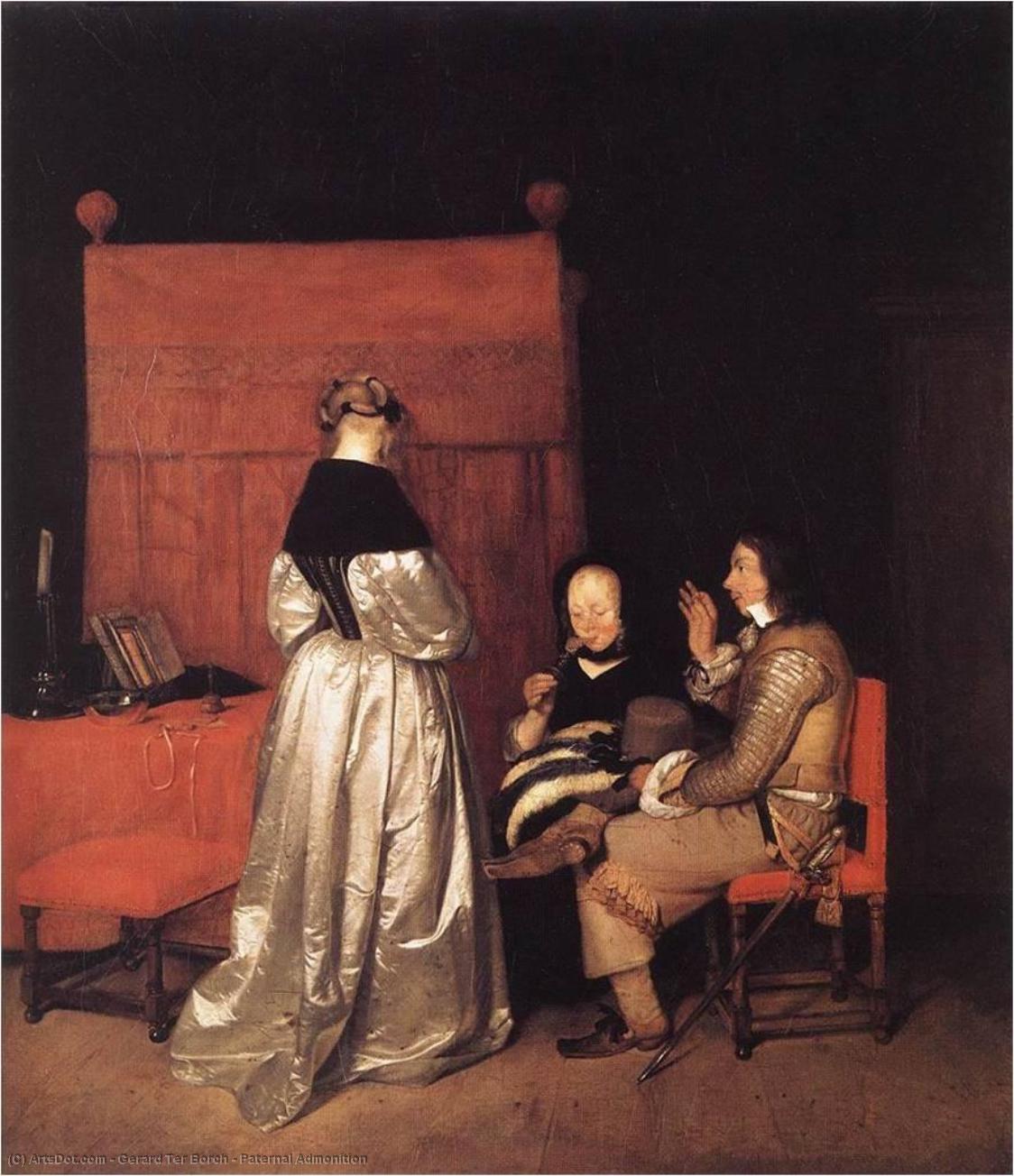
Gerard ter Borch's *Paternal Admonition*, painted around 1654, isn’t merely a portrait; it’s a meticulously crafted tableau of unspoken tension and veiled desire. Within the confines of a modestly furnished room—a subtle blend of domestic comfort and quiet restraint—three figures occupy a space brimming with psychological depth. The painting immediately draws the eye to the woman seated between two men, her posture suggesting both vulnerability and a carefully guarded composure. Her silver satin gown, shimmering with an almost ethereal light, acts as a focal point, demanding attention while simultaneously hinting at a hidden world of pleasure and intrigue.
Ter Borch’s genius lies not in dramatic gestures or overt displays of emotion, but rather in his ability to capture the subtle nuances of human interaction. The man, dressed in the formal attire of a military officer, holds a hat on his lap – a gesture that simultaneously conveys authority and a certain awkwardness. His gaze is directed towards the woman, yet his expression remains ambiguous, leaving us to ponder his intentions. The third figure, partially obscured behind the seated woman, adds another layer of complexity to the scene, suggesting a silent observer or perhaps even a participant in this unspoken exchange.
Technically, *Paternal Admonition* is a remarkable achievement. Ter Borch was a pioneer in Dutch genre painting, renowned for his unparalleled skill in rendering texture and light. He employed a technique of carefully layered glazes to create an astonishingly realistic depiction of fabrics – the luxurious sheen of the satin, the velvet upholstery, even the delicate folds of the woman’s dress are rendered with breathtaking detail. The use of chiaroscuro—the dramatic contrast between light and shadow—further enhances the painting's depth and atmosphere, drawing our attention to key elements while simultaneously creating a sense of mystery.
Notice how the light source seems to originate from an unseen window, casting soft shadows that accentuate the contours of the figures and their surroundings. This masterful manipulation of light not only adds visual interest but also contributes significantly to the painting’s overall mood—a blend of intimacy, restraint, and underlying tension.
The initial interpretation of *Paternal Admonition* as a scene of paternal guidance has been largely superseded by more nuanced readings. While the man undoubtedly holds a position of authority, many scholars now believe that the painting depicts an amorous negotiation between a soldier and a prostitute within a brothel setting. The presence of the bed, the mirror, and the various objects of feminine beauty on the table all lend credence to this interpretation.
However, Ter Borch’s genius lies in his refusal to offer easy answers. He presents us with a scene pregnant with ambiguity, inviting us to interpret the unspoken dynamics between the figures. The woman's averted gaze and the man's hesitant posture suggest a delicate dance of power and desire—a silent conversation that transcends simple categorization.
*Paternal Admonition* offers a fascinating glimpse into the social customs and moral sensibilities of 17th-century Holland. The painting reflects a society where appearances were carefully cultivated, and private interactions often concealed deeper desires. Ter Borch’s ability to capture this complex interplay of public and private life is what makes his work so enduringly captivating.
Reproductions of *Paternal Admonition* can bring this world into your own space, offering a subtle yet powerful reminder of the complexities of human relationships and the enduring allure of unspoken desires. Its quiet intensity and masterful technique make it a truly exceptional addition to any art collection or interior design scheme.

Gerard ter Borch (1617-1681), ook bekend als Gerard Terburg, was een invloedrijke en baanbrekende Nederlandse genre schilder die woonde tijdens de Gouden Eeuw van Nederland. Hij beïnvloedde zijn tijdgenoten Gabriel Metsu, Gerrit Dou, Eglon van der Neer en Johannes Vermeer.
Zijn geboorte vond plaats in december 1617 in Zwolle, provincie Overijssel, het huidige Nederlands Koninkrijk. Hij ontving een uitstekende opleiding van zijn vader Gerard ter Borch sr., ook een kunstenaar, en ontwikkelde zijn talent zeer vroeg.
De exacte omstandigheden rondom zijn jeugd zijn weinig gedocumenteerd, maar het staat vast dat hij uitgebreid reisde door Europa, waaronder Londen, Duitsland, Frankrijk, Spanje en Italië. Deze ervaring gaf hem een brede kijk op kunst en cultuur, wat zich terugvond in zijn stijl.
Gerard ter Borch sr., een bekroonde kunstenaar zelf, zorgde ervoor dat zijn zoon een goede opleiding kreeg. Een belangrijke gebeurtenis was de studie van het hoofd bij Willem Cornelisz Duyster en Pieter Codde in Amsterdam in 1632. Deze invloedrijke leraren legden de basis voor Ter Borch’s artistieke ontwikkeling.
Hij studeerde verder onder Pieter de Molijn in Haarlem in 1634, waar hij een belangrijke stijlvorming doormaakte. Zijn zus Gesina volgde ook een carrière als kunstenaar en draagde bij aan het kunsthistorische bewustzijn van het gezin.
Ter Borch’s stijl werd gekenmerkt door een combinatie van realisme en aandacht voor licht en schaduw. Hij gebruikte vaak een gedetailleerde techniek om de atmosfeer en emoties binnen zijn composities weer te geven.
Een van zijn meest bekende werken is “De Brief” (1634), een meesterwerk dat laat zien hoe Ter Borch het licht en de textuur beheerst. Ook “Het elegante gesprek” (1646), uitgevoerd door Johann Georg Wille, illustreert zijn vermogen om complexe emoties op een subtiele manier weer te geven.
Hij schilderde onder andere het portret van Adrian Pauw bij aankomst in Münster en verschillende andere belangrijke historische gebeurtenissen. Zijn werk wordt vaak beschouwd als een voorbeeld van Nederlandse genre kunst uit de Gouden Eeuw.
Ter Borch’s werken bevinden zich nu in verschillende musea wereldwijd, waaronder het Hermitage Paleis in Sint Petersburg, Rusland; het Gemäldegalerie Alte Meister in Berlijn, Duitsland; en het Getty Center voor de Kunst in Los Angeles, Verenigde Staten.
Deze musea bieden bezoekers een prachtige kans om zijn kunstwerken te bewonderen en kennis te maken met zijn stijl en historische context. Een belangrijke verzameling vindt je ook in het Mauritshuis te Den Haag.
Gerard ter Borch wordt beschouwd als een pionier van Nederlandse genre schilderkunst en hij oefende grote invloed uit op zijn tijdgenoten. Zijn stijl werd gekopieerd door andere kunstenaars, zoals Gabriel Metsu, Gerrit Dou en Johannes Vermeer.
Hij staat bekend om zijn innovatieve manier van werken en zijn aandacht voor het weergeven van het dagelijks leven met een hoog niveau van detail en emotionele expressie. Ter Borch’s werk blijft een belangrijk onderdeel van de kunstgeschiedenis en wordt nog steeds gewaardeerd door kunsthistorici en verzamelaars wereldwijd.

1617 - 1681 , Nemecko

 Náhľad
 Odoslať
 Zdieľať
 Podrobnosti o dielo

 Stiahnuť
 Podobné diela
 RTG skúška
 Prezentácia
 Zobraziť viac


