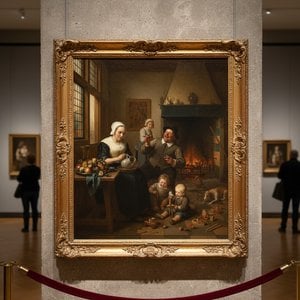
LA PELEUSE DE POMME: A Snapshot of Dutch Domestic Tranquility
Gabriel Metsu’s “La Peleuse de Pomme,” painted circa 1660, stands as a quintessential example of Dutch Golden Age genre painting—a movement dedicated to portraying scenes from everyday life with remarkable accuracy and subtle psychological depth. More than just a depiction of an apple peeling ritual, this artwork encapsulates the values of industriousness, domestic harmony, and quiet contemplation that defined the era’s artistic sensibilities.
- Composition & Perspective: The painting's central focus—a woman meticulously removing the skin from an apple—is framed within a deliberately flattened perspective. This stylistic choice eschews dramatic spatial illusion, prioritizing clarity of form and conveying a sense of immediacy, mirroring how artists aimed to capture reality as it unfolded.
- Color Palette & Light: Metsu employs a restrained color palette dominated by earthy hues – reds reflecting the apple’s flesh, greens hinting at foliage, browns grounding the scene in natural materials, and creams illuminating the woman's complexion. Soft, diffused light emanating from an unseen window casts gentle shadows, enhancing the realism of the composition and fostering an atmosphere of serene stillness.
- Technique & Texture: Metsu’s masterful brushwork contributes significantly to the artwork’s textural richness. Delicate strokes define the contours of the woman's clothing and face, while thicker impasto creates a palpable surface quality for the basket weave and apple skin—a testament to his meticulous attention to detail.
Historical Context & Artistic Influences
Painted during the height of the Dutch Golden Age (approximately 1640-1700), “La Peleuse de Pomme” reflects a broader artistic preoccupation with capturing the nuances of human experience within familiar surroundings. Metsu’s work draws inspiration from Nicolaes Maes, a fellow painter known for his similarly realistic depictions of domestic interiors and portraits. This stylistic convergence underscores the prevailing artistic conventions of the period—a commitment to portraying believable figures and environments against muted backgrounds.
Symbolism & Emotional Resonance
Beyond its visual realism, “La Peleuse de Pomme” carries symbolic weight. The apple itself represents abundance and nourishment – a tangible reminder of the fruits of labor and the comforts of home. Simultaneously, the woman’s focused activity embodies industriousness and self-sufficiency—values highly esteemed in Dutch society during this era. Ultimately, Metsu's painting evokes a feeling of quiet contentment and contemplative observation, inviting viewers to appreciate the beauty found within the commonplace.
Gabriel Metsu: A Master of Genre Painting
Gabriel Metsu (1629-1667) remains an enigmatic figure in Dutch art history. Despite producing relatively few paintings—only 14 survive—Metsu’s oeuvre demonstrates unparalleled skill in capturing psychological realism and conveying subtle emotional nuances. His dedication to meticulous observation and masterful technique cemented his place as one of the most influential artists of his time, ensuring “La Peleuse de Pomme” continues to resonate with audiences today.



 Zobraziť v interiéri
 Prepnúť na tlač
 Odoslať
 Zdieľať
 Podrobnosti
 Príručka

 Stiahnuť
 Podobné položky
 RTG skúška
 Prehliadanie diapo\]
 Štatistiky

 Prečítať si viac






































 Možnosť skla je dostupná len pri rozmeroch pod 110 cm