BEZPLATNÉ UMENÍCKE PORADENSTVO

x
Objednať reprodukciu Objednať reprodukciuKúpiť digitálnu verziu Kúpiť digitálnu verziu OdoslaťOdoslať
PodrobnostiPodrobnosti Pridať do obľúbených Pridať do obľúbených StiahnuťStiahnuť Podobné dielaPodobné diela RTG skúškaRTG skúška PrezentáciaPrezentácia

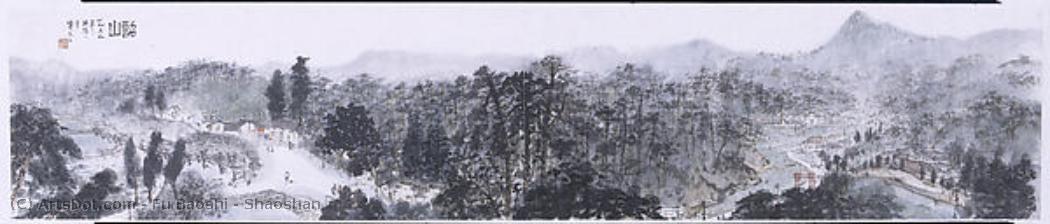
Shaoshan

  • Dátum vytvorenia1959
  • Rozmery28.0 x 136.0 cm

Explore Fu Baoshi's captivating landscape paintings & figure art – a pioneer of modern Chinese painting. Inspired by Shi Tao, he blended Japanese techniques with traditional styles.

Giclée / Umenotlač

Giclée tlač alebo plátno múzeálnej kvality s rýchlou výrobou a flexibilnými možnosťami povrchovej úpravy.

Standard
custom
CM
INCH

Vyberte si z našich preddefinovaných rozmerov, ktoré zodpovedajú pôvodným pomeroḿ diela.

šírka
výška

Môžete zadať vlastné rozmery, aby sa reprodukcia prispôsobila konkrétnemu rámu alebo priestoru. Ak zvolená veľkosť nebude zodpovedať proporciám originálu, dielo buď orežeme, alebo obraz rozšírime pomocou zrkadlenia či farebného doplnenia okrajov. Pred začatím výroby vám pošleme digitálnu ukážku na schválenie.
Máte na vedomí, že náhľad na obrazovke neodzrkadľuje skutočné orezanie alebo rozšírenie. Len digitálna ukážka presne zobrazí finálnu kompozíciu.
Hoci sú k dispozícii vlastné rozmery, pre zachovanie pôvodných proporcií odporúčame vybrať si rozmer z vopred definovaného zoznamu.

Celosvetová doprava () do 2 týždňov namiesto štandardných 4/5 týždňov. (3 júl)

why_choose_icon
Bezplatná expresná doprava po celom svete
why_choose_icon
Prémiové lnianske plátno
why_choose_icon
Kompletné poistenie prepravy
why_choose_icon
Záruka vrátenia colného poplatku
why_choose_icon
Záruka presného farebného zhodnutia
why_choose_icon
60-dňá politika vrátenia (iba pri defektoch)
why_choose_icon
100% záruka vrátenia peňazí
why_choose_icon
Výhodná množstevná zľava

Celková cena

-

reproduction

Shaoshan

Giclée / Umenotlač

Veľkosť reprodukcie

-

Celková cena za vybrané možnosti

-

Popis predmetu

In June 1959, at the invitation of the Hunan People’s Publishing House, Fu spent nine days in Shaoshan to highlight two major sites: Mao Zedong’s former residence and Shaoshan Mountain. The scroll opens on the right with a depiction of the magnificent emerald-green mountain rising above a valley dotted with the modern structures brought to the village under socialist reconstruction: a school, guesthouse, post office, cultural center, and the people’s commune. The culmination of the scroll on the left is Mao’s family residence, deliberately brought closer to the viewer for easy recognition.

Podobné diela


Biografia umelca

Fu Baoshi: A Pioneer of Modern Chinese Landscape Painting

Fu Baoshi (傅抱石), born October 5, 1904, in Xinyu, Jiangxi Province, China, stands as a pivotal figure in the history of twentieth-century Chinese art. His artistic journey began amidst the turbulent backdrop of China’s transformation—from imperial decline to republican upheaval and ultimately communist revolution—yet he forged an enduring legacy rooted in profound respect for tradition while simultaneously embracing innovative techniques and stylistic explorations. Largely self-taught, Fu Baoshi's early artistic inclinations led him to Japan where he pursued formal studies at the Tokyo School of Fine Arts from 1933 to 1936, immersing himself in the study of Oriental Art history and absorbing influences from Western aesthetics. This dual exposure profoundly shaped his artistic vision.
  • Early Influences & Training: Fu Baoshi’s formative years were marked by a dedication to mastering both Eastern and Western artistic traditions. He diligently studied calligraphy and painting techniques, recognizing the importance of grounding oneself in established conventions before venturing into experimentation.
  • Japanese Connection: His time in Japan wasn't merely academic; it instilled within him an appreciation for Japanese visual elements—particularly Shitao’s masterful landscape style—which would become a cornerstone of his artistic approach.
  • Return to China & The Nanjing School: Upon returning to Xinyu, Fu Baoshi established the Jiangsu Province Chinese Painting School and spearheaded the Nanjing School of Fine Arts, attracting talented artists who shared his commitment to revitalizing Chinese painting through modern sensibilities.

The Pursuit of Style & Technique – Embracing Shitao’s Legacy

Fu Baoshi's artistic breakthrough arrived in the early 1940s when he decisively adopted Shitao’s distinctive style—characterized by dynamic ink wash techniques and serene mountain vistas—as his primary inspiration. This stylistic choice wasn’t simply a matter of imitation; it represented a deliberate effort to recapture the grandeur and poetic atmosphere of classical landscape painting while simultaneously adapting it to the realities of the era. He meticulously honed his brushwork, mastering the subtle nuances of tonal gradation and textural variation – techniques that would become synonymous with his oeuvre. Notably, he experimented with “splattered ink,” a revolutionary method mirroring developments in Abstract Expressionism, prioritizing spontaneity and emotional resonance over meticulous detail.
  • Splattered Ink Method: Fu Baoshi’s innovative splattered ink technique—a bold departure from traditional brushwork—became his signature style, reflecting the spirit of experimentation prevalent during the war years.
  • Color Palette & Atmospheric Effects: He skillfully employed color palettes that evoked mood and emotion, prioritizing atmospheric depth and luminosity over literal representation.
  • Detailed Observation & Artistic Expression: Despite embracing spontaneity, Fu Baoshi maintained a keen eye for observation, translating his perceptions of nature into powerfully expressive paintings.

Major Achievements & Recognition – A Master Painter Emerges

Fu Baoshi’s artistic accomplishments extended far beyond stylistic innovation; he became one of China's foremost landscape painters and a respected teacher whose influence spanned generations. He undertook extensive research into the history of Chinese landscape painting, meticulously analyzing the works of Gu Kaizhi, Zhan Ziqian, Jing Hao, Wu Daozi, Li Sixun, Li ZhaoDao and Zhang Yan Yuan—giants of Tang Dynasty art—and diligently studied the techniques employed by Gao Kegong and Ni Zan during the Yuan Dynasty. His unwavering dedication to artistic scholarship underpinned his creative output, informing his stylistic choices and enriching his understanding of artistic tradition. He was awarded numerous accolades for his work, cementing his reputation as a visionary artist who successfully blended poetic atmosphere with masterful painting techniques.
  • Research into Landscape Painting History: Fu Baoshi’s scholarly pursuits—particularly his detailed analysis of Tang Dynasty landscape painters—provided him with invaluable insight into artistic principles and stylistic evolution.
  • Influence on Subsequent Generations: His teachings at Nanjing University instilled in countless students a passion for Chinese painting and contributed to the preservation and advancement of artistic traditions.
  • Critical Acclaim & Artistic Legacy: Fu Baoshi’s paintings garnered widespread acclaim from critics and collectors alike, securing his place as one of China's most celebrated landscape artists.

Concluding Reflections – A Voice for Modern China

Fu Baoshi died September 29, 1965 in Nanjing, China. His artistic output reflected the complex socio-political landscape of Mao Zedong’s era—a period marked by fervent nationalism and a commitment to socialist ideals—yet he remained steadfastly devoted to his own artistic vision. He championed the revival of traditional Chinese painting styles while simultaneously embracing modern technological subjects like airports and telephone lines, demonstrating an unparalleled ability to synthesize disparate influences into a uniquely expressive aesthetic. Fu Baoshi’s enduring legacy resides not merely in his stunning landscapes but also in his unwavering belief that art could serve as a conduit for conveying profound emotions and celebrating the beauty of China's natural heritage—a conviction that continues to inspire artists today.
Fu Baoshi

Fu Baoshi

1904 - 1965

Základné informácie

  • Artistic Movement Or Style: Modern Chinese Painting
  • Artists Or Movements Influenced By This Artist:
    • Gao Kegong
    • Ni Zan
  • Artists Who Influenced This Artist:
    • Shi Tao
    • Huang Binhong
  • Date Of Birth: October 5, 1904
  • Date Of Death: September 29, 1965
  • Full Name: Fu Baoshi
  • Nationality: Chinese
  • Notable Artworks:
    • The Elixir Terrace
    • Yan'an
    • Set of Fan Paintings Leaf 5
  • Place Of Birth: Xinyu, Jiangxi Province