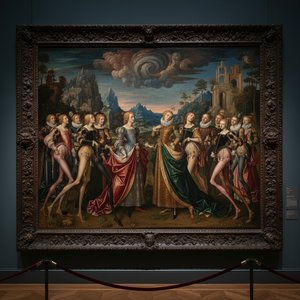
A Testament of Sorrow and Divine Mercy: El Greco’s St Veronica
Doménikos Theotokópoulos, universally known as El Greco – “the Greek” – stands apart in the annals of European art history. Born in Crete around 1541, under Venetian dominion, his artistic journey traversed Venice and Rome before finding its ultimate expression in the spiritual heartland of Spain: Toledo. More than merely a product of these locations; he synthesized their influences into something wholly unique—a style that anticipated the emotional intensity of Expressionism and the fragmented forms of Cubism centuries later.
El Greco’s distinctive approach wasn't simply stylistic innovation; it stemmed from a profound engagement with Byzantine tradition, instilled in him by his formative years. This grounding provided him with an unparalleled understanding of religious iconography—a skill he would skillfully employ throughout his prolific career. Yet, he refused to be confined by convention. He signed his works in Greek, appending “Krḗs” – Cretan – as a proud declaration of his origins, even as he ventured into new artistic territories.
The Painting’s Genesis and Artistic Style
“St Veronica Holding the Veil,” completed circa 1580-1586, exemplifies El Greco's masterful fusion of Byzantine and Renaissance sensibilities. Executed in oil on canvas measuring 84 x 91 cm, it resides within the Museo de El Greco in Toledo—a testament to its enduring significance.
The painting depicts St Veronica, a biblical figure revered for her compassion, presenting Jesus Christ with the veil she used to wipe away his brow during his agonizing journey to Calvary. This poignant scene captures the essence of Christian piety and embodies the profound sorrow experienced by those witnessing divine suffering. El Greco’s stylistic choices powerfully convey this emotion.
Characteristic of Mannerism—the artistic movement dominating the mid-16th century—the composition is marked by elongated figures, dramatic lighting, and a deliberate distortion of perspective. These techniques heighten the emotional impact of the image, prioritizing expressive gesture over realistic representation. Tintoretto and Titian served as influential predecessors, shaping El Greco’s visual vocabulary.
Symbolism and Emotional Resonance
The veil itself is laden with symbolic weight—representing purity, humility, and divine mercy. Its transference of Jesus's suffering onto the cloth underscores the Virgin Mary’s unwavering devotion and her willingness to bear witness to Christ’s agony. El Greco’s masterful use of color—particularly muted reds and browns—further amplifies the painting’s solemn atmosphere.
The Museo de El Greco houses an impressive collection showcasing El Greco's artistic prowess, including “Christ as Saviour” and “Apostle St Paul.” These works demonstrate El Greco’s unwavering commitment to portraying religious narratives with breathtaking intensity.
Handcrafted Reproductions: Preserving Artistic Legacy
High-quality reproductions of “St Veronica Holding the Veil” are available at WahooArt.com. Created by skilled artisans utilizing premium materials and techniques, these prints faithfully recreate El Greco’s original masterpiece.
For deeper insights into El Greco's life and oeuvre, visit WahooArt.com.



 Zobraziť v interiéri
 Objednať ručne maľovanú reprodukciu
 Odoslať
 Zdieľať
 Podrobnosti
 Príručkovo

 Stiahnuť
 Podobné položky
 RTG skúška
 Prehliadanie diapo\]
 Štatistiky

 Prečítať si viac






































 Možnosť skla je dostupná len pri rozmeroch pod 110 cm