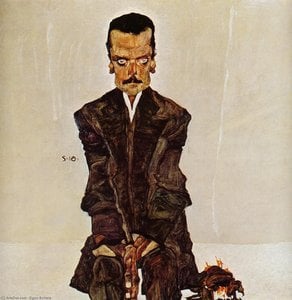
A Life Forged in Expression
Egon Schiele, narodený v roku 1890 v malej obci Tulln an der Donau, bol umelecký život plný dramatických zvratov a hlbokých osobnostných skúseností. Jeho rané roky boli ovládané chorobami a smútkom; jeho otec zomrel na spinu už len vo veku štrnásť rokov, čo zanechalo v jeho tvorbe trvalý odkaz úzkosti a reflexie nad plynulým časom. Vyrastal najprv pod starostlivosťou svojej matky a neskôr pod dočasnou ochranou svojho stríka Leopolda Czihacka, čo neprinieslo stabilný život, ale posilnilo jeho nezávislý duch. Už ako dieťa prejavoval intenzívny záujem o vlaky – motív, ktorý sa neskôr jemne objavil v jeho maľbách – a darovaniu kreslenia, hoci to bolo na začiatku potrestané jeho otcom, ktorý ho považoval za rozptylujúcu činnosť. Ranná smrť jeho sestry Elviry tiež ovplyvnila jeho psychiku. Tieto rané skúsenosti vložili doňho citlivosť a emocionálnu uprosedenosť, ktoré sa stali charakteristickými znakmi jeho umeleckého vyjadrenia – neustále boj s témami života, smrti a ľudského stavu.
The Crucible of Vienna: Artistic Development
Schiele začal svoju formálnu umelckú cestu na Kunstgewerbeschule viedeňskej, ale rýchlo sa cítil stlačený konzervatívnym prístupom. Prešiel na Akademie der bildenden Künste, kde však čakal ďalší rozčarovanie z prísnych akademických tradícií. Táto nespokojnosť ho priviedla k tomu, aby úplne zahodil formálne vzdelanie a zvolil si vlastnú cestu – dôkaz jeho neochrabného umeleckého presvedčenia. Vplyv Gustava Klimta bol v týchto raných rokoch zásadný; Schiele obdivoval Klimtov dekoratívny štýl a skúmanie symboliky, čo ho priviedlo k mentorstvu známeho umelca. Postupne sa však odlišil od Klimtovho estetického prístupu, vyvinul si vlastný jedinečný hlas, charakterizovaný uprosedenosťou, úprimnosťou a psychologickou intenzitou. Spoločne s ďalšími umelcami založil v roku 1909 skupinu Neues Wiener Kunstgruppe (Novú umeleckú skupinu), ktorá sa snažila o výzvu platných umeleckých konvencií. Jeho prvé diela, často znepokojivé portréty a sebaobrazky, predstavovali silné vyjadrenie emocionálnej ťažkosti – nepríjemné postavy a pociťovanie zraniteľnosti. Tieto maľby neboli len reprezentáciou fyzického vzhladu, ale skúmaním vnútornej krajiny – obavy, túžby a strachy, ktoré trápili ľudské duše. Hľadal nie to, čo *videl*, ale to, čo *pocítil*.
Raw Emotion and Unflinching Truth
Umelecké diela Egon Schiele sú okamžite rozpoznateľné svojou uprosedenosťou a psychologickou hĺbkou. Bez váhania sa vyrovnával s témami, ktoré boli vtedy považované za tabu – sexualita, smrť, úzkosť, izolácia – s neochabujúcou pohľadom. Jeho charakteristický štýl sa vyznačuje predlžitými postavami, zakrivelenými postojmi a expresívnymi čiarami, ktoré vyjadrujú pocit znepokojenia a emocionálnej intenzity. Človek, najmä nahá, stal sa jeho hlavným témou – nie ako ideálnym objektom krásy, ale ako prenosnou nádobou pre skúmanie ľudského zážitku. Sebaobrazky predstavovali významnú časť jeho diela, ponúkali intímne pohľady dovnútra jeho sveta – svet často poznačený osamotenosťou a sebepochybom. Nevyhýbal sa zobrazovať sám seba v nepríjemných alebo zraniteľných pózach, čo odhaľuje hlbokú úroveň sebavedomia a sebapoznania. Okrem sebaobraziek Schiele vytváral portréty iných ľudí, ktoré zachytávajú ich podobnosti s znepokojujúcou presnosťou, ktorá preniká pod povrch. Jeho krajiny zobrazovali rovnakú emocionálnu intenzitu ako jeho portréty – nie sú to len vizuálne reprezentácie, ale vyjadrenie pocitov a stavov mysle. Použitie čiary je v dielach Schiele zvlášť výrazné; nie je to len nástroj na definovanie tvaru, ale expresívna sila, ktorá prenasa emócie a psychologické napätie. Opakujúce sa motívy, ako napríklad *Physalis* – symbol smrti a plynulosti s jeho jemným, papierištným šupkom – ďalej zdôrazňujú toto zameranie na smrť.
A Legacy Cut Short: Achievements & Significance
Hoci čelil cenzúre a právnym problémom – vrátane krátkeho väzenia za údajné podnecovanie detí proti jeho umeniu – Schiele získal uznanie v okruhu avantgardných umelcov vídeňskej. Jeho diela vyzvali platné konvencie, čo vyvolalo obdiv aj pobúrenie. Predčasná smrť počas španielskej chrípkovej pandémie v roku 1918 vo veku dvadsiatich ôsmich rokov však zanechala po ňom bohatý súbor grafických diel. Jeho diela sa dnes nachádzajú v hlavných múzeách sveta, vrátane Leopoldova muzea viedeňskej a Egon Schiele Art Centrum v Českom Krumlove, čo zabezpečuje, že jeho umelecké dedičstvo bude trvať ďalej. Bol to muž, ktorý odvážne bojoval za svoje umenie a svoj názor, a jeho diela sú dôkazom sílácie umenia pri konfrontácii s komplexnosťou existencie s úprimnosťou, odvahou a neochabujúcim videním.
- Kľúčové témy: Smrt, sexualita, izolácia, emocionálna ťažkosť
- Vplyvy: Gustav Klimt, Vídeňská secesia, osobné traumy
- Štýlové charakteristiky: Predlžujúce sa postavy, zakrivelené postoje, expresívne čiary, uprosedená emócia



 Zobraziť v interiéri
 Prepnúť na tlač
 Odoslať
 Zdieľať
 Podrobnosti
 Príručka

 Stiahnuť
 Podobné položky
 RTG skúška
 Prehliadanie diapo\]
 Štatistiky

 Prečítať si viac






































 Možnosť skla je dostupná len pri rozmeroch pod 110 cm