Ručne maľovaný olej na plátne vo vašej zvolenej veľkosti a v ráme, vyrobený na mieru našimi umelcami. ( Kúpiť tlač Kúpiť obrázok)





























Vyberte si z našich preddefinovaných rozmerov, ktoré zodpovedajú pôvodným pomeroḿ diela.

Môžete zadať vlastné rozmery tak, aby sa hodili do konkrétneho rámu alebo priestoru. Ak sa váš zvolený rozmer nezhoduje s pôvodnými proporciami obrazu, dielo buď orezáme, alebo ho doplníme ručne maľovanými prvkami. Pred začiatkom výroby vám zašleme digitálny náhľad na schválenie.
Upozorňujeme, že ukážka na obrazovke neodráža skutočné orezanie alebo doplnenie. Skutočnú finálnu kompozíciu zobrazuje iba digitálny náhľad.
Hoci sú k dispozícii vlastné rozmery, odporúčame vybrať rozmer z preddefinovaného zoznamu, aby sme zachovali pôvodné proporcie.
Celosvetová doprava () za 3 až 4 týždne namiesto štandardných 5 týždňov. (7 september). Bez kompromisov v kvalite.


Boy (Ragazzo)
Veľkosť reprodukcie
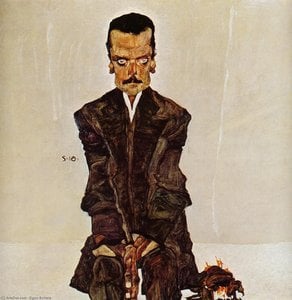
Egon Schiele's “Boy (Ragazzo),” painted in 1910, isn’t merely a depiction of youth; it’s a raw, intensely personal exploration of vulnerability and the precarious nature of existence. The drawing, rendered with Schiele’s signature agitated lines and unsettlingly direct gaze, captures a young boy seated on a simple wooden chair – an arrangement that immediately evokes a sense of quiet contemplation, yet simultaneously hints at underlying unease. The subject, though youthful in appearance, possesses a profound stillness, almost as if he's holding his breath, bracing himself against an unseen force. This isn’t the idealized portraiture of the era; instead, Schiele presents us with an honest, unvarnished glimpse into the psyche of a young man grappling with something deeply felt.

Schiele’s technique is immediately arresting. He employs a rapid, almost frantic application of charcoal – or perhaps crayon, given its texture – to build up the form. The lines aren't smooth or polished; they are jagged, broken, and imbued with an urgent energy. Notice how he uses hatching and cross-hatching to create depth and volume, particularly in the boy’s jacket, which adds a layer of complexity to the composition. The shadows are not gentle gradations but rather sharp, defined areas that heighten the sense of drama and isolation. The boy's face is rendered with an almost skeletal quality, emphasizing his youth and vulnerability. This deliberate roughness reflects Schiele’s Expressionist approach – he wasn’t interested in replicating reality; he sought to convey feeling, emotion, and psychological truth.
To understand “Boy (Ragazzo),” it's crucial to consider the context of Egon Schiele’s life. Born in Vienna in 1890, his early years were marked by illness, loss, and a profound sense of instability. The death of his father from syphilis at the age of fourteen deeply impacted him, fueling an obsession with mortality and the fragility of human existence – themes that permeate much of his work. The boy depicted here isn’t simply a portrait; it's a projection of Schiele’s own anxieties and fears, a visual manifestation of the emotional turmoil he experienced throughout his life. The drawing can be interpreted as a meditation on childhood innocence lost, or perhaps a premonition of the hardships to come.
The simple wooden chair itself is significant. It’s an ordinary object, yet it provides a grounding element within the otherwise unsettling composition. It suggests a moment of respite, a brief pause in the boy's internal struggles. The boy’s posture – slightly hunched, with his hands clasped loosely – conveys a sense of introspection and perhaps even apprehension. His gaze is averted, suggesting a reluctance to confront whatever burdens he carries. Schiele masterfully uses these subtle details to create an image that resonates deeply with the viewer, evoking feelings of empathy, sadness, and a poignant awareness of human vulnerability. The drawing’s power lies not in its literal representation but in its ability to tap into universal emotions – loneliness, fear, and the yearning for connection.
For a high-quality reproduction of “Boy (Ragazzo),” visit WahooArt.com to experience this emotionally charged masterpiece in stunning detail.


1890 - 1918 , Rakúsko

Elevate your artistic practice with this expert guide to mastering the line. Discover advanced techniques in graphite, charcoal, and contour drawing designed for art students seeking technical precision and expressive depth in their fine art studies.

Explore the profound artistry of graphite drawing. Discover professional techniques for mastering depth, texture, and detail through a lens of art history, from classical sketches to modern masterpieces. Elevate your understanding of the pencil medium with our expert guide.

Explore the profound world of Figurative Expressionism. Discover how masters like Munch and Schiele use the human form to convey raw emotion, and learn how to curate these evocative, museum-quality masterpieces for your private collection.

Discover the sophisticated mastery of graphite drawing. Explore expert techniques for achieving profound depth, intricate texture, and hyper-realistic detail through the alchemy of carbon, curated for the discerning art enthusiast and professional collector.

 Náhľad
 Odoslať
 Zdieľať
 Podrobnosti o dielo

 Stiahnuť
 Podobné diela
 RTG skúška
 Prezentácia

 Zobraziť viac







 Možnosť skla je dostupná len pri rozmeroch pod 110 cm