Objednať ručne maľovanú reprodukciu Prepnúť na digitálnu verziu obrazu Odoslať
Podrobnosti Príručkovo Pridať do obľúbených Stiahnuť Podobné položky Prehliadanie diapo\] Štatistiky

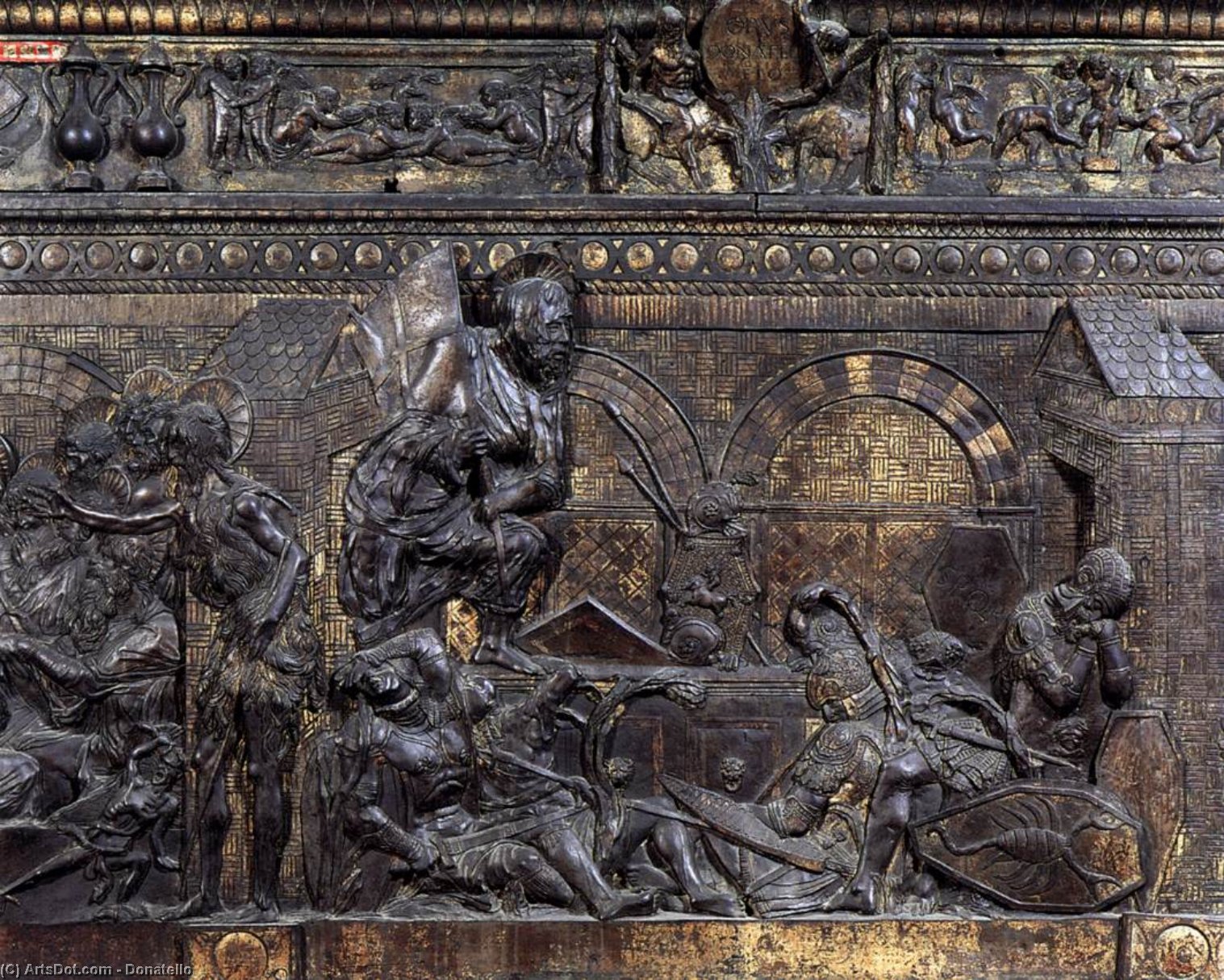
Christ before Pilate and Caiaphas

Explore Donatello's masterpiece, 'Christ before Pilate and Caiaphas,' a monumental bronze sculpture depicting Jesus’s trial before Roman authorities and Jewish leaders—a pivotal moment in Christian history.

Donatello (1386–1466): Florenský sochař raného renesansu. Inovátor voľného nude, známy svojimi expresívnymi realistickými prácami a vplyvom klasickej architektúry. Obdivuhodné diela ako David a iné, ktoré definovali taliansky renesansový umelecký štýl.

Giclée / Umenotlač

Giclée tlač alebo plátno múzeálnej kvality s rýchlou výrobou a rôznymi možnosťami povrchovej úpravy. ( Objednať ručne maľovanú reprodukciu Prepnúť na digitálnu verziu obrazu)

Štandardné rozmery
na mieru
CM
INCH

Vyberte si z našich preddefinovaných rozmerov, ktoré zodpovedajú pôvodným pomeroḿ diela.

šírka
výška

Môžete zadať vlastné rozmery, aby sa reprodukcia prispôsobila konkrétnemu rámu alebo priestoru. Ak zvolená veľkosť nebude zodpovedať proporciám originálu, dielo buď orežeme, alebo obraz rozšírime pomocou zrkadlenia či farebného doplnenia okrajov. Pred začatím výroby vám pošleme digitálnu ukážku na schválenie.
Máte na vedomí, že náhľad na obrazovke neodzrkadľuje skutočné orezanie alebo rozšírenie. Len digitálna ukážka presne zobrazí finálnu kompozíciu.
Hoci sú k dispozícii vlastné rozmery, pre zachovanie pôvodných proporcií odporúčame vybrať si rozmer z vopred definovaného zoznamu.

Celosvetová doprava () do 2 týždňov namiesto štandardných 4 až 5 týždňov. (23 september)

why_choose_icon
Bezplatná expresná doprava po celom svete
why_choose_icon
Vysokokvalitné lnianske plátno
why_choose_icon
Úplné poistenie prepravy
why_choose_icon
Záruka vrátenia colného poplatku
why_choose_icon
Záruka presného farebného zhodnutia
why_choose_icon
100-dená politika vrátenia tovaru (iba pri vadách)
why_choose_icon
100% záruka vrátenia peňazí
why_choose_icon
Ponuka množstevnej zľavy

Celková cena

$ 68

reproduction

Christ before Pilate and Caiaphas

Giclée / Umenotlač

Veľkosť reprodukcie

-

Celková cena

$ 68

Rýchle fakty

  • Medium: Bronze
  • Artist: Donatello
  • Movement: Early Renaissance
  • Notable elements or techniques: Complex relief sculpture; Anatomical detail
  • Location: San Lorenzo Museum, Florence
  • Year: 1460
  • Influences: Classical Sculpture

Kvíz o umení

Pri každej otázke je iba jedna správna odpoveď.

Otázka 1:
What artistic movement is Donatello’s Christ before Pilate and Caiaphas primarily associated with?
Otázka 2:
In which museum is the sculpture ‘Christ before Pilate and Caiaphas’ housed?
Otázka 3:
Donatello employed what sculptural technique to create this masterpiece?
Otázka 4:
The sculpture depicts a biblical scene featuring Christ before whom two figures are prominent: Pilate and Caiaphas. What is the significance of this confrontation?
Otázka 5:
What stylistic characteristic distinguishes Donatello’s sculpture from earlier Gothic art?

Donatello’s ‘Christ Before Pilate and Caiaphas’: A Crucible of Renaissance Emotion

Donatello's 1460 bronze sculpture, “Christ Before Pilate and Caiaphas,” stands as a monumental achievement within the burgeoning artistic landscape of the Italian Renaissance. Housed in the San Lorenzo museum in Florence, this work transcends mere biblical representation; it’s a visceral exploration of human drama, political intrigue, and spiritual torment – a testament to Donatello's revolutionary approach to sculpture that profoundly shaped the course of Western art. The sheer density of figures, meticulously rendered in warm bronze tones, immediately draws the viewer into the heart of the scene: Christ, positioned at the apex of the composition, confronts the Roman governor and the Jewish high priest, their faces etched with a potent blend of authority, doubt, and perhaps even veiled judgment.

  • A Masterclass in Renaissance Realism: Donatello’s genius lies not just in his technical skill but in his ability to imbue stone – or in this case, bronze – with palpable emotion. The figures are not idealized abstractions; they possess a raw humanity, evident in the strained expressions and subtly shifting postures that convey the weight of the moment.
  • The Power of Bronze Casting: The sculpture’s creation involved the complex process of bronze casting, a technique perfected by Donatello himself. This method, utilizing molds and molten metal, allowed for incredible detail – from the folds of Christ's garment to the stern features of Pilate – while simultaneously lending the piece an inherent sense of age and gravitas.

Historical Context and Symbolism

Created during a period of intense religious and political upheaval, “Christ Before Pilate and Caiaphas” reflects the anxieties and tensions of its time. The Renaissance was witnessing a renewed interest in classical antiquity, yet simultaneously grappling with the profound questions posed by Christianity. Donatello’s depiction of Christ is deliberately ambiguous, refusing to offer easy answers or simplistic moral judgments. The scene isn't merely a historical record; it’s an allegory for human fallibility and the struggle between good and evil. The inclusion of Roman soldiers and Jewish leaders underscores the political context of Christ’s trial – a microcosm of power struggles and accusations.

  • Pilate’s Hesitation: Pilate's posture, often interpreted as one of reluctant compromise, is particularly compelling. His hands are clasped in a gesture of uncertainty, suggesting the moral dilemma he faced.
  • Caiaphas’s Sternness: Conversely, Caiaphas embodies unwavering authority and religious zeal, his gaze fixed upon Christ with an expression of resolute condemnation.

Technique and Materiality

Donatello's mastery is immediately apparent in the sculpture’s surface treatment. The bronze has been skillfully patinated to achieve a rich, aged appearance, enhancing the sense of history and lending a tactile quality to the work. The artist employed strong lines to define the figures and their drapery, while finer details – such as the expressions on Christ's face and the folds in Pilate’s toga – are rendered with remarkable precision. The use of light and shadow further emphasizes the three-dimensionality of the sculpture, creating a dramatic effect that draws the viewer into the scene. The choice of bronze itself was significant; it was a material associated with strength, durability, and divine authority, perfectly suited to represent this pivotal moment in Christian history.

A Legacy of Innovation

"Christ Before Pilate and Caiaphas" is more than just a beautiful sculpture; it’s a cornerstone of Renaissance art. Donatello's innovative approach – his emphasis on realism, emotional expression, and the exploration of complex human themes – paved the way for generations of artists to come. Its influence can be seen in countless subsequent works, solidifying its place as one of the most important sculptures of the era. A hand-painted reproduction offers a remarkable opportunity to experience this masterpiece firsthand, bringing its power and beauty into your own space.


Biografia umelca

Early Life and Artistic Beginnings

Donato di Niccolò di Betto Bardi, universally known as Donatello, was born in Florence around 1386 – a date shrouded in some uncertainty, with records suggesting a range between 1382 and 1387. His origins were modest; his father, Niccolò, was a wool carder, a common profession within the burgeoning merchant class of Florence. This background, though not aristocratic, provided Donatello with an early exposure to the city’s vibrant artistic scene, as sculpture flourished alongside commerce. He received his initial training in stone carving, likely under the tutelage of a local sculptor – a typical path for young apprentices seeking their craft. Early influences were deeply rooted in the Gothic style prevalent at the time, but Donatello quickly demonstrated an innate desire to break free from its rigid conventions and explore new artistic horizons.

Key Works and Innovative Techniques

Donatello’s most celebrated works represent a pivotal shift in Florentine sculpture, marking a transition towards the Renaissance ideals of humanism and naturalism. His *David*, initially commissioned by the Medici family, stands as a testament to this transformation. Unlike previous depictions of the biblical hero, which often portrayed him as an aged king, Donatello’s David is a youthful, muscular figure – a celebration of male beauty and strength. This daring departure from tradition immediately established Donatello's reputation for innovation. Other significant works include *St. Louis of Toulouse*, a bronze sculpture now housed in the Basilica di Santa Croce, showcasing his mastery of texture and detail; the dramatic *Sacrifice of Isaac*, created for the campanile of Santa Maria del Fiore, which features strikingly realistic portraiture within its narrative scene; and the poignant *Crucifix* (1425) for Santa Croce, a powerful depiction of Christ’s agony that resonated deeply with viewers. Donatello's artistic style evolved through distinct phases. Initially, his work reflected the expressive qualities and classical monumentality characteristic of the late Gothic period. However, he steadily developed a more personal and individualistic approach, characterized by heightened emotionality and a profound understanding of human anatomy. He pioneered techniques such as *rilievo schiacciato* – a flattened relief that created an illusion of depth – and employed meticulous detail to capture the nuances of human expression. His ability to imbue his sculptures with life and emotion was truly remarkable, setting him apart from his contemporaries.

Influences and Artistic Connections

Donatello’s artistic development was shaped by a confluence of factors. The burgeoning humanist movement in Florence, which emphasized classical learning and secular values, profoundly influenced his thinking. He drew inspiration from ancient Roman sculpture, meticulously studying its forms and proportions. His collaboration with Filippo Brunelleschi, the architect of the Duomo, further broadened his artistic horizons. Brunelleschi’s innovative use of perspective and mathematical principles informed Donatello's approach to composition and spatial relationships. Furthermore, he was mentored by Lorenzo Ghiberti, a master sculptor whose workshop provided him with invaluable experience and exposure to diverse artistic styles.

Legacy and Historical Significance

Donatello’s impact on the course of Western art is immeasurable. He is widely considered one of the most important sculptors of the Early Renaissance, and his innovations profoundly influenced generations of artists who followed. His *David* became a model for subsequent depictions of the biblical hero, while his emphasis on realism and emotional expression set a new standard for sculpture. Donatello’s work demonstrated that sculpture could be more than just decorative ornamentation; it could convey complex ideas, evoke powerful emotions, and celebrate the beauty and dignity of humanity. His legacy continues to inspire artists today, solidifying his place as one of the greatest sculptors in history.
Donatello

Donatello

1386 - 1466 , Taliansko

Rýchle fakty

  • Artistic Movement Or Style: Rána renesancia
  • Artists Or Movements Influenced By This Artist: ['Taliansky renesans']
  • Artists Who Influenced This Artist: ['Klasická socha']
  • Date Of Birth: c. 1386
  • Date Of Death: 1466
  • Full Name: Donatello di Niccolò
  • Nationality: Taliančania
  • Notable Artworks:
    • David
    • St. Louis
    • Sacríficio
  • Place Of Birth: Florencia, Taliansko
Preskúmajte umelecká diela usporiadané podľa tém, štýlov a charakteristík.



































