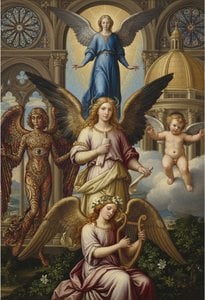
A Life Immersed in the Currents of Contemporary Russia
Dmitry Gennadyevich Gutov, born in Moscow in 1960, is more than just an artist; he’s a pivotal figure in understanding the complex narrative of Russian contemporary art. His journey reflects not only personal artistic evolution but also the shifting ideological landscapes of his homeland. From early studies at the Moscow Pedagogical State Institute (1978-1980) to his formal training at the Academy of Arts in St. Petersburg, graduating in 1992, Gutov’s education laid a foundation for an intellectually rigorous and conceptually driven practice.
Gutov didn't emerge into a vacuum; he arrived on the scene during a period of profound change. The late Soviet era and the subsequent collapse of the USSR created a fertile ground for artistic experimentation—and questioning. He quickly became central to this dialogue, not merely as a creator of objects but as a theorist, critic, and ideologue. This multifaceted role is crucial to understanding his work; Gutov doesn’t simply *show* art, he actively deconstructs its meaning, its history, and its place within society.
The Sculptural Language of Memory and Ideology
While proficient in painting and installation, Gutov is perhaps most recognized for his sculptures. These aren't monumental declarations but rather intimate assemblages—often constructed from found objects imbued with the weight of personal and collective memory. A recurring motif is the reclamation of discarded items from the Soviet past: bicycles, radios, vacuum cleaners, remnants of a bygone era. These are not presented as nostalgic relics, however. Gutov welds them onto metal grids resembling window guards, transforming them into poignant symbols of containment and loss. The act of preservation becomes an interrogation—what do we choose to remember, and what gets left behind?
His work frequently engages with the legacy of Marxist philosophy, particularly the writings of Mikhail Lifshitz, a controversial Soviet art historian. Gutov founded the Lifshitz Institute, dedicated to re-examining his ideas, demonstrating a commitment to intellectual exploration that permeates all aspects of his practice. This isn’t about blind adherence to ideology; it's about critically analyzing its impact and finding relevance in its complexities.
Themes of Spirituality and the Search for Meaning
Beyond the historical and political commentary, Gutov’s work often delves into deeply spiritual themes. His black and white paintings, such as “Angel,” are hauntingly evocative, featuring winged figures set against stark backgrounds. These images aren't necessarily religious in a traditional sense; they represent a broader search for meaning and transcendence in a world grappling with uncertainty. The use of monochrome amplifies the emotional intensity, stripping away distractions to focus on the essential forms and symbols.
The “Gondola” series exemplifies this exploration. While seemingly depicting a Venetian gondola—a symbol of romance and beauty—Gutov imbues it with a sense of melancholy and isolation. The black and white palette again contributes to the somber mood, suggesting a deeper contemplation on themes of life, death, and the passage of time.
Recognition and Lasting Influence
Dmitry Gutov’s contributions have not gone unnoticed. He has exhibited extensively both nationally and internationally, including participation in prestigious events like the Venice Biennale. In 2012, he received the Kandinsky Prize—a significant honor recognizing his achievements in contemporary art. He is also a member of the Academy of Arts of the USSR, further solidifying his position within the artistic establishment.
However, Gutov’s true legacy lies not just in awards and accolades but in his ability to provoke thought and challenge conventional perspectives. He has created a unique aesthetic fusion—blending pure painting with graphic design, Eastern calligraphy, and conceptual tradition. His work continues to resonate with audiences because it speaks to universal themes of memory, identity, and the search for meaning in an ever-changing world.
A Continuing Dialogue
Currently residing and working in Moscow, Dmitry Gutov remains a vital force in contemporary art. He is not merely an artist reflecting his time; he’s actively shaping it—through his creations, his writings, and his unwavering commitment to intellectual inquiry. His work serves as a powerful reminder that art can be both beautiful and unsettling, personal and political, historical and profoundly relevant.



 Zobraziť v interiéri
 Prepnúť na tlač
 Odoslať
 Zdieľať
 Podrobnosti
 Príručka

 Stiahnuť
 Podobné položky
 RTG skúška
 Prehliadanie diapo\]
 Štatistiky

 Prečítať si viac






































 Možnosť skla je dostupná len pri rozmeroch pod 110 cm