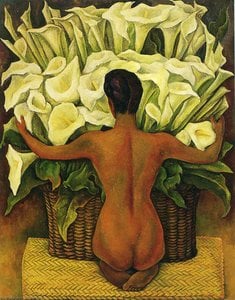
Early Life and Artistic Awakening
Diego Rivera, narodil sa 8. decembra 1886 v Guanajuato, hlavnom meste štátu Guanajuato v Strednej Južnej Mexiku, a vstúpil do sveta už ladeného umeleckou citlivosťou. Od útleho veku, zhruba od troch rokov, sa v ňom rozvinul neodolateľný záujem o umenie, ktorý bol vychovávaný rodičmi, ktorí si všimli a povzbudzovali jeho burácajúci talent. Jeho rané roky boli poznačené formálnou edukáciou na Akadémii San Carlos v Mexických mestách, kde precízne zdokonaloval svoje zručnosti v tradičnom maľovaní a sochárstve. Dôležitý okamih nastal v roku 1907, keď Teodoro A. dehesa Méndez generózne sponzoroval štúdium Riveru za hranice, čím ho uvedul do srdca európskeho umeleckého rozmachu.
Jeho prvý pobyt tam sa niesol do Madridu, Španielska, kde študoval pod vedením Eduarda Chicharro, absorboval princípy Realizmu. No Paris bol skutočne zapálil jeho tvorivú evolúciu. Ponorený do živého Montparnasse komunity, Rivera stretol kaleidoskop umeleckých perspektív, najmä revolučných princípov Kubizmu po roku 1912. Vplyv Pabla Picassa a Georgea Seurat sa stal zjavným v jeho dielach, keď začal deštruktívne formy a skúmať prepletené plochy – odchýlenie od tradičnej reprezentácie, ktoré definovalo významný štádium jeho umeleckej cesty.
The Return to Mexico and the Mural Renaissance
Hlboká zmena nastala v roku 1921, keď sa Rivera vrátil do svojej vlasti, krajiny, ktorá zápasila s následkami revolúcie. Toto návratenie nebolo len geografické presunutie; bolo to ideologové probdzenie. Stal sa kľúčovou figúrkou burzajúceho Mexického murálového hnutia, silnej umeleckej reakcie na sociálne a politické nepokoje vtedenjša čias. Hnutie malo za cieľ demokratizovať umenie, priniesť ho z elítnych kruhov do verejne prístupných priestorov pre všetkých občanov.
Riverove murály neboli len dekoratívne; boli to silné príbehy mexickej histórie, kultúry a spoločenských ťažkostí. Jeho skoré maľby, ako napríklad “Creation” (1922), ukázali jeho inovatívnu techniku encaustic, zatiaľ čo monumentálne diela v Secretaría de Educación Pública v Mexických mestách prezentovali jedinečný štýl charakterizovaný veľkými, zjednodušenými postavami a výraznými farbami – úmyselne posvätné s aztekovským umením a predtkolumbijskou estetickou tradíciou. Tieto murály neboli len maľby; boli to vizuálne manifesty, vyhlasujúce nové národné identita vytvorené z jej pôvodných korienov a revolučného ducha.
A Style Forged in Social Consciousness
Diego Rivera’s artistic style is instantly recognizable—a monumental scale that commands attention, simplified forms that convey powerful messages, vibrant colors that evoke the richness of Mexican culture, and an unwavering focus on social and historical narratives. His work wasn’t confined to aesthetic concerns; it was deeply intertwined with his political beliefs, particularly his Marxist convictions.
The “Dreams of a Sunday in the Alameda” is perhaps one of his most iconic works, though also controversial for its depiction of atheism and historical figures. The Detroit Industry Murals (1933), commissioned for the Detroit Institute of Arts, stand as a testament to his ability to capture the dynamism and complexity of industrial life, portraying both the power of machinery and the dignity of the workers who operated it. He seamlessly blended elements of Mexican folk art with pre-Columbian imagery, creating a visual language that was uniquely his own—a powerful synthesis of tradition and modernity.
Notable Works
- Creation (1922): His first significant mural, utilizing the encaustic technique.
- Dreams of a Sunday in the Alameda: A controversial piece known for its depiction of atheism and historical figures.
- Secretaría de Educación Pública Murals: Showcasing his unique style with large, simplified forms and vibrant colors influenced by Aztec art.
- Detroit Industry Murals (1933): Commissioned for the Detroit Institute of Arts, depicting industrial processes and workers.
Legacy and Enduring Influence
Diego Rivera’s impact on 20th-century art is immeasurable. He isn't merely remembered as one of Mexico’s most important artists, but as a global icon whose work continues to resonate with audiences today. His murals are not just artistic achievements; they are significant examples of social realism and public art—powerful statements about the human condition and the struggle for social justice.
He played a pivotal role in establishing Mexican Muralism as an influential artistic movement, inspiring generations of artists to use their work as a vehicle for social commentary. His personal life, particularly his passionate and often tumultuous relationship with Frida Kahlo, has further cemented his place in popular culture, adding another layer of intrigue to his already captivating legacy.
Rivera’s commitment to portraying the lives and struggles of ordinary people, combined with his innovative artistic techniques, ensures that his work will continue to inspire and provoke thought for generations to come. He left behind a body of work that is not only visually stunning but also deeply meaningful—a testament to the power of art to shape our understanding of history, culture, and ourselves.



 Zobraziť v interiéri
 Prepnúť na tlač
 Odoslať
 Zdieľať
 Podrobnosti
 Príručkovo

 Stiahnuť
 Podobné položky
 RTG skúška
 Prehliadanie diapo\]
 Štatistiky


 Prečítať si viac