Umelecké dielo zobrazené na tejto stránke je chránené autorským zákonom, čo znamená, že nemôžeme legálne vytvárať ani predávať jeho identickú reprodukciu. Táto ochrana je vymáhaná na základe medzinárodných dohôd, ako napríklad Bernská konvencia a národnými zákonmi, vrátane tých, ktoré sú stanovené v Autorské právo USA – Title 17. Všetky práva vyhradené.
Táto metóda plne dodržiava autorské práva, pretože nezahŕňa kopírovanie ani duplikovanie chráneného diela. Ide skôr o kreatívnu reinterpretáciu – nový obraz, ktorý je ovplybnený originálom, no nie je s ním identický.
Giclée tlač alebo plátno múzeálnej kvality s rýchlou výrobou a rôznymi možnosťami povrchovej úpravy. ( Objednať ručne maľovanú reprodukciu
Prepnúť na digitálnu verziu obrazu)
Vyberte si z našich preddefinovaných rozmerov, ktoré zodpovedajú pôvodným pomeroḿ diela.
Môžete zadať vlastné rozmery, aby sa reprodukcia prispôsobila konkrétnemu rámu alebo priestoru. Ak zvolená veľkosť nebude zodpovedať proporciám originálu, dielo buď orežeme, alebo obraz rozšírime pomocou zrkadlenia či farebného doplnenia okrajov. Pred začatím výroby vám pošleme digitálnu ukážku na schválenie.
Máte na vedomí, že náhľad na obrazovke neodzrkadľuje skutočné orezanie alebo rozšírenie. Len digitálna ukážka presne zobrazí finálnu kompozíciu.
Hoci sú k dispozícii vlastné rozmery, pre zachovanie pôvodných proporcií odporúčame vybrať si rozmer z vopred definovaného zoznamu.
Celosvetová doprava () do 2 týždňov namiesto štandardných 4 až 5 týždňov. (13 október)
Untitled
Veľkosť reprodukcie
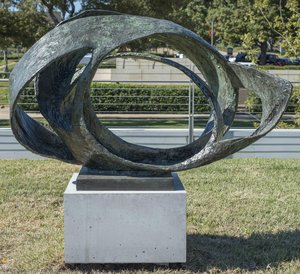
In the vast landscape of mid-century modernism, few works capture the delicate tension between weight and weightlessness quite like David Annesley’s ‘Untitled’ (1969). This mesmerizing, mandala-like sculpture serves as a masterclass in structural harmony, inviting the viewer into a rhythmic dance of shapes that seem to breathe within their own metallic confines. At first glance, the eye is drawn to the vibrant, sun-drenched yellow of its aluminum form, a hue that radiates energy and warmth against the natural backdrop of its surroundings. Yet, as one lingers, the true magic reveals itself: a complex, nested architecture where smaller geometric shapes are cradled within larger ones in a state of perfect, unshakeable equilibrium.
Annesley’s technique is deeply rooted in his unique personal history, specifically his formative years as an RAF pilot. The sculpture’s open-form design does not merely occupy space; it actively engages with and expands into the atmosphere, mimicking the sensation of flight and the liberation found in the clouds. By utilizing lightweight metal, Annesley achieves a paradoxical effect—the sculpture possesses a commanding physical presence, yet it conveys an ethereal sense of buoyancy. This mastery of linear form allows the piece to envelop the surrounding environment, making the air around the sculpture feel like an integral part of the artwork itself.
The historical significance of this work lies in its role as a bridge between the worlds of painting and sculpture. During the 1960s, Annesley found profound inspiration in his friendship with the American Color Field painter Kenneth Noland. This connection was transformative, encouraging the sculptor to move beyond mere shape and explore the emotive power of color relationships. In ‘Untitled’, we see the influence of Color Field theory translated into a three-dimensional language; the yellow is not just a coating, but a structural element that defines the boundaries of the form. The piece stands as a testament to a period when the boundaries of artistic disciplines were dissolving, giving rise to a new, multidisciplinary approach to abstraction.
For the discerning collector or interior designer, this work offers more than just aesthetic beauty; it provides a psychological sanctuary. Annesley himself described his structured compositions as restorative, noting that they release endorphins by providing the brain with the order and predictability it craves. The way the sculpture contains smaller shapes within itself creates a sense of safety and containment, making it an ideal centerpiece for spaces designed for contemplation and peace. Whether placed in a sunlit garden or featured as a focal point in a contemporary gallery setting, ‘Untitled’ acts as a visual anchor that brings a sense of profound, organized calm to any environment.
Owning a high-quality reproduction of such a seminal piece allows one to bring this sense of mathematical grace and aeronautical lightness into the home. It is an invitation to experience the intersection of modernist rigor and organic fluidity, offering a timeless elegance that continues to resonate with the human desire for balance and beauty.
„Untitled“ od David Annesley predstavuje Strong Color Unity farebnú harmóniu.
Ak si chcete objednať print diela „Untitled“ od David Annesley, stačí si ho objednať na táto stránka: umelecká tlač na bavlnenom plátne alebo archivnom plátnovom papieri.
Dielo „Untitled“ bolo vytvorené v roku 1969 pomocou techniky Metal. Materiál a dátum popisujú, ako a kedy bol originál vytvorený.
Rokné datovanie 1969 situuje dielo „Untitled“ do obdobia Mature Period v rámci vývoja umelca David Annesley.
Jasnosť diela „Untitled“ od David Annesley je zaznamenaná ako shadow pri luminancii Soft Shadow.
V rámci kariéry umelca David Annesley spadá dielo „Untitled“ do obdobia Mature Period. Táto etapa umožňuje porovnať ho s ostatnými prácami tohto umelca.
„Untitled“ od David Annesley vyvoláva Calm pocit v rámci celkového Modern nálady.
Z historického hľadiska je „Untitled“ dielo zastúpedobiteľné pre smer Color Field širšej éry Modern.
David Annesley stands as a luminous figure within the pantheon of British sculpture, a master of form whose work captures the rhythmic pulse of the mid-century modern era. Born in London in 1936, Annesley’s artistic identity was forged through a global odyssey that saw him traverse the landscapes of Zimbabwe and Australia before returning to the heart of the English art scene. This diverse exposure to different environments and textures provided a rich, foundational layer to his aesthetic sensibility, allowing him to approach the concept of space with a unique, international perspective. His journey is not merely one of geographical movement, but an evolutionary process of refining how metal, color, and gravity interact to create a sense of living motion.
The trajectory of Annesley’s career was profoundly shaped by his formative years at St Martin's School of Art in London. It was here that he encountered the monumental influence of Sir Anthony Caro, a mentor whose radical approach to sculpture would leave an indelible mark on Annesley’s soul. Under Caro’s guidance, Annesley learned to reject the heavy, representational traditions of the past in favor of a more spontaneous, abstract language. This period of study encouraged him to view sculpture not as a static object of commemoration, but as an active participant in its environment—a way to manipulate the very air around a form through the use of welded metal and bold, structural lines.
To encounter an Annesley sculpture is to witness a dance between industrial strength and visual lightness. His technique is characterized by a masterful command over welded metal, which he shapes into striking geometric configurations that often rest directly upon the ground. By eschewing traditional pedestals, Annesley allows his works to inhabit the same physical plane as the viewer, fostering an intimate and visceral engagement with the art. These pieces, such as the captivating Godroon (196 and Big Ring (1965), demonstrate a profound understanding of how weight can be visually defied through clever construction and strategic placement.
Beyond the structural integrity of his work lies a vibrant, emotive use of color. Annesley’s palette is famously bold, frequently utilizing saturated reds and brilliant yellows to breathe life into his metallic compositions. This infusion of pigment serves a dual purpose: it provides a striking contrast to the raw, industrial nature of the metal while simultaneously injecting a sense of kinetic energy into the static forms. Through this interplay of color and geometry, Annesley explores the delicate relationship between material perception and physical reality, creating works that feel as though they are vibrating with an internal light.
The enduring significance of David Annesley’s oeuvre lies in his ability to translate the complexities of movement into the permanence of metal. His works, such as the dynamic Jump, serve as meditations on freedom and the elegance of abstraction, capturing a sense of upward momentum that transcends the physical limitations of the medium. As a key voice in the development of contemporary British sculpture, Annesley helped bridge the gap between the heavy traditions of early modernism and the more fluid, experimental approaches of late 20th-century art.
Throughout his career, Annesley has remained dedicated to the pursuit of a pure, abstract language. His contributions to the art world are marked by several key achievements:
Today, Annesley’s legacy continues to resonate within the halls of contemporary art, offering a timeless testament to the power of bold form and the infinite possibilities of the abstract imagination.

1936 - , United Kingdom