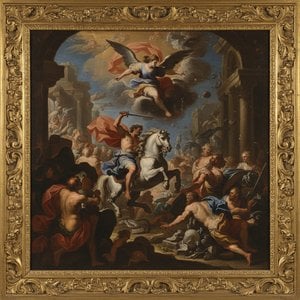
A Roman Master of the Baroque Classicizing Style
Carlo Maratta, často známy ako Maratti, stojí v 17. storočí ako významná postava talianskej maľby, zosúvišť predstavujúca prechod od vysokej baroky k viac elegantnej a klasicistickej estetike. Narodil sa 15. mája 1625 v Camerane, v štáte papežskom – dnes súčasťou Talianska – jeho umelecká cesta začala skorým presídlením do Ríma v roku ôsmom života. Toto presídlenie sa ukázalo ako transformačné, keď vstúpil do dielne Andrea Sacchiho, malára známeho svojimi meranými kompozíciami a záväzkom k klasickým ideálom. Vplyv Sacchiho hlboko ovplyvnil rozvíjajúci sa štýl Marattu, vložil do neho oddanosť jasnosti, rovnováhe a obmedzenému emocionálnemu vyjadreniu, ktoré ho odlišovalo od viac flambujúcich barokových súčasníkov. Toto učenie nebolo len technickým tréningom; bolo to ponorením do filozofického prístupu k umeniu, ktorý uprednostňoval intelektuálnu dôslednosť a harmonický dizajn pred dramatickým spektáklom. Maratta absorboval tieto princípy, no nezostal v nich len pasívne, preukázal pozoruhodnú schopnosť syntetizovať klasické základy s prevládajúcimi prúdmi barokovej zmyselnosti.
The Flourishing Career in Rome
Talent Marattu rýchlo rozkvitol a už do polovice 60-tych rokov 17. storočia začal priťahovať významné objednávky. Jeho skoré diela, ako napríklad *Navštívenie* (1656) pre Santa Maria della Pace, odhaľujú mistrovskú kontrolu nad svetlom a pohybom, spojenú s vyvíjajúcou sa schopnosťou vniesť náboženské scény s pocitom hlbokého duchovného zážitku. Nevytváral len kópie známych vzorov; vnášal do nich svoj vlastný jedinečný pohľad, charakterizovaný gráciami postáv, elegantnou odevom a jemným, no silným použitím farieb. Tento obdobie prinieslo aj vytvorenie *Tajomstvo Trojjedinosti odhalené svätému Augustínovi* (cca 1655), diela, ktoré exemplifikujú jeho zručnosť v kombinácii klasického idealizmu s barokovou dynamikou. Ako sa jeho reputácia rozširovala, tak aj rozsiahly a prestížny charakter jeho objednávok. Stal sa obľúbeným umelcom medzi významnými rómskych rodinami a, čo je dôležité, pápežom samotným. Počas šiestich desaťročí Maratta dostával podporu od až šiestich popov – dôkaz jeho umeleckého talentu a politickej zručnosti. Táto konzistentná pápežská podpora nepriniesla len finančnú istotu, ale umiestnila ho aj do srdca Ríma akoho umelckého a kultúrneho života.
A Synthesis of Styles and Influences
Štýl Marattu je často opísaný ako „klasicizujúci barok,“ termín, ktorý zachytáva jeho jedinečné postavenie v historickom kontexte umenia. Hoci hlboko zakorennený v klasickej tradícii vychádzajúcej z Rafaela, nebol imúnny voči vplyvu viac divadelnej tendencie barokovej maľby. Jeho súčasník Giovanni Bellori zdôrazňoval túto synézu v ranom biografickom spise, dokumentujúc Marattov umelecký prístup. Umelci sa snažili integrovať dramatické použitie svetla a tieňa charakteristické pre barokové maľby s jasnosťou formy a kompozičnou rovnováhou uprednostňovanú klasikmi. Táto fúzia priniesla diela, ktoré boli zároveň emocionálne angažované a intelektuálne uspokojivé. Jeho paleta, hoci živá, bola často obmedzená, zameraná na harmonické farebné vzťahy namiesto výrazných kontrastov. Vynikal v zobrazovaní náboženských príbehov, v ktorých ich vnášal s úctou a duchovým intenzívnym zážitkom. *Zjav Panny Márie svätému Filipovi Neri* (cca 1675), dnes umiestnený v Pitti Paláci v Florencii, je skvelým príkladom jeho schopnosti interpretovať takéto témy s gráciou a hlbokým emocionálnym zážitkom.
Beyond Painting: Restoration and Legacy
Prínos Marattu nebol obmedzený vytváraním nových umeleckých diel; bol tiež poverený zachovávaním umelckého dedičstva Ríma. V roku 1702-1703 ho Innocent XI menoval *surintendent des chambres du vatican* a pověřil ho opravou fresiek Rafaela v Bazilike svätej Petra – zodpovednosť, ktorá zdôrazňovala jeho postavenie ako vedúceho odborníka na klasické umenie. Táto podnikanie nebolo len technickou reštauráciou; bolo to akt úcty k jednému z najväčších umeleckých pokladov Talianska, ktoré mu bolo zverené. Maratta pokračoval v práci až do svojej smrti 15. decembra 1713 v Ríme, nechávajúc za sebou rozsiahly a vplyvný teleskop diel. Jeho dedičstvo ako majstra klasicistického štýlu neskoro barokovej éry pretrvalo počas 18. storočia, ovplyvňujúc generácie umelcov svojím dôrazom na jasnosť, rovnováhu a harmonický dizajn. Dnes sa jeho diela nachádzajú v múzeách po celom svete, vrátane tých, ktoré sú prezentované na platformách ako WahooArt.com, čím zabezpečujú, že jeho umelecké videnie bude inšpirovať a zaujímať publikum na mnoho rokov.
Key Works & Lasting Impact
- Apollo Chasing Daphne: Dynamické znázornenie klasického mýtu, ktoré ukazuje Marattovu zručnosť v zobrazovaní pohybu a emócie.
- Adoration of the Magi (in Garland): Bohato detailné kompozície, ktorá exemplifikuje jeho mistrovstvo v oblasti farieb a tvarov.
- Adoration of the Shepherds: Barokový majstrovský diel z roku 1690, ktorý je oslavovaný svojimi božskými symbolmi a dynamickým usporiadaním.
- The Visitation: Ranne dielo ukazujúce Marattov rozvíjajúci sa talent pre svetlo a pohyb v náboženskom kontexte.
- The Mystery of the Trinity Revealed to St. Augustine: Presvedčivé príklad jeho schopnosti kombinovať klasický idealizmus s barokovou dynamikou.
Marattova inštancia neskončí len na konkrétnych dielach; spočíva v prezentácii štýlu, ktorý spájal dve éry, ponúkol elegantný a intelektuálne uspokojivú alternatívu k viac dramatickým tendenciám vysokej baroky. Zostáva významnou postavou pre pochopenie vývoja talianskeho umenia a jeho trvalého dedičstva na západnej umeleckej tradícii.



 Zobraziť v interiéri
 Prepnúť na tlač
 Odoslať
 Zdieľať
 Podrobnosti
 Príručka

 Stiahnuť
 Podobné položky
 RTG skúška
 Prehliadanie diapo\]
 Štatistiky


 Prečítať si viac






































 Možnosť skla je dostupná len pri rozmeroch pod 110 cm