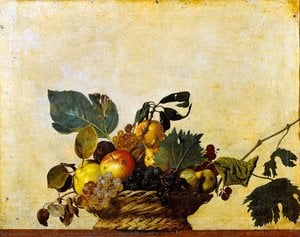
Biografia umelca
Život v tieni a svetle
Michelangelo Merisi da Caravaggio, meno rezonujúce s dramatickou intenzitou barokovej maľby, sa narodil v Miláne roku 1571, období plnom umeleckého rozkvetu a spoločenských otrasov. Jeho detstvo bolo poznačené stratou; mor postihol jeho rodné mesto, pričom si vyžiadal životy otca a starého otca, keď mal len šesť rokov. Vychovaný v relatívnej chudobe, mladý Michelangelo vo svojich formovacích rokoch získal hlboké povedomie o ľudskom utrpení a odolnosti – témy, ktoré neskôr ovládli jeho plátna. Svoju umeleckú prípravu začal v Miláne pod vedením Simonea Peterzana, bývalého žiaka Tiziana, absorbujúc základy renesančnej techniky, no už naznačujúc vzbuntovného ducha, ktorý mal čoskoro rozbiť konvenčné normy. Toto učeníctvo mu poskytlo pevný základ, no práve v Ríme, kam pricestoval okolo roku 1592, Caravaggio skutočne našiel svoj hlas, hoci nie bez počiatočných bojov a ťažkostí. Mesto, živé centrum umeleckej podpory a náboženského zanícenia, sa ukázalo lákavým aj neúprosným pre ambiciózneho mladého maliara.
Revolučná vízia: Technika a štýl
Caraggiov príchod do Ríma znamenal seismický posun v krajine talianskeho umenia. Odmietol prevládajúci manieristický štýl – charakterizovaný jeho umelou eleganciou a predĺženými formami – v prospech nekompromisného realizmu, ktorý šokoval a uchvátil publikum. Jeho najvýznamnejšou inováciou bolo majstrovské využitie chiaroscuro, dramatického kontrastu medzi svetlom a tmou, ktoré pozdvihol na novú úroveň expresívnej sily. Táto technika, často označovaná ako tenebrizmus, nebola len estetickou voľbou; bola to cesta k zvýšeniu emocionálneho dopadu, vtiahnutiu divákov do srdca scény a vnúteniu postáv hmatateľného pocitu prítomnosti. Vyhýbal sa idealizovaným zobrazeniam, namiesto toho obýval svoje plátna bežnými ľuďmi – často vybranými z ulíc Ríma – ako modelmi pre náboženské postavy. Tento radikálny prístup spochybnil tradičné predstavy o kráse a svätosti, čím posvätné učinil relatívnym a hlboko ľudským. Jeho kompozície boli často strohé a priame, zamerané na kľúčové momenty intenzívneho dramatu, či už išlo o brutálny realizmus „Zatknutia Krista“ alebo tiché zamyslenie v „Svätom Františkovi z Assisi v extáze“.
Kľúčové diela a trvalý vplyv
Počas svojej relatívne krátkej kariéry Caravaggio vytvoril rozsiahle dielo, ktoré dodnes rezonuje s publikom. Skoršie práce ako „Veštica“ (1594) demonštrujú jeho rastúci talent pre zachytávanie realistických detailov a psychologickej nuansy. „Večera v Emauzách“ (1601-1602), umiestnená v Národnej galérii v Londýne, exemplifikuje jeho majstrovstvo chiaroscuro a schopnosť odovzdať hlbokú emocionálnu hĺbku v biblickom príbehu. „Dávid s hlavou Goliáša“ (cca 1610) je obzvlášť strašidelná, často interpretovaná ako autoportrét odrážajúci vlastný trápený stav mysle Caravaggia. Jeho vplyv sa rozšíril ďaleko za hranice Talianska a inšpiroval generáciu umelcov známych ako Caravaggisti, alebo „tieňomaliari“, ktorí si osvojili jeho štýl po celej Európe. Medzi významných nasledovníkov patrí Peter Paul Rubens, Jusepe de Ribera a Gerrit van Honthorst, z ktorých každý prispôsobil Caravaggiove techniky svojim jedinečným umeleckým víziám.
Bujný život a trvalé dedičstvo
Caraggiov život bol rovnako dramatický a turbulentný ako jeho umenie. Nestály temperament a sklony k bitkám ho viedli k častým problémom so zákonom, vyvrcholili obvinením z vraždy v roku 1606, ktoré ho prinútilo utiecť z Ríma. Nasledujúce štyri roky strávil putovaním po Neapoli, Malte a Sicílii, pokračoval v maľovaní a zároveň zúfalo hľadal pápežské odpustenie. Napriek jeho úsiliu zostal vyvrhelom, prenasledovaný minulosťou a trápený osobnými konfliktmi. Zomrel v Porto Ercole, Taliansko, v roku 1610 za záhadných okolností – príčina jeho smrti zostáva predmetom debát, pričom sa teórie pohybujú od horúčky po otravu. Hoci bol jeho život skrátený, Caravaggiov umelecký odkaz pretrváva ako svedectvo o jeho revolučnej vízii a neochvejnom záväzku k realizmu. Spochybnil konvencie svojej doby, čím pripravil cestu k modernejšiemu prístupu k maľbe a zanechal nezmazateľnú stopu v priebehu západnej umeleckej histórie. Jeho dielo naďalej vzbudzuje úžas a podnecuje zamyslenie, pripomínajúc nám silu umenia osvetľovať najtemnejšie zákutia ľudskej skúsenosti.



 Náhľad v interiéri
 Prepnúť na tlač
 Odoslať ako digitálnu kartu
 Zdieľať
 Podrobnosti o dielo
 Príručka

 Stiahnuť obraz
 Podobné položky
 RTG skúška
 Prehliadanie diapozoje
 Q&A
Q&A Štatistiky
 Zobraziť viac






































 Možnosť skla je dostupná len pri rozmeroch pod 110 cm