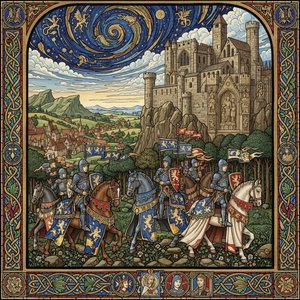
A Divine Narrative in Three Panels
In the heart of fourteenth-century Florence, a period defined by the delicate transition from the stylized elegance of the Gothic era to the burgeoning humanism of the Renaissance, Bernardo Daddi crafted a masterpiece of profound intimacy. This Triptych, completed in 1338, serves as a luminous window into the sacred life of the Virgin Mary. Through three meticulously hinged panels, Daddi guides the viewer on a spiritual journey, beginning with the tender innocence of Mary’s childhood under her mother's watchful gaze, moving through the celestial glory of her coronation by angels, and culminating in the poignant, earthly reality of the Nativity. The work is not merely a religious icon but a narrative tapestry where every figure, from the prominent saints to the ethereal angels, contributes to a larger story of divine grace unfolding within the human experience.
The composition is anchored by a breathtaking synthesis of tradition and innovation. While the structure adheres to the classical triptych format—a portable altarpiece designed for both devotion and display—the execution reveals Daddi’s unique ability to breathe life into the divine. The background, featuring rugged, distant mountains, provides a sense of depth and atmosphere that breaks away from the flat, gold-leafed voids of earlier Gothic traditions. This subtle introduction of landscape invites the eye to wander beyond the immediate sacred event, suggesting a world where the holy and the natural are inextricably linked.
Mastery of Technique and the Florentine Spirit
To behold this work is to witness the legacy of Giotto di Bondone through the refined lens of a master craftsman. Daddi, having honed his skills in the shadow of Giotto’s revolutionary naturalism, utilized the medium of tempera on panel to achieve an unparalleled clarity of color and form. The technique allows for a luminous quality, where light seems to emanate from within the figures themselves. Each brushstroke is purposeful, contributing to a sense of volume and weight that gives the holy figures a tangible, sculptural presence. This mastery of naturalism—the ability to depict the soft folds of drapery and the gentle expressions of maternal love—marks Dodeddi as a pivotal figure who bridged the gap between the symbolic and the real.
For the discerning collector or interior designer, this triptych offers more than just historical significance; it provides a profound emotional resonance. The interplay of light and shadow, combined with the vibrant, jewel-like pigments characteristic of the Florentine school, creates an atmosphere of quiet contemplation. Whether placed as a focal point in a grand library or integrated into a curated gallery space, the piece commands attention through its sophisticated balance of movement and stillness. It is a work that celebrates the beauty of detail while maintaining a cohesive, majestic presence, making it an incomparable choice for those seeking to infuse their surroundings with the timeless elegance of the Italian Quattrocento.
Otázky a odpovede
Ako si môžem pozrieť „Triptych“ od Bernardo Daddi ako prezentáciu?
Diaporama diela „Triptych“ si môžete pozrieť na stránke Diaporama daného diela.
Do ktorej obdobia tvorby Bernardo Daddi spadá dielo "Triptych"?
V rámci kariéry umelca Bernardo Daddi spadá dielo „Triptych“ do obdobia Early Renaissance. Táto etapa umožňuje porovnať ho s ostatnými prácami tohto umelca.
Umožňuje autorské právo k dielu „Triptych“ od Bernardo Daddi jeho reprodukovanie?
Originál diela „Triptych“ sa nachádza v múzeu Staatliche Museen zu Berlin a toto dielo je v verejnom vlastníctve – autorské práva vypršali.



 Zobraziť v interiéri
 Prepnúť na tlač
 Odoslať
 Zdieľať
 Podrobnosti
 Príručka

 Stiahnuť
 Podobné položky
 RTG skúška
 Prehliadanie diapo\]
 Štatistiky


 Prečítať si viac






































 Možnosť skla je dostupná len pri rozmeroch pod 110 cm