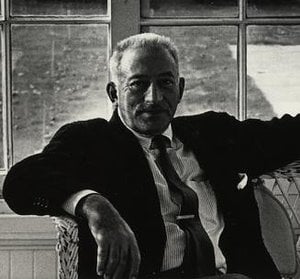
Biografia umelca
A Pioneer of Abstract Expressionism: The Life and Art of Adolph Gottlieb
Adolph Gottlieb, born in New York City in 1903, emerged as a pivotal figure in the burgeoning landscape of American Abstract Expressionism. His journey was one of constant exploration—a relentless pursuit to distill universal human experiences into a visual language that resonated with both ancient symbolism and modern anxieties. Growing up as the son of Jewish immigrants, Gottlieb’s early life instilled within him a sensitivity to cultural displacement and the search for meaning in a rapidly changing world, themes that would profoundly shape his artistic vision. He received foundational training at the Art Students League and Parsons The New School for Design, but it was his subsequent travels through Europe during the 1920s that truly ignited his aesthetic sensibilities. Immersing himself in the art and philosophies of Germany and France, he absorbed influences from Constructivism and Surrealism, laying the groundwork for his future innovations.
Early Influences and Artistic Formation
Gottlieb’s formative years were marked by exposure to European avant-garde movements—particularly Surrealism—which challenged traditional artistic conventions and championed dreamlike imagery and psychological exploration. The fascination with Freud's psychoanalytic theories profoundly impacted his understanding of the human psyche, informing his approach to representing inner states through abstract forms. His initial experiments with representational painting quickly yielded to a desire for greater expressive freedom, propelling him toward abstraction as a means of conveying emotion and communicating universal ideas. He honed his skills in drawing and etching, mastering techniques that would prove invaluable in developing his distinctive visual language.
The Founding of “The Ten” and Collaborative Exploration
A crucial step in Gottlieb’s artistic trajectory was the formation of “The Ten,” alongside fellow artists Mark Rothko, John D. Graham, Franz Kline, Barnett Newman, William Tucker, Lester Wertheimer, Robert Delaunay, Josef Albers, Philip Guston, and Helen Frankenthaler—a collective that established a distinctly American voice within the international art scene during the mid-1930s. This group actively debated artistic ideas and experimented with new approaches to abstraction, rejecting European stylistic trends in favor of a more primal and intuitive aesthetic. The influence of Surrealism remained palpable, encouraging artists to delve into subconscious imagery and confront anxieties about societal upheaval—a reflection of the turbulent political climate preceding World War II.
The Impact of Arizona and Symbolism
Between 1937 and 1938, Gottlieb undertook a transformative journey to Arizona, captivated by the stark beauty of the desert landscape and encountering the rich cultural traditions of Native American communities. This experience profoundly deepened his understanding of symbolism—particularly the iconography of ancient cultures—inspiring him to incorporate primal motifs into his paintings. He sought to capture not merely the visual appearance of the desert, but its emotional resonance—a sense of vastness, isolation, and spiritual power. The Arizona expedition served as a catalyst for Gottlieb’s artistic development, propelling him toward increasingly expressive abstraction while simultaneously grounding his work in tangible cultural references.
Pictographs, Burst Paintings, and Legacy
Gottlieb's most celebrated series, *Pictographs* (1940s), emerged from this period of intense experimentation. These paintings feature biomorphic shapes arranged within rectangular fields—resembling ancient hieroglyphs or tribal markings—representing a deliberate engagement with primal symbolism and universal archetypes. He drew inspiration from diverse sources—classical mythology, Amerindian art, African motifs—creating a compelling dialogue between modernity and ancient traditions. Alongside *Pictographs*, Gottlieb developed *Burst Paintings* in the 1950s—characterized by explosive bursts of color and energy—reflecting a more dynamic emotional expression. His work gained recognition for its innovative use of abstraction and its exploration of profound psychological themes, securing his place as one of the most influential figures in Abstract Expressionism. Adolph Gottlieb’s legacy extends beyond his individual paintings; he played a vital role in shaping the landscape of postwar American art, paving the way for future generations to explore abstraction, symbolism, and cultural influences. His commitment to exploring universal themes through a uniquely American lens cemented his place as one of the most significant abstract painters of the 20th century. He wasn’t merely creating aesthetically pleasing images; he was attempting to grapple with fundamental questions about human existence—questions that continue to resonate with audiences today. Adolph Gottlieb's work remains a powerful reminder of art’s capacity to transcend cultural boundaries and speak to the deepest aspects of the human spirit.



 Zobraziť v interiéri
 Objednať ručne maľovanú reprodukciu
 Odoslať
 Zdieľať
 Podrobnosti
 Príručka

 Stiahnuť
 Podobné položky
 RTG skúška
 Prehliadanie diapo\]
 Štatistiky


 Prečítať si viac






































 Možnosť skla je dostupná len pri rozmeroch pod 110 cm