
High Medieval artists, ranked
The most famous High Medieval artist is Джотто Ди Бондоне (1267–1337), known for Мадонна в Маэсти (Мадонна Оньисанти) and Последний суд (деталь 3) (Капелла Скровегни (Арена-капелла), Падуя). Next come Дуччо ди Буонинсенья, Чимабуэ, Чжао Мэнфу and Zhu Xi. This ranking of the 96 most famous High Medieval artists runs from Xu Daoning (born 970) to Huang Gongwang (born 1269), across 24 countries.
How this list is ranked. Artists whose works our catalogue files under High Medieval, in the order of our fame ranking of artists. Artists without a Wikidata identifier born after 1955 are left out until verified. The Wikipedia figure next to each name is the number of our 32 languages in which Wikipedia has an article on the artist.
The essentials
Ranked, with their masterpieces
2of 96
Итальянец Born in Сиена Сиенская школа, Треченто, готика Wikipedia in 31/32 languages
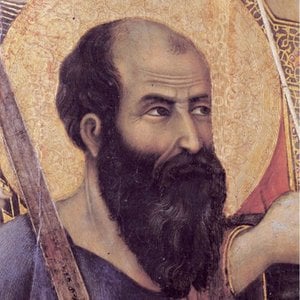
3of 96
Итальянский Born in Флоренция Византийский и Ренессанс Wikipedia in 28/32 languages

4of 96
Китайская Born in Хучжоу Живопись литерати; Пейзажная живопись Wikipedia in 18/32 languages

5of 96
Chinese Wikipedia in 31/32 languages

Zhu Xi was a Chinese philosopher, historian, politician, poet, and calligrapher of the Southern Song dynasty. Born in Fujian, he was a leading figure in the development of Neo-Confucianism, seeking to integrate moral self-cultivation, classical interpretation, ritual practice, and cosmological theory into a coherent framework.
6of 96
Chinese Born in Hangzhou Ma-Xia school, Southern Song dynasty Wikipedia in 19/32 languages

In works like Scholar Viewing a Waterfall, the ink wash is layered with precision, using subtle tonal gradations to build depth and atmosphere without relying on heavy outlines. Ma Yuan was born into a family where painting was a professional necessity.
7of 96
Китайская Born in Яньчэн Пейзажная живопись династии Северная Сун Wikipedia in 16/32 languages

8of 96
Chinese Born in Kaifeng Song Dynasty; Slender Gold calligraphy Wikipedia in 19/32 languages

The historical significance of Emperor Huizong lies in his dual identity as both a cultural architect and a fallen sovereign.
9of 96
Chinese Born in Sichuan Chan painting Wikipedia in 14/32 languages

Natural Simplicity: His legendary Six Persimmons remains perhaps the most iconic example of Chan painting, where the weight, texture, and subtle translucency of the fruit are rendered with an almost miraculous economy of line.
10of 96
Француз Born in Италия Средневековая архитектура/дизайн Wikipedia in 17/32 languages

11of 96
Итальянец Born in Лукка Византийский стиль Wikipedia in 14/32 languages

12of 96
Spanish Romanesque Sculpture

His mastery of limestone carving was unparalleled, particularly through his use of a technique known as trabajo vivo. This method involved layering stone slabs to create textured surfaces that mimicked the appearance of flesh and fabric, lending a sense of movement and vitality to the static medium.
14of 96
Китайская Born in Цзянсу Искусство династии Сун Wikipedia in 17/32 languages

15of 96
Italian Born in Siena Gothic & Renaissance

By blending the verticality and ornamentation of the Gothic style with a new, more human-centric focus on narrative clarity and structural harmony, he helped pave the way for the Renaissance masters who would follow.
16of 96
Born in Tongcheng Song Dynasty painting Wikipedia in 9/32 languages

Li Gonglin’s painting style is often described as a deliberate revival of earlier traditions, particularly those of the Five Dynasties period (907-960). Instead, he turned to the works of artists like Zhan Ziqian, known for his precise depictions of horses, and Fan Kuan, celebrated for his monumental landscapes. Unlike many artists who enjoyed patronage from the imperial court or wealthy collectors, Li Gonglin’s path was one of scholarly independence and deliberate stylistic choices rooted in a deep reverence for earlier masters.
17of 96
Китайский Born in Баодин Техника живописи «без кости» Wikipedia in 7/32 languages

Чтобы глубже погрузиться в искусство Ма Линя и контекст китайской придворной живописи династии Сун, рекомендуем ознакомиться со следующими материалами: Искусство государства Ильханидов — для понимания более широкого художественного ландшафта той эпохи;. «Всадники Чжао Мэнфу, ведущие белого коня» — знакомство с еще одним выдающимся мастером того же периода;. Горный пейзаж Тэнсё Сюбуна — чтобы оценить влияние китайского искусства на японских живописцев.
18of 96
Korean Confucianism

Rooted in Confucian ethics—emphasizing filial piety, righteousness, benevolence, and ritual propriety—his poetry reflects a deep engagement with moral dilemmas and explores the human condition through the lens of ethical contemplation. This dual commitment to tradition and creativity distinguishes Yi Kyu-Bo as a singular voice in Korean literary history—a figure who simultaneously honored the past while forging new paths toward artistic excellence.
19of 96
French Romanesque Sculpture

Born sometime around 1120, Gislebertus lived through an era where art served as the primary language of the faithful. While biographical details remain scarce, scholars believe he was trained at Cluny Abbey, arguably the epicenter of European monastic art and intellectual life at the time. Cluniac Influence: He carried the high intellectual and spiritual standards of Cluny Abbey into the public sphere of cathedral architecture.
20of 96
Muslim Born in Jazirat Ibn Omar Islamic Golden Age Engineering

He represents a pivotal figure in the Golden Age of Islam, a period characterized by intellectual flourishing and groundbreaking innovation across diverse fields.
21of 96
Italian Born in Pisa Renaissance style Wikipedia in 10/32 languages

The Crucifix of San Raniero demonstrates this perfectly, showcasing the artist’s ability to convey both physical pain and spiritual anguish with astonishing realism. Italian Realism: He gradually introduced elements of Italian realism, evident in his attention to anatomical detail and emotional expression. Notably, Giunta’s depiction of Christ as a suffering figure paved the way for Cimabue's own groundbreaking crucifixes, which further solidified this new artistic direction.
22of 96
Song dynasty Born in Hangzhou Wikipedia in 16/32 languages

The surviving works of Xia Gui include various genres, such as small album leaves and hand scrolls. Notable examples of his work include: His influence extended far beyond his own era, impacting the Japanese master Sesshū Tōyō, who was influenced by Xia's idiom and made studies of his landscape fans. Xia Gui was a Chinese landscape painter of the Song dynasty, most likely born in Hangzhou, People's Republic of China.
24of 96
Song dynasty Born in Meng Prefecture Academy-style landscape Wikipedia in 15/32 languages

The brush moves with a sharp, decisive energy. Through this precision, his approach became the foundation for what is recognized as the academy-style landscape of the Southern Song. Southern Song painters Xia Gui and Ma Yuan studied his compositions and techniques, absorbing his approach to space and form.
Where to see The physical remnants of Li Tang's brushwork reside primarily within major institutional collections.
25of 96
Chinese Born in Wuxing District Fur and feathers painting; Song realism blended with archaic Tang style Wikipedia in 12/32 languages

The historical significance of Qian Xuan lies in his ability to use art as a vessel for memory and identity.
26of 96
English Medieval Art

His contributions can be summarized through several enduring legacies: The Chronica Majora: A monumental historical achievement that remains a primary source for understanding mid-13th century Europe.
27of 96
Chinese Born in Jingdezhen Imperial porcelain

While archaeological evidence confirms that pottery production existed in the region as early as the sixth century CE, it was during the Yuan Dynasty (1271–1368) that the kilns truly ascended to global prominence.
28of 96
Wikipedia in 16/32 languages

Herrad of Landsberg, a woman of noble Alsatian lineage, emerged not merely as a religious leader but as one of the most significant polymaths of the Middle Ages. The historical significance of Herrad of Landsberg extends far beyond the cloister walls of Hohenburg.
29of 96
Japanese Born in Kyoto Waka poetry

His relationship with the imperial court, particularly his complex bond with the Retired Emperor Go-Toba, was a saga of high artistic commissions followed by the sting of political banishment.
30of 96
Byzantine Born in standardized city name Manuscript illumination

Creating such a masterpiece demanded immense patience and skill. Gold leaf, painstakingly hammered into incredibly thin sheets, was then carefully adhered to the surface using a special adhesive. Johannes Koulix’s ‘Epistle to the Hebrews’ leaf stands as a poignant reminder of the artistic achievements of the Byzantine era.
31of 96
Czech Medieval Coin Art

In the turbulent tapestry of medieval Europe, few figures loom as large or as formidable as Bretislav I, a ruler whose very name evokes the strength and strategic brilliance of the Přemyslid dynasty.
32of 96
French Gothic architecture

He clearly drew upon the established traditions of medieval architecture, particularly the Cistercian style prevalent in northern France. However, he also incorporated elements from other sources: the writings of classical mathematicians like Euclid, the techniques employed by medieval workshops, and perhaps even contemporary innovations in engineering.
33of 96
Japanese Born in Kyoto Waka poetry

His most famous poem, included in the renowned Hyakunin Isshu anthology, vividly depicts mist rising over dew-kissed pines on an autumn evening—a motif that resonated deeply with later artists and poets. His personal collection, Jakuren Hoshi Shu, further reveals the breadth of his poetic vision and the depth of his spiritual journey. Though Jakuren’s life was tragically cut short in 1202—before the completion of the Shin Kokin Wakashū—his legacy endured.
34of 96
Chinese Empire Born in Zhucheng shan shui Wikipedia in 15/32 languages

Zhang Zeduan’s technical precision helped define the early development of shan shui, the foundational Chinese landscape art style. By employing these precise boundaries, he captured the complexity of the Song dynasty's social and commercial infrastructure. They show how subsequent generations of painters from the Ming and Qing dynasties interpreted his specific visual language.
Where to see Tracing the physical presence of Zhang Zeduan's output requires looking toward two major institutions in East Asia.
35of 96
Chinese Born in Kaifeng Song Dynasty painting

He wasn't a prolific artist leaving behind an extensive body of work, but those pieces that have survived are testaments to his exceptional skill and sensitivity. His subjects were often drawn from domestic life – children at play, women engaged in scholarly pursuits or gentle pastimes. Although Su Hanchen’s surviving oeuvre is relatively small, his influence on subsequent generations of Chinese painters is undeniable.
36of 96
Japanese Born in Kyoto

The essence of Saigyō’s work lies in his mastery of waka, a classical form of Japanese poetry characterized by its delicate emotional resonance and rhythmic elegance.
37of 96
Italian Born in Florence Gothic Art

The Coronation of the Virgin: A breathtaking mosaic situated over the interior door of the Florence Cathedral, dated to approximately 1307, which stands as a testament to his ability to marry spiritual grandeur with technical precision.
38of 96
Yuan dynasty Born in Changzhou Literati painters (wenrenhua) Wikipedia in 12/32 languages

Rather than adhering to the formal structures of his contemporaries, he sought a more personal expression of the natural world. This technical mastery was not merely intuitive; he sought to codify his understanding of the medium in his treatise, Secrets of Landscape Painting (寫山水訣, Xiě Shānshuǐ Jué). His approach moved away from the rigid conventions of the imperial academies, favoring instead a personal, scholarly expression.
40of 96
Italian Medieval Italian art

This work, depicting Christ alongside the Virgin, Saint Peter, Saint Paul, and Saint John the Evangelist, represents a significant departure from his earlier geometric roots, embracing a style that is reminiscent of the great Cimabue. Madonna and Child (Art Institute of Chicago): An early work that demonstrates his foundational skill in capturing the tender, human connection within divine subjects. By integrating the geometric discipline of the Master of the Bigallo Crucifix with the more expressive, proto-Renaissance techniques seen in the works of Cimabue, Meliore helped pave the way for the dramatic innovations that would later define Florentine art.
41of 96
Chinese Born in Huzhou Bamboo painting, Calligraphy Wikipedia in 15/32 languages

Her style inspired countless subsequent painters, particularly those interested in bamboo painting.
42of 96
French Born in Fontainebleau

The development of institutions like the Musée Baron Gérard and the Musée Maurice Denis, coupled with the emergence of talented artists such as Labrèche de Carpentras, Chagall, Pissarro, Monet, and Bouguereau, demonstrates the enduring legacy of this complex and often misunderstood king.
43of 96
Italian Born in Florence Italo-Byzantine Art Wikipedia in 12/32 languages

He was a bridge-builder, an artist who took the established language of the Byzantine Empire and began to translate it into a local, Florentine dialect.
44of 96
Japanese Born in Kyoto Heian period art

Examples of his work have been designated by the Japanese government as “National Treasures,” “Important Art Objects,” and “Important Cultural Properties”—testaments to their artistic merit and historical significance.
45of 96
Chinese Born in Hangzhou Song Dynasty Science & Philosophy

Born in the vibrant landscape of Hangzhou around 1031, the historical figure was a true polymath, often likened to a Chinese Leonardo da Vinci. The foundations of this intellectual and creative prowess were laid in the fertile soil of the Song Dynasty’s golden age.
47of 96
Британка Born in Силвеш Ботаническая иллюстрация

(посмотреть на AllPaintingsStore). Для более глубокого понимания жизни и творчества Ибн Аммара обратитесь к его биографии на wikipedia.org. (читать далее). Посетите Museo Hospital de la Caridad (Севилья, Испания) — музей, представляющий впечатляющую коллекцию произведений искусства и артефактов.
49of 96
American Born in Kyoto Hip Hop/Electronic

The 1090 Club project represents perhaps the most significant achievement in 1090 Blokk Boyz’s career.
50of 96
Norwegian Born in Oslo Medieval Kingship

Neither Magnus Sigurdsson nor Sigurd Haraldsson achieved absolute dominance during their reigns.
51of 96
Japanese Born in Kyoto Waka poetry

Kamo no Shigeyasu's impact extends beyond his specific poetic achievements.
53of 96
Born in Dhandhuka Wikipedia in 10/32 languages

Hemachandra was a prolific scholar and monk of the Śvetāmbara school of Jainism. Born in Dhandhuka, India, he was a man of immense intellect, earning the title kalikālasarvajña, meaning "the knower of all knowledge in his times." His vast contributions spanned numerous disciplines, including mathematics, history, philosophy, poetry, and grammar.
Key works · The 100 most famous works
54of 96
Polish Born in Krakow Medieval Art

In the turbulent landscape of twelfth-century Poland, where the echoes of the Piast dynasty's greatness still resonated, Bolesław IV the Curly emerged not merely as a ruler, but as a transformative force. Following the untimely passing of his elder brothers, Leszek and Casimir, Bolesław ascended to the dukedom of Masovia, stepping into a political arena fraught with tension and the looming shadow of his half-brother, Władysław II the Exile.
55of 96
Japanese Born in Zama Heian calligraphy & poetry

Koreyuki flourished during a period marked by political upheaval and shifting power dynamics, yet his art reflects a deliberate retreat into established aesthetic values rather than engagement with these turbulent times. These were not simply copies; Koreyuki imbued each character with a subtle energy, demonstrating mastery over brushstroke variation and spatial composition.
56of 96
German Born in Hildesheim Medieval Art

The legacy of Adelhog can be summarized through several key contributions to the medieval landscape: Integration of Iconography: He successfully merged religious symbolism, such as the lily and the cross, with functional objects like coinage. Cultural Connectivity: Through his education in Toulouse, he acted as a conduit for French artistic influences within the German ecclesiastical tradition. This international perspective allowed him to bring a sense of continental elegance back to the German territories, bridging the gap between local tradition and the burgeoning artistic movements of the high Middle Ages.
57of 96
Khitan Born in Beijing Literati painting, Confucian tradition

Chucai’s artistic style is most accurately described as “literati painting,” a genre deeply rooted in Chinese tradition. The use of gold leaf – particularly evident in works like “Landscape with Tower” – added an element of luxury and spiritual significance, elevating the paintings beyond mere representations of the world to symbolic expressions of higher ideals. Recognizing his intelligence, diplomatic skills, and understanding of both Chinese and Khitan cultures, the young Mongol leader brought him into his inner circle in 1218.
58of 96
Portuguese Born in Lisbon Religious Art

This image symbolizes his deep love for Christ and his role as a protector of children. Paintings often portray him as a humble Franciscan friar, radiating an aura of peace and devotion. He was canonized less than a year after his death in 1231 – an astonishingly swift recognition of his sanctity by the Catholic Church.
59of 96
Chinese Born in Lanxi Zen Buddhism, Calligraphy

The seated statue of Lanxi Daolong at Kenchō-ji, designated an Important Cultural Property, serves as a tangible reminder of his presence and influence.
60of 96
Italian Proto-Renaissance

Operating primarily around Florence during a period of immense artistic ferment, this anonymous artist stands as a pivotal figure bridging the late Gothic and early Renaissance, yet stubbornly resisting easy categorization. Despite remaining anonymous, the Master of the Bigallo’s contribution to Italian art is undeniable.
61of 96
Italian Romanesque

What sets the Master of Cabestany apart is not merely the quality of his work—though that is undeniably exceptional—but also its surprisingly broad geographic distribution. Unlike many artists of the period who were tied to a specific location or patron, the Master appears to have been remarkably mobile, leading a workshop that traversed considerable distances. His work reveals clear influences from earlier French Romanesque centers, such as Saint-Sernin in Toulouse, and the innovations coming out of Tuscany—particularly those of Master Guilielmus in Pisa.
62of 96
Japanese Born in Kyoto Yamato-e & Emakimono

His era was one of profound transition, where the rugged energy of the Kamakura period met the refined aesthetic sensibilities of the Yamato-e tradition. His ability to blend the sacred with the beautiful, and the historical with the poetic, set a standard for the emakimono tradition that few could ever hope to reach.
63of 96
Chinese Born in Linhai Zen Buddhism, Gozan Bungaku

Issan Ichinei, born Hu in 1247 in Linhai, Zhejiang province, China, stands as a pivotal figure in the transmission of Zen Buddhism from its native land to Japan.
64of 96
Chinese Born in Yuyang Yuan Dynasty Poetry & Calligraphy

Xianyu Shu, also known as Boji (1256-1301), stands as a compelling figure bridging the worlds of poetry, calligraphy, connoisseurship, and official life during the Yuan Dynasty.
65of 96
Born in Похлам Romanesque

This evolution is evident in masterpieces such as the Deposition from the Cross, where dramatic relief carving and poignant religious scenes showcase a burgeoning Gothic influence. The historical significance of Benedetto Antelami lies in his role as a foundational pillar of Italian sculpture. Whether carving the intricate Histories of the Virgin or the symbolic History of Borgo, Antelami utilized a multi-layered arrangement to guide the viewer’s eye through sacred timelines, turning architectural surfaces into epic tapestries of stone.
66of 96
Japanese Born in Kyoto Calligraphy

Notable Artwork: Heart Sutra of the Divine Incantation of Amoghapasa.
67of 96
Chinese Born in Leying Zen Calligraphy, Wanshi-ha Poetry

Zen Calligraphy Master: He is widely considered to be the most distinguished Zen calligrapher of his time, elevating calligraphy beyond mere aesthetics into a form of spiritual expression. Wanshi-ha Poetry Movement: Qingmao Gulin was an integral part of the Wanshi-ha poetry movement, known for its unique writing style influenced by the Sōtō monk-poet Hongzhi Zhengjue. He not only produced stunning works of art but also contributed significantly to the intellectual and artistic landscape of his time through his involvement in the Wanshi-ha poetry movement.
68of 96
German

This impulse leads to the creation of Scivias, a work completed around 1151 or 1152. The themes of spiritual combat and the triumph of virtue are further explored in The Book of the Rewards of Life. Her compositions move through the air with a specific, ornamental neume notation, a late German style that preserves the reverence for the Virgin Mary through its very structure.
69of 96
Chinese Born in Beijing Chan Buddhist Painting

The Zen monks traveling between China and Japan became the primary conduits for his vision, carrying his ink washes into the heart of Japanese aesthetic development.
70of 96
Italian Roman School

However, scholars believe he was born in Rome around 1255, likely inheriting a family tradition of craftsmanship—a common characteristic among artists active during this time. The Basilica of St Mary Major mosaic project was Rusoti’s first major commission and it cemented him as a prominent artist of his time. His contributions include: The Synthesis of Styles: Merging Byzantine formality with nascent Italian naturalism.
72of 96
Italian Born in Siena International Gothic

By 1303, municipal records place him actively engaged in significant civic commissions, most notably within the Town Hall of San Gimignano.
73of 96
Chinese Born in Meishan Song Dynasty calligraphy and poetry

The essence of Su Dongpo lies in the seamless integration of his intellectual depth with his aesthetic output.
74of 96
Chinese Born in Changsha Northern Song Dynasty Wikipedia in 7/32 languages

In the vibrant artistic landscape of the Northern Song Dynasty, few names resonate with as much specialized brilliance as Yi Yuanji. However, a pivotal moment of creative evolution occurred when he encountered the groundbreaking works of Zhao Chang. The zenith of Yi Yuanji's career was marked by his summons to the imperial court.
75of 96
Flemish [Gothic art](https://www.britannica.com/art/Gothic-art)[Romanesque art](https://www.britannica.com/art/Romanesque-art)[Mosan school](https://www.britannica.com/topic/Mosan-school)

Around 1205, Nicolas turned his attention to Cologne Cathedral, undertaking the creation of the Shrine of the Three Kings—a reliquary intended to house the bones of the biblical Magi. The Shrine of the Three Kings is remarkable for its expressive power and dynamic composition. Nicolas of Verdun’s impact on medieval art extends far beyond his individual creations.
76of 96
Chinese Born in Ханчжоу Zen Buddhist ink art and calligraphy

His posthumous title, Bukko Kokushi, or the "National Preceptor of the Buddha's Radiance," serves as a testament to the immense respect and spiritual authority he commanded.
78of 96
Italian Born in Novara Late Gothic to Renaissance Art
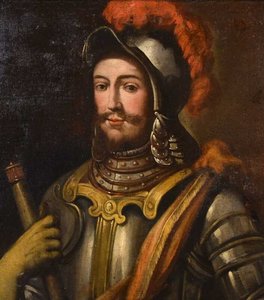
The works surviving from the Lombard Master’s hand serve as windows into a world where theology and visual beauty were inseparable.
79of 96
Chinese Born in Hangzhou Southern Song Dynasty Wikipedia in 7/32 languages

Furthermore, Liu was influenced by other artists like Gion Nankai, a prominent Nanga painter who brought a more expressive and emotionally charged approach to landscape painting.
80of 96
Born in Roda de Isábena Wikipedia in 7/32 languages

The name of the person who painted the walls of Sant Climent remains lost to time, leaving only the title of the Master of Taüll to mark their presence. The focus remained on the central figure, a Christ in Majesty, seated upon a throne and surrounded by the symbols of the four Evangelists.
81of 96
Song dynasty Born in Yanting County Scholar's painting (shi ren hua) Wikipedia in 10/32 languages

The significance of Wen Tong lies in his rejection of the professionalized, commercialized art market of his era.
82of 96
Chinese Blue-green landscape Wikipedia in 10/32 languages

Wang Ximeng was a Chinese painter active during the Northern Song dynasty. A remarkable prodigy, he was a student at the imperial court's school of paintings. His talent was recognized by Emperor Huizong of Song, who saw his potential and personally taught him.
83of 96
Japanese Born in Kyoto Nise-e, Yamato-e, Kamakura period Wikipedia in 8/32 languages

In his approach to painting, Nobuzane utilized a technique that favored clarity and psychological depth over mere decoration. To capture the soul of his subjects, he used a more economical method for the face, employing sketchy, sparse lines to evoke individual features and personality. Beyond the poetry sets, several other works are attributed to his hand or influenced by his direction: Portrait of Sugawara no Michizane in Formal Attire: A study in the dignity of courtly dress.
85of 96
French High Gothic Wikipedia in 10/32 languages

From there, his path led toward the Holy Roman Empire, possibly reaching Metz. By around 1230, he was working at Mainz Cathedral. This focus on the individual is a hallmark of his hand, seen also in the founder figures of Meissen Cathedral and the tomb slab of Hermann von Hagen in Merseburg Cathedral.
Where to see Tracing the physical remains of his hand requires traveling across several locations.
86of 96
Chinese Born in Xinzheng Tribal Art Wikipedia in 9/32 languages

However, these symbols transcend mere decoration; they serve as vehicles for conveying spiritual truths—a hallmark of Daoist art alongside Buddhist principles. Jie's meticulous technique—characterized by subtle gradations of color and masterful brushwork—elevates his landscapes to a realm of sublime beauty. Pulleyblank and Alexander Vovin arguing for a profound connection between Jie’s name ("jie") and Proto-Yeniseian (qeˀt/s), “stone.” This hypothesis posits that the root qeˀt/s underlies the ethnonym itself—a daring proposition that suggests Jie's art reflects an awareness of linguistic structures predating Chinese civilization.
87of 96
Born in Siena Wikipedia in 8/32 languages

The evolution of Dietisalvi's style is visible through his surviving works, moving toward a greater similarity with the work of Giunta Pisano and Cimabue, as well as the freer strokes of Guido da Siena. His technique showed a movement toward a more substantial depiction of bodies and a greater attention to color.
88of 96
Italian Born in Arezzo Byzantine influence Wikipedia in 8/32 languages

Margarito d’Arezzo, a name whispered through the annals of 13th-century Italian painting, remains an elusive figure despite leaving behind a surprisingly substantial body of work. Unlike many artists of his era, Margarito consistently signed his creations, offering a rare personal connection across the centuries. His work was largely forgotten until its rediscovery by Giorgio Vasari in the 16th century.
89of 96
Chinese Landscapes Wikipedia in 9/32 languages

Gao Kegong remains a significant figure for anyone studying the shifting aesthetics of the Yuan dynasty. His technical foundation was built upon the heavy influence of Mi Fu and Mi Youren. The stylistic influence of Dong Yuan and Ju Ran.
90of 96
Chinese Born in Fengyang County Northern Song Dynasty painting Wikipedia in 8/32 languages

Born around 1050 CE in the Anhui Province, Cui Bai was far more than a mere chronicler of nature; he was an artist who masterfully synthesized meticulous observation with profound emotional resonance. His journey eventually led him to the imperial capital of Kaifeng, where he sought to align his talents with the highest e
91of 96
Song dynasty Born in Kaifeng Wikipedia in 7/32 languages

Su Hanchen lived during the Song dynasty, a period of significant change in China. Born in Kaifeng, he spent much of his life in Zhejiang. His talent was recognized early by the imperial court, where he served as a Painter-in-Attendance for Emperor Huizong.
92of 96
Chinese Born in Xi'an Northern Song Dynasty Wikipedia in 7/32 languages

Daoning’s artistic journey was profoundly shaped by Li Cheng (李成, 919–967), one of the most celebrated landscape painters of the Mid-Song period. Daoning deeply admired Li Cheng's masterful use of atmospheric perspective – the subtle gradations of color and tone that create a sense of depth and distance – and meticulously emulated his techniques. His early works, such as “ Snow-covered Mountains ” (雪山), demonstrate this clear influence; the composition is characterized by broad washes of ink, suggesting vast distances and an ethereal quality.
93of 96
Chinese Blue-and-green landscape painting Wikipedia in 6/32 languages

Zhao Boju’s brushwork was defined by a meticulous precision that bridged the gap between different eras of Chinese tradition. Rather than relying solely on color, he integrated ink wash techniques into this established Tang dynasty tradition.
94of 96
Japanese Born in Kyoto nise-e (likeness picture) portraits Wikipedia in 7/32 languages

His son, Nobuzane, takes up the mantle, ensuring that the specific visual language Takanobu developed continues to influence the courtly and portrait traditions.
95of 96
Born in China Tang dynasty style Wikipedia in 6/32 languages

Ren Renfa was an expert of irrigation works, artist, and a government official of the Yuan dynasty. Born in Qinglong Town, Songjiang, he also served as a hydrological engineer, where his work included dredging an area in what is now Beijing to improve the water supply and leading a team to build embankments after the Yellow River burst its banks.
96of 96
Wikipedia in 7/32 languages

Under his direction, the Four Heavenly Guardians and the Six Patriarchs of Hossō take shape.
The paintings behind the names
Through time
In figures
| People's Republic of China | 15 |
|---|---|
| Japan | 13 |
| Italy | 11 |
| China | 11 |
| Италия | 9 |
| Китай | 5 |
| France | 3 |
| Song dynasty | 3 |
| 10th century | 1 |
|---|---|
| 11th century | 24 |
| 12th century | 31 |
| 13th century | 39 |
All of them, in order
 Джотто Ди Бондоне1267–1337Дуччо ди БуонинсеньяИтальянец · 1255–1319ЧимабуэИтальянский · 1240–1302Чжао МэнфуКитайская · 1254–1322Zhu XiChinese · 1130–1200Ma YuanChinese · 1160–1225Guo XiКитайская · 1020–1090Emperor Huizong of SongChinese · 1082–1135MuqiChinese · 1210–1269Гвидо Да СиенаФранцуз · 1230–1290Бонавентура БерлингьериИтальянец · 1210–1287Master MateoSpanish · 1161–1217
 Джованни ПизаноИтальянец · 1248–1318Ми ФэйКитайская · 1051–1107Lorenzo MaitaniItalian · 1255–1330Li Gonglin1049–1106Ма ЛиньКитайский · 1180–1256Yi Kyu-BoKorean · 1168–1241GislebertusFrench · 1120–1135Badīʿ Az-Zaman Abu L-ʿIzz Ibn IsmāʿĪl Ibn Ar-Razāz Al-JazarīMuslim · 1136–1206Giunta PisanoItalian · 1190–1260Xia GuiSong dynasty · 1195–1224
 Никола ПизаноИтальянец · 1230–1284Li TangSong dynasty · 1050–1130Qian XuanChinese · 1235–1305Matthew ParisEnglish · 1200–1259Jingdezhen Ceramic KilnChinese · born 1004Herrad of Landsberg1130–1196Fujiwara No Teika, Fujiwara No SadaieJapanese · 1162–1241Joannes KoulixByzantine · born 1101Břetislav ICzech · 1002–1055Villard De HonnecourtFrench · 1200–1266Fujiwara No SadanagaJapanese · 1139–1202Zhang ZeduanChinese Empire · 1085–1145Sū HànchénChinese · 1094–1172Saigyō HōshiJapanese · 1118–1190Gaddo GaddiItalian · 1240–1312Huang GongwangYuan dynasty · 1269–1354
 Рай КуниюкиЯпонский · 1219–1298Meliore Of JacopoItalian · 1255–1285Guan DaoshengChinese · 1262–1319Philippe le BelFrench · 1268–1314Coppo di MarcovaldoItalian · 1225–1276Fujiwara No Tadaie(Teika)Japanese · 1033–1091Kuo, RiverChinese · 1031–1095
 Арнольфо Ди КамбиоКитайский · 1245–1310Мухаммад Ибн АммарБританка · 1031–1086
 Zheng Yuan1056–1093Sakyō No Daibu AkisukeAmerican · 1090–1155Magnus Sigurdsson Or Sigurd HaraldssonNorwegian · 1115–1155Kamo No ShigeyasuJapanese · 1119–1191
 Fujiwara no TameyoriJapanese · 1128–1201Hemachandra1088–1172Bolesław Iv The CurlyPolish · 1138–1173Fujiwara No KoreyukiJapanese · 1139–1175AdelhogGerman · 1170–1190Urtu SaqaltuKhitan · 1190–1244Fernando Martins De BulhõesPortuguese · 1195–1231Lanxi DaolongChinese · 1213–1278Master Of BigalloItalian · born 1218Master Of CabestanyItalian · 1130–1180Hōgen En’IJapanese · 1240–1300Issan IchineiChinese · 1247–1317Xianyu ShuChinese · 1256–1301Бенедетто Антелами1150–1230Saionji KinhiraJapanese · 1264–1315Qingmao GulinChinese · 1262–1329Hildegard von BingenGerman · 1098–1179FachangChinese · 1210–1269Filippo RusutiItalian · 1255–1325
 Тоба СёдзоFrench · 1053–1140Memmo di FilippuccioItalian · 1263–1326Su DongpoChinese · 1037–1101Yi YuanjiChinese · 1000–1064Nicolas Of VerdunFlemish · 1130–1205Усюэ ЦзуюаньChinese · 1226–1286
 Buonamico Buffalmacco1262–1340Lombard MasterItalian · 1096–1160Liu SongnianChinese · 1174–1224Master of Taüll1100–1199Wen TongSong dynasty · 1018–1079Wang XiChinese · 1096–1119Fujiwara NobuzaneJapanese · 1176–1266
 Пьетро КаваллиниИтальянец · 1240–1330Naumburg MasterFrench · 1200–1300Li JieChinese · 1035–1110Dietisalvi di Speme1201–1291Margaritone d'ArezzoItalian · 1240–1290Gao KegongChinese · 1248–1310Cui BaiChinese · 1000–1074Su HanchenSong dynasty · 1101–1161Xu DaoningChinese · 970–1052Zhao BojuChinese · 1120–1182Fujiwara no TakanobuJapanese · 1142–1205Ren Renfa1254–1327Kōkei
Your questions, answered
First place goes to Джотто Ди Бондоне (#1); Дуччо ди Буонинсенья (#2) and Чимабуэ (#3) complete the podium.
Джотто Ди Бондоне (#1), Дуччо ди Буонинсенья (#2), Чимабуэ (#3), Чжао Мэнфу (#4) and Zhu Xi (#5).
Kyoto: 12 of the artists in this list were born there.
The highest-ranked living artists in this list are Jingdezhen Ceramic Kiln (#27), Joannes Koulix (#30) and Master Of Bigallo (#60).
The museums holding the most key works of this list are Метрополитен-музей (14), Кливлендский музей искусств (9) and The Palace Museum (9).
The highest-ranked artists born in People's Republic of China are Ma Yuan (#6), Emperor Huizong of Song (#8), Muqi (#9), Li Gonglin (#16) and Xia Gui (#22).
Most artists in this list were born in the 13th century (39 of 96), between 970 and 1269 overall.
People's Republic of China: 15 of the 96 artists in this list were born there, then Japan (13) and Italy (11).
“His technique was built on a foundation of decisive, rhythmic brushwork.” — from our biography of Ma Yuan (#6).
The women of this list (3): Herrad of Landsberg (#28), Guan Daosheng (#41) and Hildegard von Bingen (#68).
The highest-ranked artists born in Japan are Fujiwara No Teika, Fujiwara No Sadaie (#29), Fujiwara No Sadanaga (#33), Saigyō Hōshi (#36), Fujiwara No Tadaie(Teika) (#44) and Sakyō No Daibu Akisuke (#49).
Our catalogue holds 1,429 works by these artists. Each one can be ordered as a hand-painted oil reproduction or a print.
Keep reading
Other movements
 Famous Baroque artistsРембрандт ван Рейн · Рембрандт
 Famous Contemporary Realist artistsСборецы · Жан-Франсуа Милле
 Famous Impressionist artistsЗвёздная ночь (Нью-Йорк, MoMA) · Винсент Ван Гог
 Famous Romanticist artistsСатурн пожирающий своего сына · Франсиско Гойя
 Famous Neoclassicist artistsСмерть Марата · Жак-Луи Давид
 Famous Realist artistsПроисхождение мира · Гюстав Курбе
 Famous Renaissance artistsМона Лиза (Джоконда) · Леонардо Да Винчи
 Famous Dutch Golden Age artistsДевушка с жемчужной серёжкой · Ян Вермеер
 Famous Expressionist artistsКомпозиция VII · Василий Васильевич Кандинский
 Famous Rococo artistsОтплытие на Кифере · Антуан Ватто
Other periods
 Famous Early Medieval artistsSnowy River · Wang Wei
 Famous Late Medieval artistsБлаговещение и два святых · Симоне Мартини
 Famous Renaissance artistsСотворение Адама · Микеланджело
 Famous Early Modern artistsПризвание святого Матфея · Караваджо
 Famous 19th Century artistsВодяные лилии (или Нимфеи) · Клод Моне
 Famous Modern artistsГерника · Пабло Пикассо
 Famous Contemporary artistsWind Sculpture III (one in a series of nine) · Yinka Shonibare
More rankings


