Печать (жикле) или холст музейного качества с быстрыми сроками изготовления и широким выбором вариантов отделки. ( Купить картину ручной работы Купить изображение)





























Выберите один из наших стандартных размеров, соответствующих оригинальным пропорциям произведения искусства.

Вы можете указать свои собственные размеры, чтобы репродукция идеально подошла под конкретную раму или пространство. Если выбранный вами размер не будет соответствовать пропорциям оригинала, мы либо обрежем произведение, либо дополним изображение зеркальным отражением краев или однотонной заливкой. Перед началом производства вам будет отправлен цифровой макет для утверждения.
Пожалуйста, обратите внимание, что предварительный просмотр на экране не отображает фактическую обрезку или расширение изображения. Только макет точно покажет финальную композицию.
Несмотря на возможность заказа индивидуальных размеров, мы рекомендуем выбирать размер из предопределенного списка, чтобы сохранить оригинальные пропорции.
Доставка по всему миру () за 2 недели вместо стандартных 4/5 недель. (7 Сентябрь)


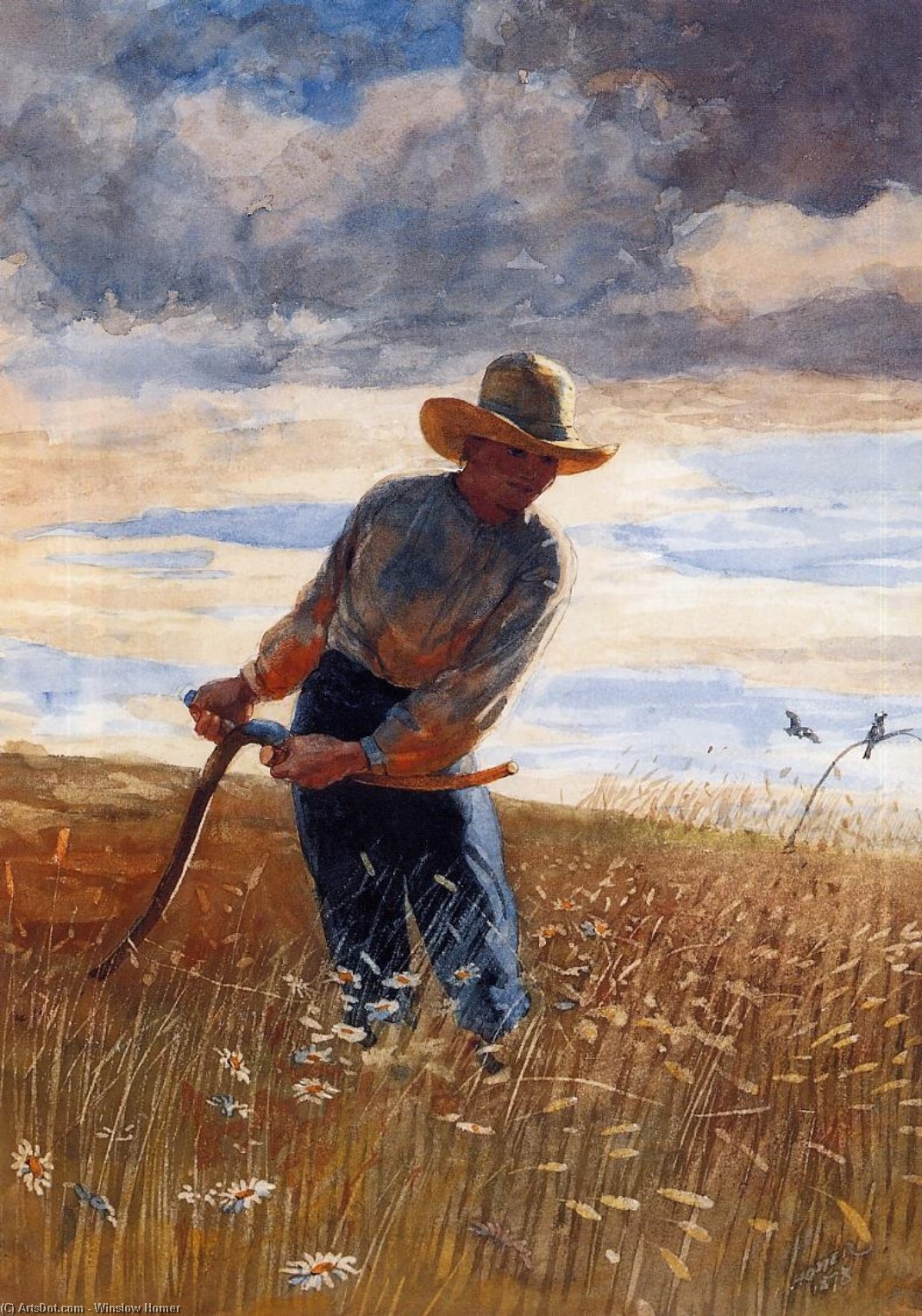
The Reaper
Размер репродукции
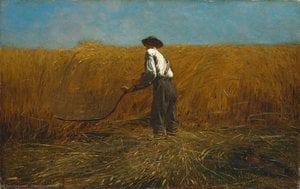
Winslow Homer’s “The Reaper,” painted in 1878, is more than just a depiction of a rural scene; it’s a profound meditation on the dignity of labor, the rhythms of nature, and the burgeoning sense of national identity taking root in America. This watercolor captures a solitary figure – a man in a worn straw hat – engaged in the timeless task of harvesting grain with a scythe. The composition is deceptively simple, yet brimming with quiet intensity, reflecting Homer’s unique approach to artmaking that prioritized direct observation and emotional resonance over academic convention.
Homer’s artistic journey was markedly different from that of many of his European contemporaries. He eschewed formal training at traditional academies, instead apprenticing himself to the demands of illustration for Harper’s Weekly beginning at just twelve years old. This early experience instilled in him a remarkable ability to capture fleeting moments and details with astonishing accuracy – a skill honed by necessity in the fast-paced world of print media. His focus wasn't on recreating idealized landscapes or historical narratives, but on truthfully representing the lives he observed around him: the bustling streets of Boston, the quiet dignity of rural New England, and ultimately, the evolving story of America itself.
“The Reaper” exemplifies Homer’s mastery of watercolor. He employs a loose, expressive brushstroke to convey movement and texture, particularly in the swaying grass and the flowing scythe. The color palette is dominated by earthy tones—greens, browns, and grays—creating a harmonious blend that reflects the natural world. The subtle gradations of light and shadow add depth and realism to the scene, while the careful placement of birds scattered throughout the painting introduces an element of spontaneity and life. Homer’s technique isn't about precise representation; it’s about capturing *feeling* – the quiet strength and resilience of the farmer, the vastness of the landscape, and the enduring connection between humanity and nature.
Beyond its realistic depiction, “The Reaper” carries significant symbolic weight. The solitary figure represents not just agricultural labor but also themes of perseverance, self-reliance, and the cyclical nature of life. The act of harvesting is a metaphor for renewal and hope, while the vastness of the field suggests both opportunity and isolation. Homer’s work resonates with a deep emotional current – a sense of quiet dignity, connection to the land, and an appreciation for the simple beauty of everyday existence. This painting speaks to the enduring spirit of America, rooted in its hardworking people and its boundless landscapes.


1836 - 1910 , Соединенные Штаты Америки

Discover the ethereal beauty of watercolor through an art-historical lens. Master the delicate balance of light, fluidity, and pigment to capture the luminous essence of nature, inspired by the legendary techniques of the Old Masters and Impressionist greats.

Master the nuances of Giclée printing with our expert guide. Discover how pigment-based inks and museum-grade substrates create fade-resistant, high-fidelity art reproductions designed for discerning collectors seeking unparalleled quality and longevity.

Откройте мир эксклюзивного искусства с WahooArt.com. Премиальные арт-постеры и ручная живопись маслом для взыскательных коллекционеров. Гарантия качества, профессиональная консультация и безупречный сервис по доставке шедевров в любую точку мира.

 Предпросмотр
 Поделиться
 Поделиться
 Детали произведения

 Скачать
 Похожие работы
 Рентгенография
 Слайд-шоу

 Читать далее







 Вариант со стеклом доступен только для размеров менее 110 см