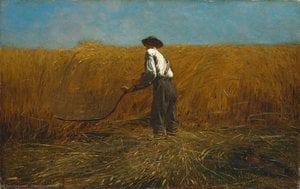
Винослоу Хомер: Гений американской реалистической живописи
Винослоу Хомер (1836-1910) был художником, который сформировался не академическими традициями Европы, а уникальным опытом жизни в Америке – практичным и внимательным к деталям. Его путь начался не с масштабных исторических полотен, а как коммерческий иллюстратор в возрасте двенадцати лет для «Харперс Уикли». Эта ранняя практика была решающей, отточив исключительную способность передавать сцены с ясностью и точностью – навыки, которые стали отличительными чертами его зрелого творчества. Он не изучал перспективу в Париже; он учился *видеть* Америку, ее людей и ее историю разворачивающейся перед глазами. Шумные улицы Бостона, тихая достоинство жизни в Новой Англии – эти были его первыми темами, изображенными с такой тщательностью, рожденной необходимостью для требований печатных средств массовой информации. Это фундамент позволил ему перейти к живописи, сначала акварелью, прежде чем полностью использовать выразительный потенциал масляных красок.
От пасторальных сцен к грубой силе природы
Ранние картины Хомера часто изображали идиллические пейзажи – дети играют, фермеры ухаживают за полями, тихие моменты домашней жизни. Эти работы были очаровательными, но они намекали на более глубокое художественное чувство, ожидающее своего раскрытия. Катализатор этой трансформации был без сомнения Гражданская война. Как военный корреспондент для «Харперс Уикли», Хомер своими глазами увидел ужасные реалии конфликта. Он не фокусировался на героических битвах или масштабных стратегиях; вместо этого он документировал повседневную жизнь солдат и гражданских лиц, тихие моменты скорби и стойкости среди хаоса. Этот опыт глубоко изменил его художественное видение. Пасторальные сцены уступили место более сложным темам: ветераны борются с травмой, освобожденные рабы исследуют новый мир, и суровая красота пейзажей тронута лишениями. Он начал изучать темы борьбы, изоляции и хрупкого человеческого существования перед лицом природы – темы, которые будут доминировать в его наиболее мощных работах. Его стиль также эволюционировал, становясь более смелым и прямым, отражая эмоциональное воздействие того, что он видел.
Мастерство света, текстуры и американского пейзажа
Художественная техника Винослоу Хомера сразу узнаваема своей твердостью и текстурой. Он не был заинтересован мимолетными впечатлениями; он хотел создать ощущение ощутимой реальности на холсте. Его масляные картины характеризуются прямым методом живописи – слои краски наносятся с уверенностью, создавая глубину и сияние. Он обладал исключительной способностью передавать свет – будь то ослепительное солнце над океаном или мягкое свечение заката над сельской местностью. Это мастерство распространилось и на его акварели, где он добивался поразительных атмосферных эффектов благодаря ярким цветам и нежной глазури. Например, картина «Бриз» (A Breezing Up), написанная в 1876 году, является воплощением этого умения – культовым изображением американской морской жизни, наполненным энергией и движением. «Течение отлива» («The Gulf Stream»), созданное десятилетия спустя, является одним из его самых известных произведений искусства – мощное и символическое изображение человека сражающегося с силами природы, метафорой борьбы человеческой души против подавляющих обстоятельств. Он не просто рисовал то, что видел; он передавал чувство, истину о человеческом состоянии.
Влияние европейской школы и формирование собственного стиля
Хотя Хомер восхищался европейскими художниками, такими как представители Барбизонской школы – известными своим реалистическим изображением сельской жизни – и признавал влияние таких мастеров как Курбе и Милетт, он в конечном итоге сформировал свой уникальный американский путь. Он отвергал распространенные академические нормы и сосредоточился на изображении своей страны с искренностью и достоверностью, без романтизации или идеализации ее. Он не стремился копировать европейские стили; он хотел создать искусство, которое было исключительно американским, отражая ее пейзажи, ее людей и ее вызовы. Его стиль также эволюционировал под влиянием европейской школы Барбизонской школы, где особое внимание уделяется передаче естественного света и текстуры поверхности холста. Это придает картинам Хомера особую выразительность и эмоциональную глубину.
Наследие Винослоу Хомера: Значение для американского искусства
Художественное наследие Винослоу Хомера заключается в его способности изображать Америку с честностью и аутентичностью, без романтизации или идеализации ее. Его картины являются не только красивыми изображениями; они являются мощными заявлениями о человеческой стойкости, красоте и силе природы и сложностях американского опыта. Он умер в 1910 году, оставив после себя богатый корпус работ, который продолжает вдохновлять современных художников и занимает особое место в истории американского искусства как один из самых важных и продолжительных мастеров своего времени. Его искусство является свидетельством эпохи и сохраняет память о ней для будущих поколений.
- Его работы продолжают вдохновлять современных художников.
- Хомер остается ключевой фигурой в развитии американской реалистической живописи.



 Предпросмотр
 Купить картину ручной работы
 Поделиться
 Поделиться
 Детали произведения

 Скачать
 Похожие работы
 Рентгенография
 Слайд-шоу
 Статистика


 Читать далее






































 Вариант со стеклом доступен только для размеров менее 110 см