Биография художника
A Life Immersed in Sentiment: The World of William Collins
Born in London in 1788, William Collins emerged as a significant voice within the British Romantic tradition, though his path to artistic recognition was subtly interwoven with familial and societal currents. His father, also named William Collins, was a respected painter and writer, providing young William with an early immersion into the world of art – a foundation that profoundly shaped his aesthetic sensibilities. While initially intended for a career mirroring his father’s, Collins ultimately carved out a distinctive niche for himself, focusing on scenes that resonated deeply with Victorian audiences: idyllic portrayals of rural life and tender depictions of childhood innocence. His formative years included time spent in Italy and France, experiences which instilled within him not only linguistic skills but also an appreciation for the light and atmosphere that would later become integral to his landscapes. A period as a clerk at Antrobus & Co., tea merchants – a role he found deeply unsatisfying – perhaps unexpectedly sharpened his observational abilities, offering glimpses into the lives of ordinary people that profoundly informed his artistic vision.
The Blossoming of a Romantic Vision
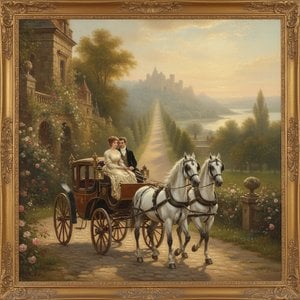
Collins’s formal training began at the Royal Academy Schools in 1807, where he diligently honed his technical skills and developed his unique style. He quickly gained recognition, securing awards and exhibiting regularly within the Academy's circles. However, it was his deliberate departure from grand historical narratives or portraiture – a conscious decision to shift towards genre painting – that truly defined him. Influenced by the Romantic movement’s emphasis on emotion and individual experience, Collins didn’t merely depict landscapes; he imbued them with feeling, capturing fleeting moments of beauty and tranquility. His paintings weren't simply representations of places but rather evocative expressions of mood and atmosphere. He possessed a remarkable ability to portray children and those on the margins of society – laborers, shepherds, and rural families – with dignity and compassion, often using muted tones and carefully observed natural light to create an atmosphere of gentle nostalgia. Works like “Barmouth Sands” and "Figures By A Cottage In An Extensive Wooded Landscape" exemplify this approach, inviting viewers into a world of quiet contemplation and emotional resonance. His style was considered a significant contribution to the development of British landscape painting during his time.
Influences and Techniques
Collins’s artistic journey was shaped by several key influences. The Romantic movement, with its focus on emotion, nature, and the individual experience, provided the overarching framework for his work. He drew inspiration from artists like Constable, whose use of light and color to capture the essence of rural landscapes profoundly impacted Collins's own approach. Furthermore, he was influenced by the Pre-Raphaelite Brotherhood, though he never formally joined their ranks. The brotherhood’s emphasis on detailed observation, moral themes, and a return to medieval and Renaissance art resonated with Collins’s desire to depict scenes of everyday life with both beauty and social commentary. His technical skills were honed through rigorous training at the Royal Academy, mastering techniques of layering paint, creating atmospheric perspective, and capturing subtle nuances of light and shadow. He was particularly adept at using color to convey mood – employing soft blues and greens to evoke a sense of peace and tranquility, or warmer tones to suggest warmth and intimacy.
A Family Legacy and Posthumous Recognition
William Collins’s life extended beyond the realm of paint and canvas; he was also a devoted family man and a chronicler of artistic history. He was the son of William Collins Sr., an Irish-born picture dealer and writer, whose literary works provided early exposure to art and literature. Most notably, he was the father of Wilkie Collins, the celebrated novelist whose works like *The Woman in White* and *The Moonstone* captivated Victorian readers. William’s early exposure to both art and literature undoubtedly influenced his son's literary pursuits, fostering a creative environment within the family home. Furthermore, he authored “Memoirs of the Life of William Collins, Esq., R.A.” (1848), a poignant tribute to his father that offered valuable insights into the life and work of a previous generation of artistic talent. This act underscores not only his filial devotion but also his deep understanding of art history and its importance in shaping cultural narratives.
Enduring Appeal and Historical Significance
Although Collins enjoyed some success during his lifetime, his true recognition came posthumously, particularly in the latter half of the 19th century. A renewed appreciation for sentimental painting – a genre characterized by its focus on emotional themes and idyllic scenes – combined with a growing fascination with depictions of rural life, led to a surge in demand for his work. His paintings resonated with an audience yearning for simpler times and nostalgic visions of the countryside. His works were frequently reproduced in popular prints and magazines, further cementing their place in the public consciousness. Today, William Collins is celebrated as a significant figure in British art history – a painter who skillfully blended Romantic ideals with meticulous observation and a deep understanding of human emotion. His legacy continues to inspire artists and captivate audiences with its enduring charm and emotional depth, offering valuable glimpses into 19th-century society and values.



 Предпросмотр
 Купить картину ручной работы
 Поделиться
 Поделиться
 Детали произведения

 Скачать
 Похожие работы
 Рентгенография
 Слайд-шоу


 Читать далее






































 Вариант со стеклом доступен только для размеров менее 110 см