Биография художника
A Life Forged in Abstraction
Винсент де Кунинг, имя которого стало синонимом первобытной энергии и глубокой эмоциональности Абстрактного экспрессионизма, родился в 1904 году в Ротердаме, Нидерланды. Ранняя его жизнь была отмечена семейным разделением – родители развелись, когда он был еще ребенком, что, возможно, внушило ему чувство неустанного поиска, которое пронизывало весь его художественный путь. В двенадцать лет де Кунинг покинул формальное образование и начал работать коммерческим художником, заложив основу для своего технического мастерства, одновременно подпитывая стремление вырваться за рамки традиционных ограничений. Вечерние занятия в Академии изобразительных искусств и технических наук в Ротердаме предоставили ему дальнейшее фундаментальное обучение, но жажда чего-то большего – более смелого, более выразительного языка – в конечном итоге подтолкнула его к Америке в 1926 году. Его прибытие не было простым: он знаменито пробрался на корабль, воплощая дух изгоя, стремящегося к новым горизонтам. Нью-Йорк стал его принятым домом, и его динамичная, зачастую грязная энергия глубоко повлияла на его развивающийся стиль. Он работал различными работами – от художника-облупителя до плотника – все это время неустанно преследуя свое художественное видение, впитывая пульс города в свою работу.
From Urban Scenes to Abstract Fury
Ранние картины де Кунинга отражали его непосредственные окрестности: городские пейзажи и портреты, запечатлевшие динамику жизни Нью-Йорка. Однако это были лишь ступеньки к более глубокому исследованию формы и эмоций. Переломным моментом стала его связь с Аршилем Горки, чье влияние оказалось трансформационным. Горки поощрял эксперименты де Кунинга в области абстракции, способствуя готовности разрушать традиционное представление о репрезентации ради чего-то более глубокого. 1930-е годы были отмечены тем, что де Кунинг занимался социалистическим реализмом и работами по оформлению стен в рамках Программы общественной работы (WPA), периода, который отточил его навыки, но также подчеркнул ограничения чисто репрезентативного искусства. Он почувствовал тягу к творчеству Стивена Дэвиса и Джона Грэма, художников, которые сами по себе расширяли границы. Это сочетание влияний постепенно направило его в сторону все более абстрактного словарного запаса. Это не было внезапным сдвигом, а скорее постепенным процессом – сознательным разрушением устоявшихся норм, подпитываемым интеллектуальным любопытством и неустанным стремлением к художественной истине.
The Woman Series: A Landmark Achievement
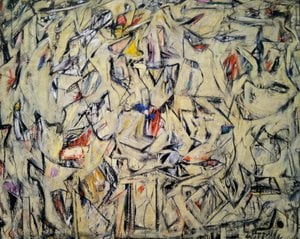
После Второй мировой войны де Кунинг вышел на передовую бурного движения Абстрактного экспрессионизма. Этот период ознаменовал поворотный момент, кульминацией которого стали его знаковые «Женские» серии (1950-1953 гг.). Эти картины – включая монументальную *«Женщину I»* – не являются простыми изображениями женских фигур; это висцеральные исследования женственности, сексуальности и сложностей человеческих эмоций. Характеризующиеся агрессивными мазками, фрагментированными формами и острой контрастировкой цветов, «Женские» серии бросали вызов традиционным представлениям о красоте и репрезентации. Они были спорными, даже шокирующими для некоторых, но их сила заключалась в том, что они отказывались соответствовать нормам. Де Кунинг не был заинтересован в создании идеализированных образов; он стремился запечатлеть первобытную, дикую сущность своих субъектов. Помимо «Женских» серий, работы, такие как *«Остекление»* и *«Раскопки»*, продемонстрировали его динамичный подход к живописи, демонстрируя мастерское владение текстурой, цветом и композицией. Он не избегал хаоса или неоднозначности; вместо этого он принимал их как неотъемлемые компоненты своего художественного языка.
Evolving Landscapes and Enduring Legacy
В 1960-е годы стиль де Кунинга претерпел еще один значительный эволюционный этап. Хотя абстракция оставалась центральной для его работы, пейзажные элементы стали играть более заметную роль, часто изображаясь более яркой палитрой и более свободным, более текучим мазком кисти. Он продолжал экспериментировать неустанно на протяжении всей своей жизни, исследуя различные техники и материалы, никогда не желая останавливаться на достигнутом. Его поздние работы демонстрируют поразительную способность переодеваться, оставаясь верным своим основным художественным принципам. Историческое значение де Кунинга неоспоримо. Он помог установить Нью-Йорк в качестве мирового центра искусства, бросив вызов доминированию европейских традиций и проложив путь для будущих поколений художников. Его работы продолжают вдохновлять восхищение и провоцировать споры, напоминая нам о силе абстракции для передачи глубоких эмоциональных истин. Винсент де Кунинг умер в 1997 году, оставив после себя обширное и влиятельное собрание работ, которое служит свидетельством его непоколебимой приверженности художественной инновации и его непреходящему наследию как одного из самых важных американских художников XX века. *Его влияние все еще ощущается.*



 Предпросмотр
 Switch to Print
 Поделиться
 Поделиться
 Детали произведения

 Скачать
 Похожие работы
 Рентгенография
 Слайд-шоу
 Stats
Stats

 Читать далее






































 Вариант со стеклом доступен только для размеров менее 110 см