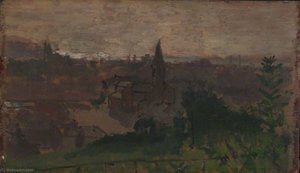
Walter Richard Sickert: A Life Painted in Shadows and Light
Walter Richard Sickert, родившийся в Мюнхене в 1860 году, был фигурой, постоянно находящейся между мирами – немецким по происхождению, британским по убеждению, и художником, неустанно колеблющимся между устоявшимися традициями живописи и бурлящими течениями модернизма. Его ранние годы были отмечены перемещениями; переезд семьи в Англию в 1868 году, вызванный политическими потрясениями в Европе, внушил ему чувство отчужденности, которое, возможно, и послужило источником его жизненного интереса к изгоям общества и маргинализированным личностям. Хотя он происходил из семьи художников – его отец, Оскальд Ситтерт, был датским живописцем – молодой Уолтер изначально стремился к карьере на сцене, временно выступая актером вместе с выдающимся Сирием Хэррингом. Это раннее знакомство с искусством театра, с искусством иллюзии и персонажа, оказало глубокое влияние на его художеческое видение, наделив его картины театральностью и психологической глубиной, которые отличали его от современников. Однако очарование визуального выражения оказалось сильнее, побудив его поступить в Slade School в 1881 году и впоследствии стать преданным учеником Джеймса Эббота Макнил Уизлера. Это наставничество было формирующим, внушая Ситтерту предпочтение тональных исследований, написанных *alla prima*, непосредственно с натуры, и утонченное эстетическое чувство, которое легло в основу его ранних работ. Влияние Уизлера не было лишь техническим; оно способствовало признанию художественной независимости и готовности бросать вызов общепринятым нормам.
London’s Underbelly and the Allure of Modern Life
Художественный компас Ситтерта быстро обратился к яркой, часто грязной реальности жизни Лондона. Он был очарован атмосферой музыкальных залов города – пространств, кишащих энергией, зрелищем и разнообразным слоем общества. Его картины того периода, такие как
Katie Lawrence at Gatti's, поражают своей неукоснительной передачей этих сред и их обитателей. Это были не просто изображения; это были исследования современной городской жизни, запечатлевающие мимолетные моменты и необузданные эмоции, испытываемые в этих стенах. Он стремился писать жизнь такой, какой она была прожита, а не такой, какой ее идеализировали – радикально отходя от викторианских художественных конвенций. Его готовность изображать обычных людей, особенно женских артисток, честно и без романтизации, был провокационным актом, предвещающим сдвиг в сторону социального реализма в искусстве 20-го века. Время, проведенное в Диппе, Франция, также оказалось решающим, предлагая новые перспективы света, цвета и композиции, а его последующие визиты в Венецию еще больше усовершенствовали его подход к изображению внутренних пространств и сложных расстановок фигур. Он не просто фиксировал то, что видел; он интерпретировал это через свое собственное, уникальное видение, наделяя даже самые обыденные сцены чувством тайны и психологического напряжения.
Influences and Artistic Development
Ситтерт был глубоко увлечен искусством Уизлера, который повлиял на его подход к композиции, цвету и свету. Он также восхищался работами Дега, особенно его способностью создавать ситуации, просто посредством поз своих персонажей. Ситтерт изучал эти принципы, применяя их в своих собственных картинах, часто изображая сцены из жизни, которые он наблюдал в Лондоне – музыкальные залы, рынки, улицы и дома. Его ранние работы были отмечены тональными исследованиями, выполненными *alla prima*, что позволяло ему быстро передать атмосферу и настроение сцены. Он также был опытным гравёром, создавая серию литографий и офортов, которые дополняли его живописные работы. В 1894 году Ситтерт переехал в Диппе, где провел несколько лет, работая над пейзажами и портретами. Этот период был отмечен развитием его собственного стиля, характеризующегося сдержанной цветовой палитрой, вниманием к деталям и акцентом на психологическое состояние персонажей. Он также начал экспериментировать с новыми техниками, такими как использование фотографии в качестве источника вдохновения.
Key Works and Recognition
Ситтерт создал множество значительных работ, которые оказали влияние на развитие британского искусства. Среди наиболее известных –
Katie Lawrence at Gatti's (1888),
Sinn Féiners (1907) и
The Horses of St Mark’s (1913). Последняя картина, особенно, вызвала споры из-за своей неоднозначности и мрачной атмосферы. Ситтерт также был признанным критиком искусства, пишущим статьи для различных журналов и газет. Его работы выставлялись в крупных галереях по всему миру, включая Национальную галерею в Лондоне и Музей современного искусства в Нью-Йорке.
A Lingering Mystery and Lasting Legacy
Несмотря на свою художественную значимость, жизнь Ситтерта омрачена слухами о его возможной причастности к серийным убийствам Джека Потрошителя. Хотя эти теории были в основном отвергнуты, они свидетельствуют об тревожном характере его работ и их сосредоточении на темах насилия и городской деградации. Ситтерт умер в 1942 году в Батамптоне, недалеко от города Бристоль, оставив после себя богатое наследие, которое продолжает вдохновлять художников и исследователей сегодня. Он был новатором, который осмелился смотреть за пределы поверхности, столкнуться с неудобными истинами современной жизни и запечатлеть их на холсте. Его работы – это свидетельство меняющегося мира, предлагающие взглянуть на жизнь тех, кого традиционно не замечали в искусстве.
Key Details & Influences
- Born: May 31, 1860, Munich, Bavaria
- Died: January 22, 1942, Bathampton, England
- Key Influences: James Abbott McNeill Whistler, Edgar Degas
- Associated Groups: New English Art Club, Camden Town Group



 Предпросмотр
 Перейти к печати
 Поделиться
 Поделиться
 Детали произведения

 Скачать
 Похожие работы
 Рентгенография
 Слайд-шоу
 Статистика


 Читать далее






































 Вариант со стеклом доступен только для размеров менее 110 см