

Произведение искусства, представленное на этой странице, защищено законом об авторском праве, что исключает возможность законного создания или продажи его точной репродукции. Данная защита обеспечивается международными соглашениями, такими как Бернская конвенция и национальным законодательством, включая положения, изложенные в Закон США об авторском праве — Раздел 17.
Этот метод полностью соответствует нормам авторского права, так как он не предполагает копирования или дублирования защищенного произведения. Напротив, это творческая реинтерпретация — создание новой картины, которая вдохновлена оригиналом, но не является его точной копией.
Печать (жикле) или холст музейного качества с быстрыми сроками изготовления и широким выбором вариантов отделки. ( Купить картину ручной работы Перейти к цифровым изображениям)





























Выберите один из наших стандартных размеров, соответствующих оригинальным пропорциям произведения искусства.

Введите необходимую ширину и высоту, чтобы репродукция подошла к вашей раме или стене. При печати изображение можно только уменьшить, но нельзя увеличить больше оригинала, поэтому при выборе другого формата часть изображения может быть обрезана. Перед печатью мы отправим вам цифровой макет на утверждение. Изображение на этой странице не отображает реальную обрезку — ее можно увидеть только на макете.
Доставка по всему миру () за 2 недели вместо стандартных 4–5 недель. (8 Ноябрь)
Ion-20
Размер репродукции
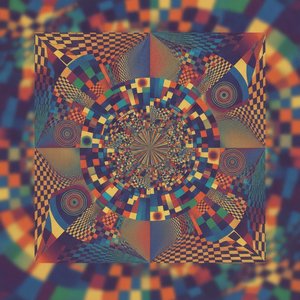
“Ion-20,” created by the visionary Victor Vasarely, is more than just a painting; it's an invitation to question your perception. This striking work, rendered in vibrant red, blue, and white hues, exemplifies the groundbreaking style of Op Art – Optical Art – that captivated the art world in the mid-20th century. Vasarely, born Károly Vaszary in 1906 in Pécs, Croatia, initially pursued a medical career before dedicating himself to exploring the fascinating relationship between mathematics and visual experience. His journey began with formal training at the Podolini-Volkmann Academy and the influential Műhely workshop under Sándor Bortnyik, where he absorbed the principles of functional design and geometric abstraction – concepts that would become the bedrock of his artistic practice.
At first glance, “Ion-20” appears as a chaotic jumble of squares. However, a closer examination reveals a meticulously constructed illusion. Vasarely’s genius lies in manipulating color and form to create an optical effect, deliberately disrupting our natural tendency to perceive objects as stable and unified. The overlapping shapes, varying sizes, and contrasting colors actively engage the viewer's eye, generating a sense of movement and depth that seems to defy the two-dimensional surface. This technique, central to Op Art, challenges the brain’s processing of visual information, creating a dynamic and mesmerizing experience. The painting’s title, “Ion-20,” subtly hints at the underlying mathematical principles – specifically, the concept of ionization – that informed Vasarely's artistic explorations.
Created using oil on canvas, "Ion-20" is a prime example of Op Art’s broader aims. Emerging in the 1960s, Op Art sought to translate scientific theories about perception and visual illusions into artistic expression. Artists like Vasarely were fascinated by the way our eyes and brains interpret patterns and shapes, leading them to create works that deliberately tricked the viewer's senses. This movement was heavily influenced by developments in psychology and neuroscience, reflecting a growing interest in understanding how we see the world. Vasarely’s work anticipated later explorations in motion graphics and digital art, demonstrating the enduring power of manipulating visual perception.
"Ion-20" doesn't convey explicit narrative content; its strength lies in its purely formal qualities. The geometric abstraction represents a detachment from representational imagery, focusing instead on the fundamental elements of form and color. The vibrant palette evokes feelings of energy, dynamism, and perhaps even a slight sense of disorientation – mirroring the perceptual challenges presented by the artwork. This piece is an invitation to contemplate the nature of perception itself, prompting viewers to consider how their brains actively construct reality.
Страница предварительного просмотра В интерьере произведения «Ion-20» позволяет ознакомиться с работой перед оформлением заказа.
С точки зрения воспринимаемой яркости, «Ion-20», Виктор Вазарели — это deep_shadow.
В работе «Ion-20», Виктор Вазарели используется Dark цветовая палитра, которая определяет общий колорит произведения.

1906 - 1997 , Россия
Explore the mesmerizing world of Victor Vasarely. Discover how his Bauhaus-inspired Op Art masters the science of perception through geometric abstraction and vibrant color. A sophisticated guide for discerning art collectors seeking to understand the legacy of optical illusion.

Embark on a visual journey through the mesmerizing world of Op Art. Discover the masters of optical illusion, explore geometric abstraction, and learn how to curate high-impact kinetic works for your private collection with expert guidance from art professionals.
 Предпросмотр
 Поделиться
 Поделиться
 Детали произведения
 Руководство

 Скачать
 Похожие предметы
 Рентгенография
 Слайд-шоу
 Вопросы и ответы
 Статистика просмотров

 Читать далее









 Вариант со стеклом доступен только для размеров менее 110 см


