БЕСПЛАТНАЯ КОНСУЛЬТАЦИЯ ПО ВОПРОСАМ ИСКУССТВА

x
Заказать репродукцию Заказать репродукциюКупить цифровое изображение Купить цифровое изображение ПоделитьсяПоделиться
ПодробнееПодробнее Добавить в избранное Добавить в избранное СкачатьСкачать Похожие работыПохожие работы РентгенографияРентгенография Слайд-шоуСлайд-шоу

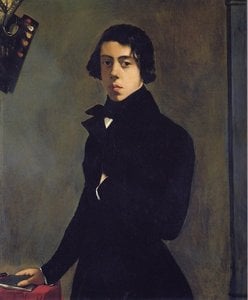
Self-Portrait

Explore Théodore Chassériau's 'Self-Portrait,' a captivating 1835 oil painting showcasing the artist’s restrained elegance and introspective style, housed in the Louvre.

Теодор Шассериу (1819-1856) – французский романтик художник, объединивший классическую точность Ингре и экспрессию Делакруа. Его портреты и картины Северной Африки вдохновлены путешествиями.

Жикле / Арт-принт

Печать (жикле) или холст музейного качества с быстрыми сроками изготовления и широким выбором вариантов отделки.

P118B $10
P118H $10
P118W $10
P438Z $10
P508JH $12
P508YH $12
P805H $10
P805Z $10
P919BZ $10
P919G $10
P919XJ $10
P959ZH $10
P968JZ $12
W106C $8
W218G $10
W218JH $8
W218Y $10
W307PJ $10
W316G $10
W316PJ $8
W316Y $10
W398PJ $8
W4111J $10
W500HY $15
W500JH $15
W692G $12
W849H $8
W940BG $15
W953PJ $8

Standard
custom
CM
INCH

Выберите один из наших стандартных размеров, соответствующих оригинальным пропорциям произведения искусства.

ширина
высота

Вы можете указать свои собственные размеры, чтобы репродукция идеально подошла под конкретную раму или пространство. Если выбранный вами размер не будет соответствовать пропорциям оригинала, мы либо обрежем произведение, либо дополним изображение зеркальным отражением краев или однотонной заливкой. Перед началом производства вам будет отправлен цифровой макет для утверждения.
Пожалуйста, обратите внимание, что предварительный просмотр на экране не отображает фактическую обрезку или расширение изображения. Только макет точно покажет финальную композицию.
Несмотря на возможность заказа индивидуальных размеров, мы рекомендуем выбирать размер из предопределенного списка, чтобы сохранить оригинальные пропорции.

Доставка по всему миру () за 2 недели вместо стандартных 4/5 недель. (4 Июль)

why_choose_icon
Бесплатная экспресс-доставка по всему миру
why_choose_icon
Высококачественный льняной холст
why_choose_icon
Полное страхование доставки
why_choose_icon
Гарантия возмещения таможенных пошлин
why_choose_icon
Гарантия точного соответствия цветов
why_choose_icon
Политика возврата в течение 60 дней (только при наличии дефектов)
why_choose_icon
Гарантия возврата 100% средств
why_choose_icon
Предложение оптовых скидок

Общая стоимость

-

reproduction

Self-Portrait

Жикле / Арт-принт

Размер репродукции

-

Итоговая стоимость

-

Основные сведения

  • Influences:
    • Ingres
    • Delacroix
  • Movement: Romanticism
  • Artist: Théodore Chassériau
  • Dimensions: 99 x 82 cm
  • Year: 1835
  • Location: Louvre, Paris
  • Artistic style: 19th-century

Тест по искусству

В каждом вопросе только один правильный ответ.

Вопрос 1:
What artistic movement is most closely associated with Théodore Chassériau’s ‘Self-Portrait’?
Вопрос 2:
The microphone stand visible in the painting 'Self-Portrait' suggests which of the following?
Вопрос 3:
What is the predominant color palette used in ‘Self-Portrait’?
Вопрос 4:
According to the description, what is a key characteristic of Chassériau’s technique in this painting?
Вопрос 5:
Théodore Chassériau was born in which country?

Описание предмета коллекционирования

The Enigmatic Self: Théodore Chassériau’s “Self-Portrait in a Redingote”

Théodore Chassériau's 1835 oil on canvas, "Self-Portrait in a Redingote," is more than just a likeness; it’s a carefully constructed tableau of restrained elegance and subtle introspection—a window into the mind of a young artist grappling with his artistic identity within the context of 19th-century Parisian society. Housed within the prestigious Musée du Louvre, this painting immediately draws the viewer in with its dark palette and the commanding presence of the subject, a young man radiating an almost melancholic intensity.

The work firmly anchors itself within the Romantic movement, yet it subtly resists simple categorization. While undeniably influenced by the dramatic flair of Eugène Delacroix – particularly evident in the dynamic lighting and the suggestion of movement – Chassériau retains a core Neoclassical discipline, meticulously rendered lines defining the sharp angles of his suit jacket and the precise contours of his face. This duality reflects the artist’s own journey: initially trained under the rigorous tutelage of Jean-Auguste-Dominique Ingres, he ultimately forged his own path, embracing a more expressive and emotionally charged style.

A Study in Light and Shadow – Technique and Composition

Chassériau's masterful technique is immediately apparent. The painting’s composition centers around the subject, occupying nearly the entire frame, creating an intimate and almost claustrophobic effect. He stands in a three-quarter pose, his gaze directed slightly to the left, inviting the viewer into his world. A subtle yet significant detail—a microphone stand discreetly positioned behind him on the left – hints at a performance context, perhaps suggesting Chassériau’s burgeoning career as a stage designer or illustrator, alongside his painting endeavors. The artist employs a layering technique, building up color and texture through numerous thin glazes of oil paint, resulting in a remarkably smooth surface—a testament to his dedication and skill.

The lighting is particularly noteworthy. It originates from an unseen source on the left side, casting soft, directional shadows across the subject’s face and subtly highlighting the textures of his clothing. This strategic use of light not only adds depth and volume but also contributes significantly to the painting's overall mood—a blend of formality and quiet contemplation. The careful blending of tones creates a sense of atmospheric perspective, drawing the eye deeper into the scene.

Symbolism and Emotional Resonance

Beyond its technical brilliance, “Self-Portrait in a Redingote” is rich in symbolic meaning. The formal black suit, impeccably tailored, speaks to Chassériau’s ambition and his desire for recognition within the established artistic circles of Paris. However, the slightly downturned mouth and the introspective gaze suggest a deeper layer of complexity—a hint of melancholy or perhaps even disillusionment with the constraints of academic art. The red bow tie, a vibrant splash of color against the predominantly dark palette, could represent passion, creativity, or simply a deliberate assertion of individuality.

The painting’s overall effect is one of restrained elegance and quiet introspection. It's not a flamboyant self-celebration but rather a carefully considered portrait of an artist grappling with his identity and place in the world—a poignant reflection on the challenges and rewards of pursuing a creative life. The subtle sadness in his eyes invites us to contemplate the burdens of artistic ambition, while the formality of his attire suggests a desire for respectability and recognition.

A Legacy of Romanticism – Historical Context

Created during a period of significant social and political upheaval—the aftermath of the Napoleonic Wars and the rise of Romanticism—Chassériau’s work reflects the movement's emphasis on emotion, individualism, and the sublime. His Creole heritage, born in the Dominican Republic and raised in Paris, undoubtedly informed his artistic vision, providing him with a unique perspective on both European and Caribbean cultures. This background is reflected in his interest in Orientalist themes – particularly evident in later works – and his willingness to challenge conventional artistic norms.

Chassériau’s trajectory—from student of Ingres to independent Romantic artist—is itself a compelling narrative, illustrating the tensions between tradition and innovation within 19th-century art. “Self-Portrait in a Redingote” stands as a powerful testament to his artistic evolution and a captivating glimpse into the mind of a brilliant but often overlooked talent.

Похожие произведения


Биография художника

Théodore Chassériau: Bridging Neoclassicism and Romantic Passion

Théodore Chassériau (1819–1856) stands as a pivotal figure in the transition between Neoclassical elegance and Romantic fervor—a testament to artistic synthesis achieved during France’s mid-century cultural landscape. Born under the tropical sun of Samaná, Dominican Republic, on September 20, 1819, his heritage blended Creole sensibilities with French intellectual traditions, shaping a worldview that would profoundly inform his artistic vision. His father, Benoît Chassériau, was a diplomat navigating the complexities of Caribbean politics, while his mother, Maria Magdalena Couret de la Blagniére, descended from Haitian and French lineages—a lineage imbued him with an unparalleled perspective on cultural exchange. This early exposure to diverse influences would become palpable in his oeuvre, distinguishing him from many of his contemporaries. ### Early Training and Ingres’s Influence Chassériau's artistic journey commenced at the tender age of eleven when he entered the studio of Jean-Auguste-Dominique Ingres—a decision that cemented his destiny as Ingres’s favored pupil. Recognizing a rare talent, Ingres championed Chassériau’s abilities, instilling within him the rigorous discipline and meticulous technique characteristic of Neoclassical art. Under Ingres's tutelage, Chassériau honed his draftsman skills, mastering the precise lines and idealized forms demanded by the era’s dominant aesthetic. This foundational training would remain visible throughout his career—a subtle echo of Ingres’s influence that transcended stylistic shifts. The pivotal role Ingres played in shaping Chassériau's artistic sensibilities cannot be overstated; he was arguably the most gifted pupil of Ingres, who declared “Come, gentlemen, come see, this child will be the Napoleon of painting.” ### Embracing Romantic Expression and Delacroix’s Legacy However, Chassériau wasn’t merely a devotee of Ingres's style. The burgeoning Romantic movement—with its emphasis on emotion, drama, and individual subjectivity— exerted an irresistible pull. Recognizing the limitations of Neoclassicism’s restrained palette and formal conventions, Chassériau sought inspiration in Eugène Delacroix’s vibrant canvases—embracing looser brushwork, richer hues, and more emotionally charged subject matter. This wasn't a rejection of Ingres; rather, it was a masterful fusion—a synthesis that allowed him to explore complex themes with both technical brilliance and profound feeling. As evidenced by his prints illustrating Shakespeares *Othello* and his depictions of Moorish life in Algeria, Chassériau absorbed Delacroix’s spirit, forging a unique artistic language that resonated with the sensibilities of his time. ### Themes and Artistic Achievements: From Portraits to Orientalist Visions Chassériau's artistic output encompassed an astonishing diversity of genres—portraits capturing the dignity and grace of aristocratic subjects, historical paintings commemorating pivotal moments in French history, religious scenes imbued with spiritual contemplation, allegorical murals conveying moral lessons, and a significant body of Orientalist work exploring the exotic landscapes and cultures of North Africa. Notable masterpieces include *Desdemona (The Song of the Willow)*—a poignant portrayal of Shakespeare’s heroine—and *Scene in the Jewish Quarter of Constantine*, which captures the bustling energy of urban life with remarkable detail. His portraits, such as *Comtesse de La Tour-Maubourg* and *Suzanne and the Old Men*, exemplify his ability to convey not only physical likeness but also inner character—a skill that cemented his reputation as one of France’s foremost portraitists. Furthermore, his Algerian expeditions fueled his artistic imagination—resulting in evocative images that captured the splendor of Moorish architecture and the dynamism of tribal rituals. ### Legacy and Influence: A Bridge Between Eras Théodore Chassériau died prematurely at the age of thirty-seven on October 8, 1856—a tragic interruption to a promising artistic career. Yet, his impact on the art world endured—establishing him as a crucial bridge between Neoclassicism and Romanticism. He demonstrated that these seemingly opposing styles could coexist harmoniously—enriching one another through mutual inspiration. His work influenced subsequent artists who sought to emulate Ingres’s precision while embracing Delacroix’s expressive fervor. Moreover, Chassériau's exploration of Orientalist themes contributed to a broader artistic fascination with North Africa and the Middle East—laying the groundwork for future generations to delve into these regions’ cultural heritage. He remains an artist whose legacy continues to captivate viewers today—a testament to his singular vision and enduring contribution to French art history.
Теодор Шассериу

Теодор Шассериу

1819 - 1856 , Доминиканская Республика

Основные сведения

  • Artistic Movement Or Style: Неоклассицизм и Романтизм
  • Artists Or Movements Influenced By This Artist: ['Эжен Делакруа']
  • Artists Who Influenced This Artist:
    • Жан-Огюст Доминик Анре Грезы
    • Жюль Август Доминик Анре Грезы
  • Date Of Birth: Сентябрь 20, 1819 г.
  • Full Name: Théodore Chassériau
  • Nationality: Французский
  • Notable Artworks:
    • Десмонда (Песнь иво)
    • Сцена еврейского квартала Константинополя
  • Place Of Birth: Сан-Мана, Доминиканская Республика
Откройте для себя произведения искусства, подобранные по темам, стилям и характеристикам.