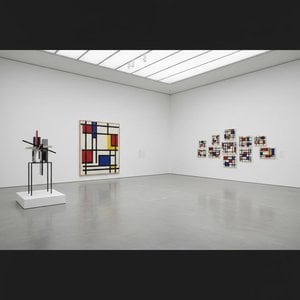
Примерить в интерьере Примерить в AR Переключиться на печать Перейти к цифровым изображениям Отправить
Подробнее Руководство Добавить в избранное Скачать Похожие объекты Рентгенография Слайд-шоу Статистика

Simultaneous Counter Composition.

Experience Theo van Doesburg's vibrant 1930 abstract masterpiece, a geometric explosion of color and form; discover this iconic De Stijl vision for your collection.

Тео ван Досбург – революционер искусства! Основатель «Де Стиля», новатор геометрической абстракции, архитектуры и дизайна. Его работы вдохновляют на создание гармонии и красоты!

Масляная репродукция ручной работы

Картина маслом на холсте в выбранном вами размере и раме, написанная на заказ нашими художниками. ( Переключиться на печать Перейти к цифровым изображениям)

Corner sample of the P118B picture frame: moulded polystyrene, 5 cm wide and 3 cm thick
P118B $10
Corner sample of the P118H picture frame: moulded polystyrene, 5 cm wide and 3 cm thick
P118H $10
Corner sample of the P118W picture frame: moulded polystyrene, 5 cm wide and 3 cm thick
P118W $10
Corner sample of the P438Z picture frame: moulded polystyrene, 5.5 cm wide and 3.5 cm thick
P438Z $10
Corner sample of the P508JH picture frame: moulded polystyrene, 7 cm wide and 3.5 cm thick
P508JH $12
Corner sample of the P508YH picture frame: moulded polystyrene, 7 cm wide and 3.5 cm thick
P508YH $12
Corner sample of the P805H picture frame: moulded polystyrene, 5 cm wide and 3.5 cm thick
P805H $10
Corner sample of the P805Z picture frame: moulded polystyrene, 5 cm wide and 3.5 cm thick
P805Z $10
Corner sample of the P919BZ picture frame: moulded polystyrene, 7 cm wide and 3.5 cm thick
P919BZ $10
Corner sample of the P919G picture frame: moulded polystyrene, 7 cm wide and 3.5 cm thick
P919G $10
Corner sample of the P919XJ picture frame: moulded polystyrene, 7 cm wide and 3.5 cm thick
P919XJ $10
Corner sample of the P959ZH picture frame: moulded polystyrene, 5 cm wide and 3 cm thick
P959ZH $10
Corner sample of the P968JZ picture frame: moulded polystyrene, 6 cm wide and 4 cm thick
P968JZ $12
Corner sample of the W106C picture frame: solid wood, 5 cm wide and 3 cm thick
W106C $8
Corner sample of the W218G picture frame: solid wood, 5 cm wide and 3 cm thick
W218G $10
Corner sample of the W218JH picture frame: solid wood, 5 cm wide and 3 cm thick
W218JH $8
Corner sample of the W218Y picture frame: solid wood, 5 cm wide and 3 cm thick
W218Y $10
Corner sample of the W307PJ picture frame: solid wood, 6 cm wide and 3 cm thick
W307PJ $10
Corner sample of the W316G picture frame: solid wood, 6 cm wide and 3 cm thick
W316G $10
Corner sample of the W316PJ picture frame: solid wood, 6 cm wide and 3 cm thick
W316PJ $8
Corner sample of the W316Y picture frame: solid wood, 6 cm wide and 3 cm thick
W316Y $10
Corner sample of the W398PJ picture frame: solid wood, 5 cm wide and 3 cm thick
W398PJ $8
Corner sample of the W4111J picture frame: solid wood, 6.5 cm wide and 3.5 cm thick
W4111J $10
Corner sample of the W500HY picture frame: solid wood, 7 cm wide and 5 cm thick
W500HY $15
Corner sample of the W500JH picture frame: solid wood, 7 cm wide and 5 cm thick
W500JH $15
Corner sample of the W692G picture frame: solid wood, 8 cm wide and 4 cm thick
W692G $12
Corner sample of the W849H picture frame: solid wood, 5 cm wide and 3 cm thick
W849H $8
Corner sample of the W940BG picture frame: solid wood, 7.5 cm wide and 4.5 cm thick
W940BG $15
Corner sample of the W953PJ picture frame: solid wood, 6 cm wide and 3.5 cm thick
W953PJ $8

Стандартный размер
индивидуальный заказ
CM
INCH

Выберите один из наших стандартных размеров, соответствующих оригинальным пропорциям произведения искусства.

ширина
высота

Вы можете указать собственные размеры, чтобы картина идеально вписалась в выбранную раму или пространство. Если выбранный вами размер не соответствует пропорциям оригинала, мы либо обрежем полотно, либо расширим его за счет дополнительных элементов, написанных вручную. Цифровой макет будет отправлен вам на утверждение перед началом производства.
Обратите внимание, что предварительный просмотр на экране не отражает фактическую обрезку или расширение. Только макет точно покажет окончательную композицию.
Хотя доступны индивидуальные размеры, мы рекомендуем выбирать вариант из предопределенного списка, чтобы сохранить исходные пропорции.

Примеры возможных изменений: замена лица на фото клиента; добавление домашнего животного (например, замена кошки на собаку); добавление скрытого послания на фоне; изменение пейзажа или элементов фона.
После оформления заказа команда WahooArt.com свяжется с клиентом по электронной почте для уточнения деталей и предоставит предварительный макет

Доставка по всему миру () за 3–4 недели вместо стандартных 5 недель. (10 Октябрь). Без компромиссов в качестве.

Бесплатная экспресс-доставка по всему миру
Высококачественный льняной холст
Полное страхование при транспортировке
Гарантия возврата таможенных пошлин
Гарантия точного цветового соответствия
100-дневный период возврата (только при обнаружении дефектов)
Гарантия возврата 100% средств
Скидка при заказе нескольких работ

Итоговая стоимость

$ 272

Simultaneous Counter Composition.

Материал репродукции

Размер репродукции

-

Итоговая стоимость

$ 272

Краткая справка

  • Subject or theme: Geometric composition
  • Artistic style: Abstract
  • Artist: Theo van Doesburg
  • Title: Simultaneous Counter Composition
  • Year: 1930

Викторина по искусству

В каждом вопросе только один правильный ответ.

Вопрос 1:
What artistic movement is Theo van Doesburg most associated with?
Вопрос 2:
What primary visual characteristic defines the composition of 'Simultaneous Counter Composition'?
Вопрос 3:
In what year was 'Simultaneous Counter Composition' created?
Вопрос 4:
The painting primarily utilizes which combination of colors, as described?
Вопрос 5:
Theo van Doesburg's early artistic influences included styles reminiscent of which artist?

The Geometry of Inner Harmony: Exploring Theo van Doesburg's Abstraction

To stand before Theo van Doesburg’s Simultaneous Counter Composition is not merely to observe paint on canvas; it is to step into a meticulously constructed intellectual space where color and form engage in a vibrant, calculated dialogue. This piece, dating from 1930, stands as a powerful testament to the revolutionary spirit of De Stijl, the movement that sought to purify art down to its most essential geometric truths. Van Doesburg, an architect of abstraction, believed that true reality could be found not in the messy chaos of visible nature, but in the underlying harmony of pure lines and primary colors. The painting immediately envelops the viewer in a field of structured energy, inviting the eye to wander across its carefully balanced quadrants.

A Masterclass in Primary Structure

The composition itself is breathtaking in its deliberate organization. Divided into distinct yet interconnected sections—left, center, and right—the canvas pulses with a controlled chromatic symphony. We see the bold interplay of red, yellow, blue, black, and white, colors that carry immense symbolic weight within modernist thought. These hues are not simply placed side-by-side; they interact, their adjacency creating optical vibrations. The varying sizes and shapes of the squares suggest a dynamic tension, as if opposing forces—structure versus fluidity, chaos versus order—are locked in a perfect, silent negotiation. It is an exercise in visual equilibrium, where every seemingly arbitrary block contributes to the whole.

Historical Echoes: De Stijl's Vision

Understanding this work requires acknowledging its historical cradle: the fervor of Neoplasticism. Van Doesburg was instrumental in guiding art away from mere representation and toward a universal language built on abstraction. This painting embodies that quest for universal harmony, echoing the philosophical underpinnings of the early 20th century desire to rebuild culture after periods of immense upheaval. The rigid geometry is not a limitation, but rather an assertion of underlying cosmic order—a belief that even in the most abstract arrangement, there exists profound, discernible beauty and balance.

Bringing Geometric Vibrancy Home

For the collector or designer seeking to infuse a space with intellectual depth and vibrant energy, Simultaneous Counter Composition offers unparalleled impact. Its bold, graphic nature means it functions as both a striking piece of art and a powerful architectural accent. Reproducing this work allows one to bring the disciplined passion of early modernism into contemporary living. Imagine its clean lines juxtaposed against soft furnishings or rich wood tones; the painting acts as a brilliant focal point, demanding contemplation while simultaneously providing visual rest through its inherent balance.

Emotional Resonance and Technique

The emotional impact of this piece is one of exhilarating clarity. It feels both rigorously intellectual and deeply soulful. The technique, characterized by flat planes of color meeting at sharp, decisive edges, celebrates the purity of the painted surface. When considering a reproduction, note how the vibrancy of these primary colors—the way they seem to vibrate against each other—is crucial. Owning this piece is owning a conversation between structure and spirit, a vibrant reminder that even in apparent complexity, perfect harmony can be found.

Вопросы и ответы

В каком году было создано произведение «Simultaneous Counter Composition.», Тео ван Досбург?

Произведение «Simultaneous Counter Composition.», Тео ван Досбург было создано в 1930 году.

В какой технике выполнено произведение «Simultaneous Counter Composition.», Тео ван Досбург?

«Simultaneous Counter Composition.» выполнено в технике Painting.

С каким чувством ассоциируется «Simultaneous Counter Composition.»?

«Simultaneous Counter Composition.», Тео ван Досбург передает Energetic эмоциональный настрой.

Насколько светлым является произведение «Simultaneous Counter Composition.» в целом?

В целом, для произведения «Simultaneous Counter Composition.» зафиксирован уровень balanced. Воспринимаемая яркость описывает, насколько светлым или темным кажется работа.

Какому художнику приписывают работу «Simultaneous Counter Composition.»?

«Simultaneous Counter Composition.» был создан Тео ван Досбург. Информация на этой странице описывает оригинальную работу Тео ван Досбург.

Сколько лет было Тео ван Досбург, когда создавалось произведение «Simultaneous Counter Composition.» в 1930 году?

Когда в 1930 году было создано произведение «Simultaneous Counter Composition.», художнику Тео ван Досбург (родившемуся в 1883) было 47 лет.

Какова цветовая палитра произведения «Simultaneous Counter Composition.», Тео ван Досбург?

В работе «Simultaneous Counter Composition.», Тео ван Досбург используется палитра Dark, где доминирующим цветом является Prussian Blue (#051e3b).


Биография художника

The Architect of Abstraction: A Life in Geometric Harmony

Theo van Doesburg, born Christian Emil Marie Küpper in 1883 in Utrecht, Netherlands, wasn’t merely a painter; he was a revolutionary force who fundamentally reshaped the very foundations of modern art. His journey began amidst the lingering echoes of Impressionism and Post-Impressionism – initially mirroring styles reminiscent of Vincent van Gogh – both in subject matter and emotional intensity. However, this early phase served as a crucial prelude, a necessary stepping stone toward the radical transformation that would define his enduring legacy. A pivotal moment arrived in 1913 with his encounter with Wassily Kandinsky’s *Rückblicke*. This text ignited within van Doesburg a profound realization: true artistic expression lay not in replicating the external world but in channeling an inner, spiritual reality through pure abstraction. It was this conviction that birthed Neoplasticism – more commonly known as De Stijl – a movement he founded and fiercely championed, becoming its most ardent advocate.

Forging a New Visual Language: The Principles of De Stijl

De Stijl wasn’t simply an artistic style; it was a comprehensive philosophical manifesto translated into visual form. Van Doesburg believed in stripping art down to its most essential elements – straight lines, right angles, and the primary colors of red, yellow, and blue, alongside black, white, and gray. This austere palette wasn't born from limitation but from a desire for universality—a belief that these fundamental forms resonated with an underlying cosmic order. He envisioned a *total* work of art, extending beyond the canvas to encompass architecture, design, and even everyday objects. Collaboration was key; van Doesburg worked closely with architects like J.J.P. Oud and Gerrit Rietveld, designing stained glass windows, furniture, and entire interiors that embodied the principles of De Stijl. His collaborations extended to fellow artists such as Piet Mondrian, with whom he co-founded the influential journal *De Stijl*, a platform for disseminating their ideas and attracting like-minded creatives. However, despite their shared origins, tensions arose between van Doesburg and Mondrian regarding the rigidity of Neoplasticism. Van Doesburg introduced “Elementarism” in 1926, advocating for diagonal lines and more dynamic compositions – a departure that ultimately led to a schism within the movement, revealing his restless spirit and constant pursuit of artistic evolution.

The Early Years & Influences: From Impressionism to Kandinsky

Van Doesburg’s early artistic development was deeply influenced by the vibrant colors and emotional intensity of Vincent van Gogh. His initial paintings often depicted landscapes and portraits imbued with a sense of melancholy and introspection, mirroring Van Gogh's expressive brushstrokes and use of color. However, this early phase served as a crucial prelude, a necessary stepping stone toward the radical transformation that would define his enduring legacy. The turning point came in 1913 with his encounter with Wassily Kandinsky’s *Rückblicke*. This text, exploring the spiritual dimension of art and advocating for abstraction, profoundly impacted van Doesburg's artistic vision. He began to experiment with simplified forms and non-representational imagery, moving away from traditional subject matter and seeking a more direct connection to inner experience. The influence of Japanese prints – particularly their use of flat planes of color and geometric patterns – also played a significant role in shaping his aesthetic sensibilities.

A Revolutionary Movement: The Birth of De Stijl

De Stijl, meaning “The Style,” emerged as a multifaceted movement encompassing painting, architecture, design, and typography. It wasn’t merely an artistic style; it was a comprehensive philosophical manifesto translated into visual form. Van Doesburg believed in stripping art down to its most essential elements – straight lines, right angles, and the primary colors of red, yellow, and blue, alongside black, white, and gray. This austere palette wasn't born from limitation but from a desire for universality—a belief that these fundamental forms resonated with an underlying cosmic order. He envisioned a *total* work of art, extending beyond the canvas to encompass architecture, design, and even everyday objects. The core tenets of De Stijl were rigorously defined: absolute geometric abstraction, the use of primary colors and neutral tones, and a rejection of illusionistic space. The group’s journal, *De Stijl*, became a vital vehicle for disseminating these ideas and attracting like-minded creatives, fostering a vibrant intellectual community dedicated to exploring the possibilities of pure abstraction.

Beyond Painting: A Multifaceted Artistic Vision

While celebrated as a painter, van Doesburg’s artistic pursuits were remarkably diverse. He was a prolific writer, poet, and critic, using his pen to articulate the theoretical underpinnings of De Stijl and challenge conventional notions of art. His engagement with Dadaism in the early 1920s further broadened his artistic horizons, leading to experimental works that incorporated collage and typography. This period also saw him teaching at the Bauhaus, where he shared his ideas with a new generation of artists and designers. He wasn’t content to remain within the confines of traditional art forms; van Doesburg actively sought to integrate art into everyday life, believing it had the power to transform society. His designs for interiors and furniture weren't merely aesthetic exercises but attempts to create harmonious living spaces that reflected the principles of De Stijl. A prime example is his collaboration with Sophie Taeuber-Arp and Georges Vantongerloo on designing artist residences, showcasing a holistic approach to artistic creation – an attempt to build a world *in* the image of his ideals.

Legacy & Enduring Influence: A Pioneer of Modernism

Theo van Doesburg’s life was tragically cut short in 1931 at the age of 47, yet his impact on modern art remains profound. De Stijl, though relatively short-lived as a cohesive movement, exerted an enormous influence on subsequent artistic developments, including Bauhaus design, Minimalism, and Constructivism. His emphasis on geometric abstraction, pure color, and functionalism continues to resonate with artists and designers today. His work serves as a reminder that art is not merely about representation but about the exploration of fundamental forms and ideas. Van Doesburg’s legacy extends beyond his paintings and designs; it lies in his unwavering commitment to artistic innovation and his belief in the transformative power of abstraction. His vision of a unified, harmonious world – expressed through the language of De Stijl – continues to inspire those who seek to create a more beautiful and meaningful environment.

Key Works & Lasting Impact

  • Study for Simultaneous Compositions XXII (1922): A quintessential example of Neoplasticism, showcasing the movement’s signature geometric forms and limited color palette.
  • Composition with half values (1928): Demonstrates van Doesburg's exploration of tonal variations within the De Stijl aesthetic.
  • Dancers (1917-1918): Represents a transitional phase in his work, blending figurative elements with emerging abstract tendencies.
  • Collaboration on *De Stijl* journal: A crucial platform for disseminating the movement’s ideas and fostering dialogue among artists and intellectuals.
  • Elementarism (1926): Van Doesburg's attempt to inject dynamism into Neoplasticism, introducing diagonal lines and a more fluid approach to composition.
Тео ван Досбург

Тео ван Досбург

1883 - 1931 , Нидерланды

Краткая справка

  • Artistic Movement Or Style: Де Стиль, Неопластицизм
  • Artists Or Movements Influenced By This Artist:
    • Бхауэиз
    • Минимализм
  • Artists Who Influenced This Artist:
    • Ван Гог
    • Кандинский
  • Date Of Birth: 30 августа 1883
  • Date Of Death: 7 марта 1931
  • Full Name: Тео ван Досбург
  • Nationality: Нидерландский
  • Notable Artworks:
    • Изучение для одновременных композиций XXII
    • Композиция с полутонами
    • Танцоры
  • Place Of Birth: Утрехт, Нидерланды
Откройте для себя произведения искусства, распределенные по темам, стилям и характеристикам.