Биография художника
A Life Immersed in the Animal World
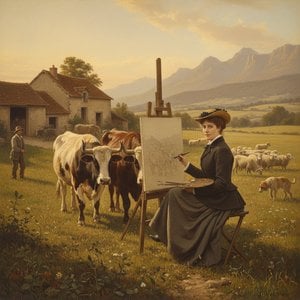
Роза Бонёур, урожденная Мария-Розалия Бонёур в 1822 году в Бордо Франции, была не просто художницей животных; она была их интерпретатором, способной уловить самую суть. Ее имя звучит в истории искусства как маяк реализма и свидетельство женской художественной амбициозности в эпоху, когда доминировали мужчины. Родившись в семье, глубоко укоренившейся в искусстве – ее отец, Оскар-Рем де Бонёур, был художником пейзажей и портретов – путь молодой Розалии не был предопределен, но был взращен. Приверженность семьи к Сен-Симонизму, прогрессивной социалистической философии, призывающей к равному образованию для обоих полов, оказалась особенно формирующей, внушая Розе чувство независимости и интеллектуальной любознательности, которые определяли ее жизнь и творчество. Трагическая смерть матери в возрасте одиннадцати не сломила семью Бонёуров; они остались убежищем для творчества и нестандартного мышления. Это уникальное воспитание заложило основу для художника, которая смело бросала вызов общественным нормам, как она отчаянно изображала красоту природы.
От скромных начинаний к успеху в салонах
Переезд семьи в Париж в 1828 году стал поворотным моментом, предоставив Розе доступ к формальному художественному образованию. Изначально ее обучение следовало традиционным линиям – копирование с рисунков и создание набросков по гипсовым моделям. Однако именно животные, окружавшие Париж, захватили ее воображение. Лошади, коровы, овцы, козы — она неустанно наблюдала за ними, не просто как за объектами искусства, но и как за живыми существами, достойными тщательного изучения. Эта преданность непосредственному наблюдению стала краеугольным камнем ее художественного стиля. Ее отец активно поддерживал этот интерес, даже привозил живых животных в их студию для Розы, чтобы она их разбирала и анализировала. Этот практический подход, в сочетании с посещениями парижских бойнеек для понимания анатомии животных, отличал ее от многих современников, которые полагались на второстепенные изображения. Ее прорыв произошел в 1849 году с картиной «Окулуки» (Ploughing in the Nivernais), которая сразу привлекла внимание Парижа и ознаменовала собой наступление новой талантливой художницы. Но именно «Конный рынок» (The Horse Fair), завершенный между 1853 и 1855 годами, закрепил ее международную славу. Этот монументальный холст, ныне находящийся в Metropolitan Museum of Art в Нью-Йорке, пульсирует энергией и анатомической точностью, изображая хаотичное, но очаровательное зрелище лошадиного рынка. Даже королева Виктория была очарована его мощью и реализмом.
Стиль, основанный на реализме и наблюдении
Художественный стиль Розы Бонёур не был направлен на романтизацию животных; он был направлен на изображение их с непоколебимой честностью и детальностью. Она избегала сантиментальности, предпочитая научный подход к своим объектам. Ее картины характеризуются анатомической точностью, динамичными композициями и способностью уловить уникальный характер каждого существа. Эта преданность реализму распространилась не только на физическое представление. Бонёур стремилась понять поведение животных, их действия и даже их эмоциональное состояние. Она часто работала *на пленэре*, непосредственно наблюдая за своими объектами в их естественной среде обитания, что еще больше усиливало подлинность ее работ. Этот подход к правде резонировал с растущим реалистическим движением середины 19 века, которое отвергало идеализированные изображения в пользу изображения жизни такой, какая она есть на самом деле. Ее техника включала тщательное нанесение слоев краски и мастерское использование света и тени для создания глубины и текстуры, оживляя каждое животное на холсте.
Пионер женского искусства
Наследие Розы Бонёур выходит далеко за рамки ее художественных достижений; она стала иконой для женщин, стремящихся к признанию в мужском мире искусства. Она бросила вызов общественным нормам не только через свой профессиональный успех, но и через свой личный выбор. Своеобразно, она часто носила мужскую одежду во время работы с животными, ссылаясь на практичность и свободу движений — смелое заявление, которое бросало вызов общепринятым ожиданиям. Она получила заказы от правительств и частных коллекционеров, доказав, что женщины-художницы могут достичь того же уровня признания, что и их коллеги по мужскому полу. Ее успех проложил путь для будущих поколений женщин-художниц, вдохновляя их преследовать свои страсти без компромиссов. Ее работы продолжают восхищать в крупных музеях мира, напоминая нам о ее непреходящем вкладе в историю искусства и ее непоколебимой приверженности изображению красоты и достоинства животного царства.
Сохраняющееся влияние и последнее наследие
Влияние работ Розы Бонёур продолжает ощущаться сегодня. Ее преданность реализму повлияла на многих художников, а ее картины по-прежнему ценятся за их техническое мастерство и эмоциональную глубину. Она продемонстрировала, что искусство может быть одновременно научным и глубоко трогающим. Помимо своих художественных вкладов, история жизни Бонёур служит мощным примером женской силы и творческой независимости. Она бросила вызов общественным нормам, превзошла ожидания и в конечном итоге добилась заслуженного признания по своим собственным правилам. Ее наследие — это не только красивые картины, но и смелость, решимость и непоколебимая приверженность своему делу. Ее работы продолжают вдохновлять художников и любителей искусства во всем мире, напоминая нам о силе наблюдения, красоте природы и важности преследовать свои страсти с убежденностью.



 Примерить в интерьере
 Заказать репродукцию ручной работы
 Отправить
 Поделиться
 Подробнее
 Руководство

 Скачать
 Похожие объекты
 Рентгенография
 Слайд-шоу
 Статистика


 Развернуть текст






































 Вариант со стеклом доступен только для размеров менее 110 см