Печать (жикле) или холст музейного качества с быстрыми сроками изготовления и широким выбором вариантов отделки. ( Купить картину ручной работы Купить изображение)





























Выберите один из наших стандартных размеров, соответствующих оригинальным пропорциям произведения искусства.

Вы можете указать свои собственные размеры, чтобы репродукция идеально подошла под конкретную раму или пространство. Если выбранный вами размер не будет соответствовать пропорциям оригинала, мы либо обрежем произведение, либо дополним изображение зеркальным отражением краев или однотонной заливкой. Перед началом производства вам будет отправлен цифровой макет для утверждения.
Пожалуйста, обратите внимание, что предварительный просмотр на экране не отображает фактическую обрезку или расширение изображения. Только макет точно покажет финальную композицию.
Несмотря на возможность заказа индивидуальных размеров, мы рекомендуем выбирать размер из предопределенного списка, чтобы сохранить оригинальные пропорции.
Доставка по всему миру () за 2 недели вместо стандартных 4/5 недель. (7 Сентябрь)


La Condition humaine
Размер репродукции
René Magritte's La Condition Humaine (The Human Condition) is a cornerstone of Surrealist art, a painting that doesn’t simply depict a scene but rather interrogates the very nature of representation and reality. Part of a series of four works sharing the same title, this piece invites viewers into a captivating paradox – a world where what *is* seen clashes with what we *believe* to be true.
The painting presents an interior scene: a room featuring a window draped with a simple curtain. Beyond the window lies a landscape of trees and sky. However, this seemingly straightforward composition is disrupted by a canvas *within* the room, positioned directly in front of the window. This inner canvas precisely replicates the external view – the same trees, the same clouds. The result? A painted landscape obscures our direct perception of the real one, creating an unsettling visual echo.
Magritte’s style is characterized by a meticulous realism, devoid of expressive brushstrokes or dramatic flourishes. He renders both the interior and exterior scenes with almost photographic precision. This deliberate clarity isn't about celebrating beauty; it heightens the disquieting effect when we realize the painting *within* the painting actively conceals reality. This technique is central to Surrealism’s goal of challenging logic and prompting viewers to question their assumptions.
Created in 1933, *La Condition Humaine* reflects the intellectual currents of its time. The title itself is borrowed from André Malraux’s novel *Man's Fate*, hinting at broader themes of human existence and our place within a complex world. Magritte famously explained his intention: to create a situation where the painted tree literally hides the real tree, forcing us to confront the limitations of representation. This concept resonates with the philosophical skepticism of René Descartes, who questioned the reliability of sensory experience.
The painting is rich in symbolism. The window traditionally represents a portal to the outside world, but here it’s blocked by an imitation of that world. This suggests our perception isn't direct access to reality, but rather filtered through internal representations – memories, beliefs, and artistic constructs. The solitary bird perched on the windowsill adds a layer of melancholy contemplation; a silent observer witnessing this interplay between illusion and actuality. The painting is not about what we see, but *how* we see.
*La Condition Humaine* evokes a sense of quiet unease, intellectual curiosity, and introspective thought. It’s a piece that doesn't offer easy answers, but rather encourages ongoing contemplation. Its subtle palette and clean lines make it surprisingly versatile for interior design:
To fully appreciate the nuances of this work, display it in a well-lit space allowing ample room to step back and contemplate its complexities. The painting’s subtle details reward careful observation – an invitation to question everything you think you know.
René Magritte was a Belgian Surrealist painter renowned for his witty and unsettling juxtapositions of ordinary objects. His work consistently challenged conventional notions of reality, leaving an enduring legacy that continues to inspire artists and thinkers today. Magritte’s genius lies in making the familiar strange, forcing us to see the world anew.

Непреходящее наследие Магритта заключается в том, что он заставляет нас видеть знакомое по-новому, подвергать сомнению наши предположения о реальности и ценить силу искусства, побуждающей к размышлениям и вдохновению.

1898 - 1967 , Бельгия

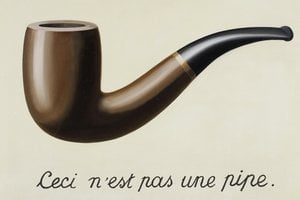
Delve into the profound mysteries of René Magritte’s Surrealism. Explore an expert analysis of 'The Treachery of Images,' decoding the philosophical paradoxes and visual subversions that redefined modern art history for collectors and connoisseurs alike.

 Предпросмотр
 Поделиться
 Поделиться
 Детали произведения

 Скачать
 Похожие работы
 Рентгенография
 Слайд-шоу

 Читать далее







 Вариант со стеклом доступен только для размеров менее 110 см