Примерить в интерьере Примерить в AR Заказать репродукцию ручной работы Перейти к цифровым изображениям Отправить
Подробнее Руководство Добавить в избранное Скачать Похожие объекты Рентгенография Слайд-шоу Статистика

About Young Sister

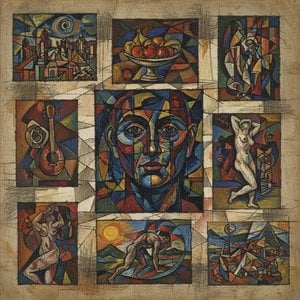
Explore Marcel Duchamp’s "About Young Sister" (1911). An abstract Expressionist piece featuring muted tones & layered textures, embodying early 20th-century art's innovative spirit.

Шоколадный помольник №2 Дюшанпа — новаторское произведение искусства Дада и Концептуализма, демонстрирующее использование повседневных предметов для создания провокационных работ и переосмысления роли художника.

Произведение искусства, представленное на этой странице, защищено законом об авторском праве, что исключает возможность законного создания или продажи его точной репродукции. Данная защита обеспечивается международными соглашениями, такими как Бернская конвенция и национальным законодательством, включая положения, изложенные в Закон США об авторском праве — Раздел 17.

Этот метод полностью соответствует нормам авторского права, так как он не предполагает копирования или дублирования защищенного произведения. Напротив, это творческая реинтерпретация — создание новой картины, которая вдохновлена оригиналом, но не является его точной копией.

Жикле / Арт-принты

Печать (жикле) или холст музейного качества с быстрыми сроками изготовления и широким выбором вариантов отделки. ( Заказать репродукцию ручной работы Перейти к цифровым изображениям)

Corner sample of the P118B picture frame: формованный полистирол, 5 cm wide and 3 cm thick
P118B $10
Corner sample of the P118H picture frame: формованный полистирол, 5 cm wide and 3 cm thick
P118H $10
Corner sample of the P118W picture frame: формованный полистирол, 5 cm wide and 3 cm thick
P118W $10
Corner sample of the P438Z picture frame: формованный полистирол, 5.5 cm wide and 3.5 cm thick
P438Z $10
Corner sample of the P508JH picture frame: формованный полистирол, 7 cm wide and 3.5 cm thick
P508JH $12
Corner sample of the P508YH picture frame: формованный полистирол, 7 cm wide and 3.5 cm thick
P508YH $12
Corner sample of the P805H picture frame: формованный полистирол, 5 cm wide and 3.5 cm thick
P805H $10
Corner sample of the P805Z picture frame: формованный полистирол, 5 cm wide and 3.5 cm thick
P805Z $10
Corner sample of the P919BZ picture frame: формованный полистирол, 7 cm wide and 3.5 cm thick
P919BZ $10
Corner sample of the P919G picture frame: формованный полистирол, 7 cm wide and 3.5 cm thick
P919G $10
Corner sample of the P919XJ picture frame: формованный полистирол, 7 cm wide and 3.5 cm thick
P919XJ $10
Corner sample of the P959ZH picture frame: формованный полистирол, 5 cm wide and 3 cm thick
P959ZH $10
Corner sample of the P968JZ picture frame: формованный полистирол, 6 cm wide and 4 cm thick
P968JZ $12
Corner sample of the W106C picture frame: массив дерева, 5 cm wide and 3 cm thick
W106C $8
Corner sample of the W218G picture frame: массив дерева, 5 cm wide and 3 cm thick
W218G $10
Corner sample of the W218JH picture frame: массив дерева, 5 cm wide and 3 cm thick
W218JH $8
Corner sample of the W218Y picture frame: массив дерева, 5 cm wide and 3 cm thick
W218Y $10
Corner sample of the W307PJ picture frame: массив дерева, 6 cm wide and 3 cm thick
W307PJ $10
Corner sample of the W316G picture frame: массив дерева, 6 cm wide and 3 cm thick
W316G $10
Corner sample of the W316PJ picture frame: массив дерева, 6 cm wide and 3 cm thick
W316PJ $8
Corner sample of the W316Y picture frame: массив дерева, 6 cm wide and 3 cm thick
W316Y $10
Corner sample of the W398PJ picture frame: массив дерева, 5 cm wide and 3 cm thick
W398PJ $8
Corner sample of the W4111J picture frame: массив дерева, 6.5 cm wide and 3.5 cm thick
W4111J $10
Corner sample of the W500HY picture frame: массив дерева, 7 cm wide and 5 cm thick
W500HY $15
Corner sample of the W500JH picture frame: массив дерева, 7 cm wide and 5 cm thick
W500JH $15
Corner sample of the W692G picture frame: массив дерева, 8 cm wide and 4 cm thick
W692G $12
Corner sample of the W849H picture frame: массив дерева, 5 cm wide and 3 cm thick
W849H $8
Corner sample of the W940BG picture frame: массив дерева, 7.5 cm wide and 4.5 cm thick
W940BG $15
Corner sample of the W953PJ picture frame: массив дерева, 6 cm wide and 3.5 cm thick
W953PJ $8

Стандартный размер
индивидуальный заказ
CM
INCH

Выберите один из наших стандартных размеров, соответствующих оригинальным пропорциям произведения искусства.

ширина
высота

Введите необходимую ширину и высоту, чтобы репродукция подошла к вашей раме или стене. При печати изображение можно только уменьшить, но нельзя увеличить больше оригинала, поэтому при выборе другого формата часть изображения может быть обрезана. Перед печатью мы отправим вам цифровой макет на утверждение. Изображение на этой странице не отображает реальную обрезку — ее можно увидеть только на макете.

Доставка по всему миру () за 2 недели вместо стандартных 4–5 недель. (24 Октябрь)

Бесплатная экспресс-доставка по всему миру
Высококачественный льняной холст
Полное страхование при транспортировке
Гарантия возврата таможенных пошлин
Гарантия точного цветового соответствия
100-дневный период возврата (только при обнаружении дефектов)
Гарантия возврата 100% средств
Скидка при заказе нескольких работ

Итоговая стоимость

$ 68

About Young Sister

Жикле / Арт-принты

Размер репродукции

-

Итоговая стоимость

$ 68

Краткая справка

  • year: 1911
  • movement:
    • Early Expressionism
    • Cubism
  • notable elements:
    • Muted color palette
    • Loose brushwork
    • Amorphous shapes
    • Abstraction
  • style: Abstract, Painterly
  • subject: Seated figure playing a musical instrument (possibly violin)

Викторина по искусству

В каждом вопросе только один правильный ответ.

Вопрос 1:
In what year was Marcel Duchamp's 'About Young Sister' created?
Вопрос 2:
Which artistic movements are most closely associated with the style of 'About Young Sister'?
Вопрос 3:
What is the approximate size of 'About Young Sister'?
Вопрос 4:
The color palette of 'About Young Sister' is best described as:
Вопрос 5:
What technique is prominently used in 'About Young Sister' to create texture?

About “About Young Sister” – A Glimpse into Duchamp’s Early Style

Marcel Duchamp's *About Young Sister*, painted in 1911, offers a fascinating window into the artist’s formative period—a time of stylistic exploration before his radical departures into Conceptual Art. This 73 x 60 cm canvas isn’t a straightforward portrait; rather, it’s an evocative study of form and atmosphere, hinting at a figure engaged with music while simultaneously dissolving into abstraction.

Subject & Composition

The artwork centers on a seated individual, strongly suggested to be playing a stringed instrument – likely a violin – though the depiction is far from literal. The figure isn’t sharply defined; instead, it emerges from and blends with large, amorphous shapes that surround it. Duchamp deliberately positions the subject slightly off-center, creating a dynamic tension within the composition. These surrounding forms aren't merely background elements but active participants in defining space and mood.

Style & Technique

*About Young Sister* showcases Duchamp’s early leanings towards both Expressionism and Cubism. Visible brushstrokes and a loose, painterly style dominate the surface, prioritizing emotional expression over precise representation. The color palette is deliberately muted – primarily beige, brown, and gray – contributing to a somber yet contemplative atmosphere. Duchamp employs expressive lines to delineate forms, favoring soft transitions over harsh edges. Layering of paint creates texture and depth, while the diffused lighting minimizes strong contrasts, flattening the image plane. The lack of traditional perspective further emphasizes this flatness, relying instead on spatial relationships between shapes.

Historical Context & Artistic Evolution

Created in 1911, *About Young Sister* predates Duchamp’s most famous and provocative works like *Fountain*. It represents a crucial stage in his artistic development, demonstrating his engagement with the avant-garde movements of the time. While still rooted in representational painting, the work foreshadows his later rejection of traditional artistic conventions. Duchamp was beginning to question the very definition of art, moving away from purely “retinal” experiences (pleasing the eye) towards works that engaged the intellect.

Symbolism & Emotional Impact

The piece evokes a sense of introspection and perhaps melancholy. The abstracted form of the figure and the muted color scheme contribute to this mood. The musical instrument suggests themes of creativity, expression, and possibly longing. The ambiguity inherent in the work invites viewers to project their own interpretations onto it, fostering a personal connection with the artwork. It’s not simply *about* a young sister; it's about memory, emotion, and the elusive nature of perception.

For Collectors & Designers

*About Young Sister* is an exceptional example of Duchamp’s early work, offering collectors a rare opportunity to acquire a piece that demonstrates his artistic transition. Its subdued palette and abstract forms make it incredibly versatile for interior design. It would complement modern or minimalist spaces, adding depth and sophistication without overwhelming the room.
  • Ideal for living rooms, studies, or bedrooms.
  • Pairs well with neutral color schemes and natural materials.
  • A conversation starter that showcases discerning taste.
This artwork is a testament to Duchamp’s genius – even in his early explorations, he was challenging conventions and paving the way for a new era of artistic expression.

Вопросы и ответы

Какова насыщенность цветов в работе «About Young Sister», Марсель Дюшан?

Цвета в работе «About Young Sister», Марсель Дюшан обладают Balanced Soft насыщенностью. Насыщенность определяет, насколько яркими или приглушенными являются цвета.

Что общего у работы «About Young Sister» с остальным творчеством Марсель Дюшан?

В творчестве Марсель Дюшан работа «About Young Sister» выполнена в стиле Expressionism и перекликается с темами cubist & expressionist blend, rejection of realism's gaze, challenging artistic norms, dada's spirit, subtle shift, exploring inner perception, sisterhood and introspection, early experimentation".

Каков эмоциональный тон произведения «About Young Sister», Марсель Дюшан?

Эмоциональный тон, зафиксированный для «About Young Sister», Марсель Дюшан, — Melancholic. Он передает суть чувств, которые выражает это произведение.


Биография художника

Marcel Duchamp: A Revolutionary Spirit

Marcel Duchamp, born Henri-Robert-Marcel Duchamp in 1887 in Blainville-Crevon, Normandy, was more than an artist; he was a philosophical provocateur who fundamentally altered the course of modern art. His early life, though seemingly conventional – nurtured within a family that appreciated artistic expression with both brothers pursuing successful careers as artists – hinted at the iconoclasm to come. Duchamp initially pursued formal training, mastering traditional techniques and experimenting with post-impressionist styles. However, this academic foundation served not as an end in itself, but as a springboard for questioning the very nature of art, its purpose, and its definition. He wasn’t content merely to depict the world; he sought to challenge how we perceive it, and what constitutes artistic value. This restless intellectual curiosity would become the defining characteristic of his prolific career.

Early Artistic Explorations: Cubism and Impressionism

Duchamp's initial foray into art began with a fascination for Cubism, spearheaded by Pablo Picasso and Georges Braque. Influenced by Cézanne’s exploration of geometric forms and spatial relationships, Duchamp produced works like *Portrait of Chess Players* (1911), demonstrating an early grasp of fragmented perspectives and multiple viewpoints – a decisive departure from the single-point perspective dominant in traditional painting. Yet, he swiftly recognized that simply rearranging visual elements wasn't sufficient to address the deeper philosophical concerns animating him. He diligently honed his skills in watercolor and gouache, mastering techniques that allowed for nuanced tonal gradations and subtle textural variations. These formative experiences instilled a disciplined approach to artistic practice, informing his later conceptual explorations.

The Dadaist Rebellion: Challenging Artistic Conventions

The horrors of World War I profoundly impacted Duchamp’s worldview, fueling a vehement rejection of the prevailing cultural values and intellectual complacency of the time. This disillusionment propelled him into the embrace of Dadaism – a movement born from nihilistic protest against rationality, logic, and bourgeois morality. Dada artists deliberately undermined established artistic conventions, embracing absurdity and chance as expressive tools. Duchamp’s Dadaist output included collages and assemblages that juxtaposed disparate materials in jarring combinations, disrupting conventional notions of visual harmony. He famously declared “Dada is not a painting,” encapsulating the movement's rejection of aesthetic judgment and its insistence on questioning artistic dogma. The Dadaists sought to dismantle the hierarchy between art and everyday life, arguing that true creativity resided in challenging accepted norms.

The Birth of Conceptual Art: ‘Ready-Made’ Sculpture

Duchamp’s most enduring contribution to art history arrived with his groundbreaking concept of “ready-made” sculpture – a radical departure from traditional sculptural practice. Rejecting the notion that artistic skill was paramount, Duchamp questioned whether an object could be considered art simply by virtue of its selection and presentation as such. In 1917, he submitted *Fountain*, a porcelain urinal signed "R. Mutt," to Marcel Broodthaers’s exhibition in Cologne – a deliberate provocation designed to expose the arbitrariness of aesthetic judgment and dismantle the distinction between artist and craftsman. This audacious act ignited considerable controversy, sparking debates about authorship, originality, and the very definition of art itself. *Fountain* became emblematic of Conceptual Art, establishing Duchamp as its progenitor and cementing his legacy as one of the most influential figures in 20th-century art.

Legacy and Enduring Influence

Marcel Duchamp’s impact on subsequent generations of artists is undeniable. He fundamentally reshaped our understanding of artistic expression, prioritizing conceptual ideas over visual aesthetics—a paradigm shift that continues to resonate within contemporary art practice. His unwavering commitment to questioning assumptions and challenging conventions serves as an inspiration for artists striving to push boundaries and redefine the role of art in society. Notable works include *L.H.O.O.Q.* (1919), a satirical reworking of Leonardo da Vinci’s Mona Lisa, and *The Large Glass* (1915–1923), an ambitious multi-faceted installation that explores themes of illusion, perception, and the subconscious—a testament to his intellectual rigor and enduring influence. Duchamp's legacy extends beyond specific artworks; it resides in his unwavering belief that art should provoke thought and inspire dialogue—a conviction that continues to shape artistic discourse today.
Марсель Дюшан

Марсель Дюшан

1887 - 1968 , Франция

Краткая справка

  • Artistic Movement Or Style:
    • Кубизм
    • Дадаизм
    • Концептуальное искусство
  • Artists Or Movements Influenced By This Artist: ['Минимализм']
  • Date Of Birth: 28 июля 1887 г.
  • Date Of Death: 2 октября 1968 г.
  • Full Name: Marcel Duchamp
  • Nationality: Французский
  • Notable Artworks:
    • Фонтан
    • Л.Х.О.О.К.
    • Большое стекло
  • Place Of Birth: Блейнвиль-сур-Мер, Франция
Откройте для себя произведения искусства, распределенные по темам, стилям и характеристикам.