

Произведение искусства, представленное на этой странице, защищено законом об авторском праве, что исключает возможность законного создания или продажи его точной репродукции. Данная защита обеспечивается международными соглашениями, такими как Бернская конвенция и национальным законодательством, включая положения, изложенные в Закон США об авторском праве — Раздел 17.
Этот метод полностью соответствует нормам авторского права, так как он не предполагает копирования или дублирования защищенного произведения. Напротив, это творческая реинтерпретация — создание новой картины, которая вдохновлена оригиналом, но не является его точной копией.
Печать (жикле) или холст музейного качества с быстрыми сроками изготовления и широким выбором вариантов отделки. ( Купить картину ручной работы Перейти к цифровым изображениям)





























Выберите один из наших стандартных размеров, соответствующих оригинальным пропорциям произведения искусства.

Введите необходимую ширину и высоту, чтобы репродукция подошла к вашей раме или стене. При печати изображение можно только уменьшить, но нельзя увеличить больше оригинала, поэтому при выборе другого формата часть изображения может быть обрезана. Перед печатью мы отправим вам цифровой макет на утверждение. Изображение на этой странице не отображает реальную обрезку — ее можно увидеть только на макете.
Доставка по всему миру () за 2 недели вместо стандартных 4–5 недель. (22 Ноябрь)
Self-Portrait
Размер репродукции
Man Ray's "Self-Portrait," painted in 1927, isn’t merely a depiction of an individual; it’s a carefully constructed meditation on identity, the gaze, and the very act of representation. Born Emmanuel Radnitzky in Philadelphia, Man Ray – a name he adopted to signify his artistic liberation – was a pivotal figure in the Dada and Surrealist movements, constantly challenging conventional notions of art and perception. This particular self-portrait, rendered in oil on canvas, embodies this restless spirit, presenting a subtly unsettling image that invites prolonged contemplation.
The painting’s style is rooted in early Modernism, yet it transcends simple categorization. Ray employs a flattened perspective, reminiscent of Cubist influences, but softens the edges with an almost dreamlike quality. The composition is strikingly direct – we confront the artist directly, his gaze meeting ours across the canvas. However, this apparent straightforwardness belies a complex layering of symbolism and technique. Notice the meticulous detail in the rendering of his face: the slight furrow of his brow, the subtle curve of his lips, the almost imperceptible glint in his eyes – each element contributes to an aura of quiet intensity.
Ray’s artistic practice was characterized by a remarkable versatility. While he is celebrated for his groundbreaking work in photography—particularly his photograms (rayographs)—“Self-Portrait” demonstrates his mastery of oil painting. He skillfully blends photographic techniques with traditional brushwork, creating an effect that feels both familiar and utterly unique. The use of muted tones – predominantly browns, grays, and blacks – contributes to the painting’s somber mood, while subtle highlights draw attention to key features of the face. The texture is rich and layered, achieved through multiple thin glazes of paint, a technique that adds depth and luminosity to the canvas.
Interestingly, Ray often referenced his photographic experiments in his paintings. The slightly blurred quality of the image, reminiscent of a photograph captured with a slow shutter speed, subtly echoes the ephemeral nature of memory and perception. This connection between photography and painting highlights Ray’s belief that both mediums could be used to explore similar themes – the subjective experience of reality.
The “Self-Portrait” is more than just a likeness; it's a visual representation of Man Ray’s own evolving identity. Born into a Jewish immigrant family in Philadelphia, he deliberately shed his original name – Emmanuel Radnitzky – to create the persona of Man Ray, a symbol of artistic freedom and experimentation. The painting can be interpreted as a declaration of this transformation, a conscious effort to break free from traditional constraints and forge a new path.
Furthermore, the direct gaze of the subject challenges the viewer’s own role in the act of observation. Ray isn't simply presenting himself; he is inviting us to confront our own perceptions and consider how we see ourselves reflected in his image. The painting subtly suggests that identity is not a fixed entity but rather a fluid and ever-changing construct, shaped by experience and self-awareness.
“Self-Portrait” remains a powerfully resonant work of art, offering insights into the complexities of identity, perception, and artistic innovation. Its understated elegance, combined with its subtle symbolism, makes it a captivating piece for collectors and interior designers alike. Reproductions of this iconic painting capture the depth and nuance of Ray’s original vision, allowing viewers to appreciate its beauty and intellectual richness in their own homes. It's a testament to Man Ray's enduring legacy as one of the most influential artists of the 20th century – an artist who dared to challenge conventions and redefine the boundaries of art itself.
На странице Похожие работы для работы «Self-Portrait», Ман Рей представлены похожие произведения.
«Self-Portrait» был создан Ман Рей. Информация на этой странице описывает оригинальную работу Ман Рей.
Статистика по произведению «Self-Portrait», Ман Рей представлена на странице Статистика просмотров: ежемесячное количество просмотров данной работы, посещаемость других работ художника, а также распределение недавних посетителей по странам и языкам.


1890 - 1976 , США

Discover how custom historical portraits transcend decor to become profound expressions of identity. Explore the artistry of bespoke oil reproductions, from Renaissance mastery to modern reimagining, and learn to transform personal legacies into museum-quality fine art masterpieces.
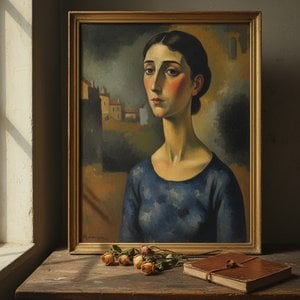
Delve into the haunting beauty of Amedeo Modigliani's portraits. Explore the intersection of Expressionism and Modernism through an expert analysis of his iconic elongated forms, melancholic gazes, and profound influence on art history.

Immerse yourself in the raw emotion of Egon Schiele. Explore 25 iconic Expressionist masterpieces, from haunting self-portraits to profound sketches. Find museum-quality art reproductions and curated decor inspiration. Discover all masterpieces on WahooArt.com.

Discover the profound alchemy of art. Explore how masters transform raw emotion into timeless masterpieces through light, color, and texture. Elevate your collection with expert insights into the soul of fine art and the enduring beauty of Impressionist techniques.

Explore 25 iconic Modigliani masterpieces and their soulful stories. Discover the full collection online at WahooArt.com.
 Предпросмотр
 Поделиться
 Поделиться
 Детали произведения
 Руководство

 Скачать
 Похожие предметы
 Рентгенография
 Слайд-шоу
 Вопросы и ответы
 Статистика просмотров

 Читать далее









 Вариант со стеклом доступен только для размеров менее 110 см


