БЕСПЛАТНАЯ КОНСУЛЬТАЦИЯ ПО ВОПРОСАМ ИСКУССТВА

x
Заказать принт Заказать принтКупить цифровое изображение Купить цифровое изображение ПоделитьсяПоделиться
ПодробнееПодробнее Добавить в избранное Добавить в избранное СкачатьСкачать Похожие работыПохожие работы РентгенографияРентгенография Слайд-шоуСлайд-шоу

Untitled

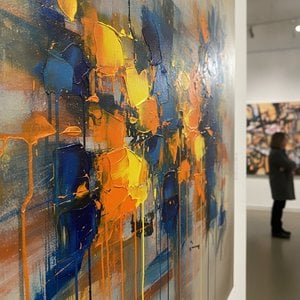
Experience the vibrant energy of Karel Appel's COBRA masterpiece; this abstract burst of color captures raw instinct from 1960—discover your own artistic freedom.

Карл Appel – яркий художник CoBrA, известный своими смелыми абстракциями и скульптурами. Его работы отражают детскую непосредственность и бунтарский дух послевоенной Европы. Откройте для себя мир экспрессивного искусства!

Масляная репродукция ручной работы

Картина маслом на холсте в выбранном вами размере и раме, написанная на заказ нашими художниками.

Standard
custom
CM
INCH

Выберите один из наших стандартных размеров, соответствующих оригинальным пропорциям произведения искусства.

ширина
высота

Вы можете указать собственные размеры, чтобы картина идеально вписалась в выбранную раму или пространство. Если выбранный вами размер не соответствует пропорциям оригинала, мы либо обрежем полотно, либо расширим его за счет дополнительных элементов, написанных вручную. Цифровой макет будет отправлен вам на утверждение перед началом производства.
Обратите внимание, что предварительный просмотр на экране не отражает фактическую обрезку или расширение. Только макет точно покажет окончательную композицию.
Хотя доступны индивидуальные размеры, мы рекомендуем выбирать вариант из предопределенного списка, чтобы сохранить исходные пропорции.

Примеры того, что можно изменить: заменить лицо на фото клиента; добавить домашнее животное (например, заменить кошку на собаку); добавить скрытое послание на фон; изменить пейзаж или детали фона.
После оформления заказа команда WahooArt.com свяжется с клиентом по электронной почте для уточнения деталей и предоставит предварительный макет

Доставка по всему миру () за 3–4 недели вместо стандартных 5 недель. (2 Июль). Без компромиссов в качестве.

why_choose_icon
Бесплатная экспресс-доставка по всему миру
why_choose_icon
Высококачественный льняной холст
why_choose_icon
Полное страхование доставки
why_choose_icon
Гарантия возмещения таможенных пошлин
why_choose_icon
Гарантия точного соответствия цветов
why_choose_icon
Политика возврата в течение 60 дней (только при наличии дефектов)
why_choose_icon
Гарантия возврата 100% средств
why_choose_icon
Предложение оптовых скидок

Общая стоимость

-

reproduction

Untitled

Техника репродукции

Размер репродукции

-

Итоговая стоимость

-

Основные сведения

  • Title: Untitled
  • Movement: COBRA
  • Notable elements or techniques: Gestural forms, Layered texture
  • Subject or theme: Organic shapes
  • Influences: European Avant-garde
  • Artistic style: Abstract Expressionism
  • Medium: Screenprint

Тест по искусству

В каждом вопросе только один правильный ответ.

Вопрос 1:
What avant-garde movement is Karel Appel strongly associated with for this artwork?
Вопрос 2:
Which element of the artwork's composition is described as eschewing traditional perspective?
Вопрос 3:
According to the description, what emotion is often symbolized by the color yellow in Appel's work?
Вопрос 4:
What type of forms populate the artwork, described as rounded and organic, reminiscent of natural elements?
Вопрос 5:
What medium is the artwork most likely to be, given the visible layering and texture?

Описание произведения

A Burst of Color and Instinct: Decoding Karel Appel’s Untitled

Karel Appel's "Untitled," a striking print or screenprint from 1960, embodies the rebellious spirit of COBRA – the Dutch avant-garde movement that shook the foundations of postwar European art. More than just pigment on paper, this artwork is an assertion of spontaneous expression and a deliberate rejection of academic formalism, reflecting Appel’s profound connection to the everyday experiences of working-class Holland during his formative years. The image immediately captivates with its bold palette – dominant yellows, blues, reds, and blacks punctuated by flashes of orange and white – applied in broad, gestural strokes that convey an undeniable sense of dynamism.
  • Composition & Rhythm: Appel eschews traditional perspective, opting instead for an asymmetrical arrangement where forms overlap and intersect. This seemingly chaotic composition subtly reveals underlying rhythmic patterns through repeated shapes and colors, guiding the viewer’s eye across the surface in a continuous exploration of visual elements.
  • Form & Texture: The artwork is populated by biomorphic forms – rounded, organic shapes reminiscent of natural elements or abstracted figures – creating a complex textural landscape. Visible brushstrokes contribute to an impression of immediacy and materiality, hinting at Appel’s hand application during the printmaking process.
  • Color Theory & Emotion: The color choices aren't merely decorative; they are deliberately emotive. Yellow symbolizes optimism and energy, while blue conveys tranquility and contemplation. Red injects passion and vitality into the composition, mirroring Appel’s fascination with primal forces and childlike wonder.
The COBRA movement itself was born from a desire to break free from the constraints of Surrealism and Cubism, prioritizing intuition and gesture over meticulous representation. Appel sought inspiration in primitive art forms – African masks and tribal sculptures – believing that these conveyed unfiltered emotion and challenged Western artistic conventions. This influence is palpable in “Untitled,” where the artist abandons rational thought for a visceral response to the world around him.
  • Technique & Medium: Likely produced through screenprinting, the artwork’s layered texture speaks volumes about Appel's meticulous approach to printmaking. The process itself – transferring ink onto paper – was chosen specifically to capture and amplify the artist’s spontaneous marks, ensuring that the energy of his initial gesture remained faithfully reproduced.
  • Symbolism & Interpretation: Beyond its aesthetic qualities, “Untitled” invites contemplation on themes of freedom and spontaneity. Appel's work consistently explores the intersection between human emotion and natural forms, suggesting a belief in the transformative power of unfiltered experience. The absence of recognizable imagery encourages viewers to engage with the artwork on an emotional level, prompting them to consider their own responses to color, shape, and texture.
Ultimately, Karel Appel’s “Untitled” transcends mere visual appeal; it stands as a testament to the enduring legacy of COBRA – a movement that championed artistic liberation and celebrated the beauty of imperfection. Its vibrant colors, dynamic forms, and textured surface continue to inspire artists and collectors alike, securing its place as an iconic exemplar of postwar abstraction.

Похожие произведения


Биография художника

Christiaan Karel Appel: A Life Painted in Bold Strokes

Karel Appel, affectionately known as ‘Kik’ from childhood, burst onto the post-war art scene like a vibrant explosion of color and energy. Born in Amsterdam in 1921, his early life was steeped in the everyday rhythms of working-class Holland – his father a barber, his lineage tracing back to French Huguenots through his mother. This grounding, however, would soon be superseded by an irrepressible artistic drive that defied convention and ultimately reshaped the landscape of European art. A pivotal moment arrived at age fourteen with his first painting, a still life of fruit, followed shortly after by a paint set and easel gifted by his uncle Karel Chevalier, who also provided early instruction. These gifts weren’t merely tools; they were keys unlocking a world where imagination reigned supreme. The shadow of the Second World War loomed large over Appel’s formative years. Studying at the Rijksakademie van Beeldende Kunsten in Amsterdam during the German occupation proved challenging, yet it was there he forged lifelong bonds with fellow artists Corneille and Constant, friendships that would prove crucial to his artistic evolution. Facing opposition from his parents regarding his chosen path and fearing forced labor under Nazi rule, Appel bravely left home, choosing a life dedicated to art over conformity.

Early Life and Artistic Beginnings

Christiaan Karel Appel was born on April 25, 1921, in Amsterdam’s Dapperstraat 7, the son of Jan Appel, who ran a barbershop, and Johanna Chevallier, descended from Huguenot refugees. He had three brothers. From a young age, Appel demonstrated an innate fascination with art—a passion ignited by his uncle Karel Chevalier, who gifted him a paint set and easel at fourteen. This simple act profoundly shaped Appel’s artistic trajectory, fostering a belief in spontaneous expression and rejecting academic constraints. His first painting, a still life of fruit, served as a formative experience, establishing the foundation for his distinctive style.

The CoBrA Revolution: Embracing Childlike Vision

Appel’s artistic journey truly blossomed with the formation of the CoBrA group in 1948 – an acronym derived from Copenhagen, Brussels, and Amsterdam—representing the movement’s core cities. Alongside Corneille Guillaume Beverloo and Constant Nieuwenhuys, Appel spearheaded a radical departure from established artistic norms. CoBrA wasn’t merely a style; it was a philosophy rooted in spontaneity, experimentation, and a profound embrace of the untamed creativity found in children's art and primitive cultures. Influenced by masters like Pablo Picasso and Henri Matisse, as well as the raw energy of Jean Dubuffet, Appel rejected rigid formalism in favor of intuitive expression. He began sculpting in 1947, utilizing assemblage techniques – constructing works from found materials painted in a bold palette of white, red, yellow, blue, and black—a technique that would become synonymous with his artistic vision. The CoBrA group’s manifesto declared “La cause était entendue,” rejecting the conventions of Surrealism and De Stijl.

International Recognition and Artistic Development

Appel’s relocation to Paris in 1950 marked a pivotal moment, propelling him into an era of prolific international travel and exposure. He explored Mexico, the USA, Yugoslavia, and Brazil, absorbing diverse cultural influences that enriched his artistic vocabulary. His debut American gallery exhibition at Martha Jackson Gallery in 1954 garnered significant acclaim, followed by inclusion in MoMA’s “The New Decade” exhibition in 1955—a testament to CoBrA's influence on the broader art landscape. Appel’s monumental murals continued to solidify his reputation as a visionary artist, demonstrating his ability to translate his dynamic style onto grand scales. Despite initial resistance from critics and institutions, Appel experienced a resurgence of popularity in the Netherlands after 1990, culminating in major exhibitions organized by Rudy Fuchs in Amsterdam and Brussels—affirming his legacy within his homeland.

Legacy and Enduring Influence

Karel Appel’s contribution to post-war European art is undeniable. He established the Karel Appel Foundation to safeguard his artworks and promote public awareness of his oeuvre, ensuring that future generations could appreciate the power of his distinctive aesthetic. His unwavering belief in spontaneity and childlike vision—inspired by children's art—continues to resonate with contemporary artists who champion experimentation and reject traditional boundaries. Appel’s work remains a significant testament to the transformative potential of artistic expression and serves as an enduring inspiration for artists worldwide.
Кarel Appel

Кarel Appel

1921 - 2006 , Нидерланды

Основные сведения

  • Artistic Movement Or Style: Кобра
  • Artists Or Movements Influenced By This Artist: ['Сюрреализм']
  • Artists Who Influenced This Artist:
    • Пабло Пикассо
    • Э Henri Matisse
  • Date Of Birth: 25 апреля 1921 г.
  • Date Of Death: 3 мая 2006 г.
  • Full Name: Christiaan Karel Appel
  • Nationality: Нидерландцы
  • Notable Artworks:
    • Квадратный человек
    • Женщина-ворона
    • Мамонт
  • Place Of Birth: Амстердам, Нидерланды