x
ПредпросмотрПредпросмотр Предпросмотр в ARПредпросмотр в AR Купить картину ручной работы Купить картину ручной работыКупить изображение Купить изображение ПоделитьсяПоделиться
Детали произведенияДетали произведения Добавить в избранное Добавить в избранное СкачатьСкачать Похожие работыПохожие работы РентгенографияРентгенография Слайд-шоуСлайд-шоу

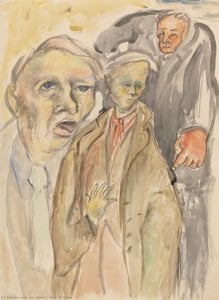
Mujer desnuda reclinada

Joy Hester's 'Mujer desnuda reclinada' (1955) is an emotionally charged Expressionist ink drawing capturing vulnerability and introspection through fluid lines & earthy tones, reflecting her unique vision.

Джэй Ст Клер Хестер (1920-1960) – выдающаяся австралийская модернистка, известная эмоциональными чернильными рисунками, исследующими любовь, потерю и человеческую душу. Ключевая фигура «Яростных гусениц» и круга Хейда.

Жикле / Арт-принт

Печать (жикле) или холст музейного качества с быстрыми сроками изготовления и широким выбором вариантов отделки. (Купить картину ручной работы Купить картину ручной работыКупить изображение Купить изображение)

P118B $10
P118H $10
P118W $10
P438Z $10
P508JH $12
P508YH $12
P805H $10
P805Z $10
P919BZ $10
P919G $10
P919XJ $10
P959ZH $10
P968JZ $12
W106C $8
W218G $10
W218JH $8
W218Y $10
W307PJ $10
W316G $10
W316PJ $8
W316Y $10
W398PJ $8
W4111J $10
W500HY $15
W500JH $15
W692G $12
W849H $8
W940BG $15
W953PJ $8

Стандартный размер
на заказ
CM
INCH

Выберите один из наших стандартных размеров, соответствующих оригинальным пропорциям произведения искусства.

ширина
высота

Вы можете указать свои собственные размеры, чтобы репродукция идеально подошла под конкретную раму или пространство. Если выбранный вами размер не будет соответствовать пропорциям оригинала, мы либо обрежем произведение, либо дополним изображение зеркальным отражением краев или однотонной заливкой. Перед началом производства вам будет отправлен цифровой макет для утверждения.
Пожалуйста, обратите внимание, что предварительный просмотр на экране не отображает фактическую обрезку или расширение изображения. Только макет точно покажет финальную композицию.
Несмотря на возможность заказа индивидуальных размеров, мы рекомендуем выбирать размер из предопределенного списка, чтобы сохранить оригинальные пропорции.

Доставка по всему миру () за 2 недели вместо стандартных 4/5 недель. (4 Сентябрь)

why_choose_icon
Бесплатная экспресс-доставка по всему миру
why_choose_icon
Высококачественный льняной холст
why_choose_icon
Полное страхование доставки
why_choose_icon
Гарантия возмещения таможенных пошлин
why_choose_icon
Гарантия точного соответствия цветов
why_choose_icon
Политика возврата в течение 60 дней (только при наличии дефектов)
why_choose_icon
Гарантия возврата 100% средств
why_choose_icon
Предложение оптовых скидок

Общая стоимость

$ 68

reproduction

Mujer desnuda reclinada

Жикле / Арт-принт

Размер репродукции

-

Итоговая стоимость

$ 68

Основные сведения

  • Artist: Joy St Clair Hester
  • Influences:
    • Hester
    • O'Connor
  • Location: Art Gallery NSW
  • Movement: Expressionism
  • Medium: Ink wash/Watercolor
  • Artistic style: Modernist
  • Year: 1955

Тест по искусству

В каждом вопросе только один правильный ответ.

Вопрос 1:
What is the primary medium used in Joy St Clair Hester’s ‘Mujer desnuda reclinada’?
Вопрос 2:
The artwork primarily focuses on:
Вопрос 3:
Joy St Clair Hester was associated with which artistic movement?
Вопрос 4:
What is the dominant color palette of ‘Mujer desnuda reclinada’?
Вопрос 5:
According to the provided information, what influenced Joy Hester’s artistic style?

A Portrait of Introspection: Joy St Clair Hester’s *Mujer Desnuda Reclinada*

Joy St Clair Hester's *Mujer Desnuda Reclinada*, painted in 1955, is not merely a depiction of the human form; it’s an intimate exploration of vulnerability, loss, and the quiet power of observation. This arresting work, rendered primarily in shades of white, cream, and charcoal against a profound dark background, embodies the core tenets of Hester's distinctive Expressionist style – a language born from personal experience and imbued with a haunting emotional resonance.

The subject, a reclining nude female figure, is presented with an arresting directness. Her pose, relaxed yet subtly alert, suggests both vulnerability and a quiet strength. The artist’s masterful use of fluid, almost hesitant lines defines the contours of her body, avoiding any overtly sensual portrayal. Instead, Hester focuses on capturing the essence of the form – its curves, its weight, its inherent dignity – through a deliberate restraint that amplifies the emotional impact. The simplicity of the palette and the emphasis on line create an atmosphere of profound introspection, inviting the viewer to contemplate the figure’s inner world.

Echoes of the Heide Circle and Australian Modernism

To fully appreciate *Mujer Desnuda Reclinada*, it's crucial to understand its context within the vibrant artistic circles of 1950s Australia. Hester was a key member of both the Heide Circle, centered around the Reed family’s home, and the Angry Penguins group – movements that challenged traditional art practices and sought to forge a distinctly Australian modern identity. The influence of these groups is evident in Hester's willingness to break free from academic constraints and embrace a more personal, emotionally charged approach to her work.

Her early life, marked by the loss of her father at a young age, profoundly shaped her artistic vision. This experience, coupled with the anxieties surrounding World War II and her own battle with Hodgkin’s disease, fueled a deep exploration of mortality and the human psyche – themes that resonate powerfully in *Mujer Desnuda Reclinada*. The painting can be seen as a meditation on fragility, resilience, and the enduring beauty found within moments of quiet contemplation.

The Language of Line: Technique and Style

Hester’s technique is characterized by a remarkable economy of line. She eschews detailed rendering in favor of bold, expressive strokes that define form and convey emotion with exceptional subtlety. The varying weights of the lines – thick for outlining major contours, thinner for suggesting texture and shadow – create a dynamic interplay of visual elements. The predominantly monochromatic palette further emphasizes this linear approach, allowing the lines themselves to carry the weight of meaning.

The painting’s flatness—a deliberate choice by Hester—contributes to its immediate impact. There's no illusion of depth or spatial perspective; instead, the viewer is drawn into a close encounter with the subject, invited to engage with her presence on an emotional level. The dark background serves not as a mere backdrop but as a crucial element in defining the figure’s luminosity and emphasizing her vulnerability.

Symbolism and Emotional Resonance

*Mujer Desnuda Reclinada* transcends a simple depiction of a nude form; it's a potent symbol of introspection, resilience, and the quiet dignity of the human spirit. The reclining pose itself suggests surrender, acceptance, and a willingness to confront one’s own vulnerabilities. The figure’s averted gaze invites the viewer to share in her silent contemplation, fostering a sense of empathy and connection.

Ultimately, this painting is a testament to Hester's extraordinary ability to distill complex emotions into simple, yet profoundly moving forms. It remains a powerful example of Australian Modernism—a poignant exploration of the human condition rendered with remarkable grace and emotional depth.


Биография художника

Joy St Clair Hester (1920–1960): Australian Modernist renowned for emotionally charged ink drawings exploring love, loss, & the human psyche. A key figure of the Angry Penguins/Heide Circle.

Joy St Clair Hester, a pivotal figure in Australian Modernism, lived a life marked by both artistic fervor and personal hardship. Born in Elwood, Australia, in 1920, her early years were shadowed by the loss of her father, an event that would subtly yet profoundly influence the emotional depth of her later work. From her formative studies at St Michael’s Grammar School and Brighton Technical School, Hester demonstrated a clear artistic inclination, culminating in recognition at the National Gallery School in Melbourne where she won the Drawing Head from Life prize in 1938. This early success signaled not just technical skill but an emerging ability to capture the essence of human form—a talent that would become her signature. It was also during this period that Hester began to break free from traditional artistic constraints, seeking a more expressive and personal visual language.

Early Life and Art Training

Joy Hester’s childhood in Elwood instilled within her a sensitivity to observation and an appreciation for the subtleties of human experience—qualities that would inform her artistic vision throughout her life. Her father’s untimely death at the age of twelve profoundly impacted her emotional landscape, fostering a preoccupation with themes of loss and vulnerability that permeate her oeuvre. Recognizing her innate talent, Hester pursued formal art education diligently, attending St Michael’s Grammar School from 1933 to 1937 and subsequently enrolling in Commercial Art for a year at Brighton Technical School. This grounding in technical skills provided the foundation upon which she built her distinctive artistic style. Crucially, she excelled at the National Gallery School in Melbourne (1937–1938), securing the Drawing Head from Life prize—a testament to her mastery of anatomical representation and her ability to convey emotion through precise draughtsmanship. Her instructors encouraged experimentation beyond conventional techniques, nurturing her desire to forge a path that was both intellectually stimulating and aesthetically innovative.

The Heide Circle and Angry Penguins

Joy Hester’s artistic trajectory took its most decisive turn in 1938 with her encounter—and subsequent relationship—with Albert Tucker, initiating not only a significant romantic partnership but also an important artistic collaboration. This connection propelled her into the orbit of Sunday Reed, a visionary patron who championed avant-garde art and fostered a vibrant intellectual environment. Together they formed the Heide Circle alongside artists Sidney Nolan, Arthur Boyd, and Charles Blackman—a group united by a shared commitment to challenging artistic conventions and exploring radical new ideas. Heide served as a crucible for experimentation, encouraging artists to confront societal norms and redefine their understanding of Australian identity. Simultaneously, Hester became a founding member of the Contemporary Art Society (CAS) and, notably, the sole female participant in the groundbreaking Angry Penguins movement—a collective that fiercely defended modernist principles against prevailing conservative sentiment. Her work embodied the group’s rebellious spirit and unwavering belief in artistic freedom, solidifying her position as a trailblazer within Australian art history.

A Distinctive Style: From Observation to Emotion

Hester’s artistic style evolved dramatically throughout her career, reflecting her growing engagement with psychological themes and her mastery of innovative techniques. Initially influenced by traditional academic drawing methods—particularly the meticulous study of human anatomy—she swiftly abandoned these conventions in favor of a more expressive approach. Embracing watercolor and ink as her primary mediums, Hester achieved remarkable textural depth and tonal nuance—capturing not merely visual likeness but also profound emotional resonance. Her distinctive technique involved rapid sketching with bold lines infused with palpable energy, conveying feelings of anxiety, fear, and vulnerability with uncompromising honesty. The shadow of World War II profoundly impacted her artistic vision, prompting her to explore themes of mortality and existential questioning. Recurring motifs—faces rendered with haunting intensity—became emblems of her artistic exploration, reflecting her deep empathy for the human condition. Her masterful use of line—dark, sinuous lines that seemed to pulsate with emotion—established a signature style that distinguishes her work from its contemporaries.

Major Achievements and Legacy

Joy St Clair Hester’s contribution to Australian Modernism is undeniable. Her unflinching exploration of psychological states—coupled with her innovative technique—challenged artistic orthodoxies and paved the way for future generations of artists. Despite facing considerable adversity during her lifetime, including a debilitating illness diagnosed in 1947—Hodgkin's lymphoma—Hester persevered in her creative pursuits, producing a prolific body of work that continues to inspire admiration and scholarly inquiry. Her series *Face*, *Sleep,* and *Love* (1948–49)—amongst many others—remain iconic representations of modernist expressionism, demonstrating her unparalleled ability to convey complex emotions through simple visual forms. Furthermore, Hester’s participation in the Angry Penguins movement cemented her place as a champion of artistic freedom and intellectual courage—a legacy that transcends time and continues to resonate with audiences today. Her enduring influence is evident in the work of subsequent Australian artists who embraced similar stylistic approaches and thematic concerns—solidifying Joy St Clair Hester's position as one of Australia’s most important modernist figures.
Джэй Ст Клер Хестер

Джэй Ст Клер Хестер

1920 - 1960 , Австралия

Основные сведения

  • Artistic Movement Or Style: Экспрессионизм и Модернизм
  • Artists Or Movements Influenced By This Artist: ['Английский экспрессионизм']
  • Artists Who Influenced This Artist:
    • Эйса О'Коннор
    • Данила Васильефф
  • Date Of Birth: Август 21, 1920
  • Date Of Death: Декабрь 4, 1960
  • Full Name: Joy St Clair Hester
  • Nationality: Австралиец
  • Notable Artworks:
    • Лицо
    • Сон
    • Любовь
  • Place Of Birth: Эльсторвик, Австралия