Примерить в интерьере Примерить в AR Переключиться на печать Перейти к цифровым изображениям Отправить
Подробнее Руководство Добавить в избранное Скачать Похожие объекты Рентгенография Слайд-шоу Статистика

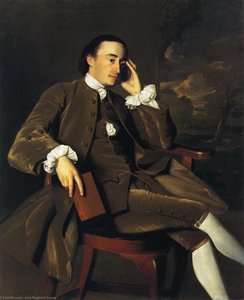
John A. Sidell

Experience Neoclassical elegance with John Vanderlyn's 1830 portrait of John A. Sidell, showcasing masterful detail and classical form; discover this American art masterpiece today.

Джон Вандерлин (1775-1852) – пионер американского неоклассицизма, известный портретами и историческими работами, такими как «Прибытие Колумба». Его искусство стало мостом между европейской академией и развивающейся американской живописью.

Масляная репродукция ручной работы

Картина маслом на холсте в выбранном вами размере и раме, написанная на заказ нашими художниками. ( Переключиться на печать Перейти к цифровым изображениям)

Corner sample of the P118B picture frame: moulded polystyrene, 5 cm wide and 3 cm thick
P118B $10
Corner sample of the P118H picture frame: moulded polystyrene, 5 cm wide and 3 cm thick
P118H $10
Corner sample of the P118W picture frame: moulded polystyrene, 5 cm wide and 3 cm thick
P118W $10
Corner sample of the P438Z picture frame: moulded polystyrene, 5.5 cm wide and 3.5 cm thick
P438Z $10
Corner sample of the P508JH picture frame: moulded polystyrene, 7 cm wide and 3.5 cm thick
P508JH $12
Corner sample of the P508YH picture frame: moulded polystyrene, 7 cm wide and 3.5 cm thick
P508YH $12
Corner sample of the P805H picture frame: moulded polystyrene, 5 cm wide and 3.5 cm thick
P805H $10
Corner sample of the P805Z picture frame: moulded polystyrene, 5 cm wide and 3.5 cm thick
P805Z $10
Corner sample of the P919BZ picture frame: moulded polystyrene, 7 cm wide and 3.5 cm thick
P919BZ $10
Corner sample of the P919G picture frame: moulded polystyrene, 7 cm wide and 3.5 cm thick
P919G $10
Corner sample of the P919XJ picture frame: moulded polystyrene, 7 cm wide and 3.5 cm thick
P919XJ $10
Corner sample of the P959ZH picture frame: moulded polystyrene, 5 cm wide and 3 cm thick
P959ZH $10
Corner sample of the P968JZ picture frame: moulded polystyrene, 6 cm wide and 4 cm thick
P968JZ $12
Corner sample of the W106C picture frame: solid wood, 5 cm wide and 3 cm thick
W106C $8
Corner sample of the W218G picture frame: solid wood, 5 cm wide and 3 cm thick
W218G $10
Corner sample of the W218JH picture frame: solid wood, 5 cm wide and 3 cm thick
W218JH $8
Corner sample of the W218Y picture frame: solid wood, 5 cm wide and 3 cm thick
W218Y $10
Corner sample of the W307PJ picture frame: solid wood, 6 cm wide and 3 cm thick
W307PJ $10
Corner sample of the W316G picture frame: solid wood, 6 cm wide and 3 cm thick
W316G $10
Corner sample of the W316PJ picture frame: solid wood, 6 cm wide and 3 cm thick
W316PJ $8
Corner sample of the W316Y picture frame: solid wood, 6 cm wide and 3 cm thick
W316Y $10
Corner sample of the W398PJ picture frame: solid wood, 5 cm wide and 3 cm thick
W398PJ $8
Corner sample of the W4111J picture frame: solid wood, 6.5 cm wide and 3.5 cm thick
W4111J $10
Corner sample of the W500HY picture frame: solid wood, 7 cm wide and 5 cm thick
W500HY $15
Corner sample of the W500JH picture frame: solid wood, 7 cm wide and 5 cm thick
W500JH $15
Corner sample of the W692G picture frame: solid wood, 8 cm wide and 4 cm thick
W692G $12
Corner sample of the W849H picture frame: solid wood, 5 cm wide and 3 cm thick
W849H $8
Corner sample of the W940BG picture frame: solid wood, 7.5 cm wide and 4.5 cm thick
W940BG $15
Corner sample of the W953PJ picture frame: solid wood, 6 cm wide and 3.5 cm thick
W953PJ $8

Стандартный размер
индивидуальный заказ
CM
INCH

Выберите один из наших стандартных размеров, соответствующих оригинальным пропорциям произведения искусства.

ширина
высота

Вы можете указать собственные размеры, чтобы картина идеально вписалась в выбранную раму или пространство. Если выбранный вами размер не соответствует пропорциям оригинала, мы либо обрежем полотно, либо расширим его за счет дополнительных элементов, написанных вручную. Цифровой макет будет отправлен вам на утверждение перед началом производства.
Обратите внимание, что предварительный просмотр на экране не отражает фактическую обрезку или расширение. Только макет точно покажет окончательную композицию.
Хотя доступны индивидуальные размеры, мы рекомендуем выбирать вариант из предопределенного списка, чтобы сохранить исходные пропорции.

Примеры возможных изменений: замена лица на фото клиента; добавление домашнего животного (например, замена кошки на собаку); добавление скрытого послания на фоне; изменение пейзажа или элементов фона.
После оформления заказа команда WahooArt.com свяжется с клиентом по электронной почте для уточнения деталей и предоставит предварительный макет

Доставка по всему миру () за 3–4 недели вместо стандартных 5 недель. (10 Октябрь). Без компромиссов в качестве.

Бесплатная экспресс-доставка по всему миру
Высококачественный льняной холст
Полное страхование при транспортировке
Гарантия возврата таможенных пошлин
Гарантия точного цветового соответствия
100-дневный период возврата (только при обнаружении дефектов)
Гарантия возврата 100% средств
Скидка при заказе нескольких работ

Итоговая стоимость

$ 272

John A. Sidell

Материал репродукции

Размер репродукции

-

Итоговая стоимость

$ 272

Краткая справка

  • Year: ca. 1830
  • Movement: Neoclassicism
  • Dimensions: 76 x 61 cm
  • Artist: John Vanderlyn
  • Medium: Oil on Canvas
  • Subject or theme: Portrait
  • Title: John A. Sidell

Викторина по искусству

В каждом вопросе только один правильный ответ.

Вопрос 1:
What artistic movement is John Vanderlyn’s ‘John A. Sidell’ primarily associated with?
Вопрос 2:
The painting features a prominent red curtain, which serves what purpose in the composition?
Вопрос 3:
What notable element can be found near the bottom right corner of the painting?
Вопрос 4:
John Vanderlyn’s background influenced his artistic approach by emphasizing training in European styles, specifically...
Вопрос 5:
Based on the image description, what can you infer about John Vanderlyn’s artistic skill?

A Pioneer Bridging Worlds: The Life and Art of John Vanderlyn

John Vanderlyn’s “John A. Sidell,” painted circa 1830, stands as a testament to the burgeoning Neoclassical movement's influence on American artistic sensibilities during its formative years. Born in Kingston upon Thames, England, in 1775, Vanderlyn wasn’t merely an artist; he was instrumental in establishing a precedent for American painters to pursue formal training abroad—specifically in Paris—rejecting the prevailing stylistic norms of London’s established academies.

His lineage provided him with an inherent understanding of artistic principles. As grandson to Pieter Vanderlyn, a respected colonial portraitist known for his meticulous attention to detail and masterful rendering of likenesses, John inherited not only a name but also a foundational skillset crucial for mastering the neoclassical style. Early employment with a New York print seller honed his observational abilities and exposed him to the broader artistic landscape, preparing him for his subsequent studies under Archiba Duffrin in Paris.

Style and Technique: Embracing Classical Idealism

“John A. Sidell” exemplifies Vanderlyn’s commitment to Neoclassical ideals—clarity of form, balanced composition, and idealized representation—characteristics deeply rooted in the artistic traditions of antiquity. The painting utilizes oil paint on canvas with a smooth, polished surface, demonstrating Vanderlyn's meticulous brushwork and skillful blending techniques. Careful attention is paid to anatomical accuracy and drapery folds, reflecting the influence of Greek sculpture and Roman portraiture.

Historical Context: Shaping American Artistic Identity

Painted during a period of significant cultural exchange between Britain and America, “John A. Sidell” reflects the broader trend toward adopting European artistic conventions. The neoclassical style gained traction in New York City as artists sought to elevate their craft beyond the more sentimental Romantic tendencies prevalent at the time. Vanderlyn’s work contributed to establishing American painting as a serious pursuit of aesthetic excellence alongside its European counterparts.

Symbolism and Emotional Impact: Dignity and Reflection

The portrait depicts John A. Sidell seated with an air of quiet contemplation, gazing intently at something unseen—perhaps a book or a document—suggesting intellectual engagement and inner reflection. Vanderlyn’s masterful depiction captures not only Sidell's physical appearance but also conveys a sense of dignified composure. The inclusion of the red curtain serves as a visual anchor, adding depth to the scene and subtly emphasizing the formality of the setting.

Decorative Potential: Bringing Classical Elegance Home

A high-quality reproduction of “John A. Sidell” would undoubtedly infuse any interior space with an aura of refined taste and intellectual curiosity. Its balanced composition, muted color palette dominated by reds and browns, and meticulous detailing align perfectly with contemporary design sensibilities seeking inspiration from timeless artistic traditions.

Вопросы и ответы

Сколько лет было Джон Вандерлин, когда создавалось произведение «John A. Sidell» в 1830 году?

Джон Вандерлин было 55 лет, когда в 1830 году была создана работа "John A. Sidell". Возраст рассчитан на основе года рождения художника, 1775.

К какому оттенку склоняется «John A. Sidell»?

Сквозь «John A. Sidell», Джон Вандерлин проходит Green to Violet Spectrum-й оттенок.

Как контраст и гармония сочетаются в работе «John A. Sidell»?

Цветовой анализ «John A. Sidell», Джон Вандерлин выявляет Serene контраст и Softly Mixed Palette гармонию.

В каком году было создано произведение «John A. Sidell», Джон Вандерлин?

«John A. Sidell» датируется 1830 годом. Эта дата позволяет определить место произведения в творчестве Джон Вандерлин и в контексте его эпохи.

Какова воспринимаемая яркость произведения «John A. Sidell», Джон Вандерлин?

Воспринимаемая яркость произведения «John A. Sidell», Джон Вандерлин составляет deep_shadow. Она может гармонировать с освещением в предназначенном для него пространстве.

Какому художнику приписывают работу «John A. Sidell»?

Автор произведения «John A. Sidell» — Джон Вандерлин. Работа внесена в каталог под именем Джон Вандерлин.

В каком году и к какому направлению относится произведение «John A. Sidell»?

«John A. Sidell» была создана в 1830 году в рамках направления Neoclassical Style.


Биография художника

A Pioneer Bridging Worlds: The Life and Art of John Vanderlyn

John Vanderlyn, born in Kingston, New York, on October 15, 1775, occupies a unique position in the narrative of American art. He wasn’t merely a painter; he was a cultural bridge, forging a path for American artists to embrace European training—specifically, the burgeoning Neoclassical style emanating from Paris—rather than defaulting to the established artistic centers of London. His story is one of ambition, talent, and ultimately, a poignant struggle against financial hardship, yet his contributions remain significant in shaping the early landscape of American painting. Vanderlyn’s lineage itself hinted at an artistic destiny; he was the grandson of Pieter Vanderlyn, a respected colonial portraitist, inheriting not just a name but also a foundational understanding of form and representation. Early employment with a New York print seller provided practical exposure to the art world, while initial instruction under Archibald Robinson honed his fundamental skills. However, it was through copying portraits by Gilbert Stuart—and crucially, spending time within Stuart’s studio—that Vanderlyn truly began to cultivate his own portraiture abilities, absorbing the techniques of a master already renowned for capturing likeness and character.

Early Life and Artistic Foundations

Born into a family with roots in Dutch colonial artistry, John Vanderlyn's early life was steeped in an appreciation for visual representation. His grandfather, Pieter Vanderlyn, was a well-regarded portraitist in New York, providing the young John with an inherent understanding of artistic principles. This familial legacy, combined with his father’s profession as a glazier-painter and dealer in painting supplies, exposed him to both the practical aspects of art production and the broader world of artistic patronage. Crucially, Vanderlyn's early training wasn't solely focused on technique; it was shaped by observation and imitation. His employment with a New York print seller provided valuable experience in reproducing images, fostering an understanding of composition and detail. However, his most formative years were spent within the studio of Gilbert Stuart, arguably the most celebrated portraitist of his time. Spending considerable time observing Stuart’s methods—his meticulous attention to likeness, his skillful use of light and shadow, and his ability to capture a subject's personality—proved invaluable. This apprenticeship instilled in Vanderlyn a deep respect for the art of portraiture and laid the groundwork for his own future success in this genre.

A Revolutionary Decision: Journeying to Paris

In 1796, a pivotal moment arrived that would fundamentally alter the course of Vanderlyn’s artistic development. Aaron Burr, recognizing Vanderlyn's potential and ambition, orchestrated an extraordinary opportunity—sending him to Paris to study art. This decision was revolutionary; it marked a deliberate shift away from the traditional British artistic influence that had long dominated American training. While many American artists continued to travel to London for instruction, Burr’s patronage enabled Vanderlyn to immerse himself in the heart of the European art world – specifically, the vibrant and influential Parisian scene. For five years, Vanderlyn dedicated himself entirely to absorbing the principles of Neoclassicism—an aesthetic movement that was rapidly gaining momentum across Europe. He studied at the *École des Beaux-Arts*, the prestigious Royal Academy of France, where he learned from leading artists and honed his skills in drawing, painting, and sculpture. This exposure profoundly shaped his style, instilling a sense of clarity, balance, and idealized beauty into his work—a direct reflection of the classical ideals that were so central to Neoclassical art.

The Embrace of Neoclassicism and Parisian Success

Parisian life was a whirlwind of artistic discovery for Vanderlyn. He witnessed firsthand the techniques employed by masters like Jacques-Louis David, Jean-Auguste-Dominique Ingres, and Théodore Géricault—artists who were pushing the boundaries of painting with their dramatic compositions, meticulous detail, and commitment to historical subjects. Vanderlyn quickly adapted these influences to his own style, developing a distinctive approach that combined European sophistication with an emerging American sensibility. In 1808, Vanderlyn achieved a significant milestone when he was awarded the gold medal at the *Salon*, the official exhibition of the Académie des Beaux-Arts. This recognition—a rare honor for a foreign artist—cemented his reputation as one of the most promising painters in Europe and signaled the beginning of a period of considerable success. The acclaim he received fueled his ambition and solidified his commitment to pursuing a career as a historical painter, a genre that was highly valued by European art institutions.

Major Works and Artistic Versatility

Vanderlyn’s career was remarkably diverse, encompassing portraiture, landscape painting, and even large-scale panoramic works. He secured commissions from prominent figures—James Monroe, John C. Calhoun, and Andrew Jackson all sat for his portraits—demonstrating his ability to capture the likenesses of important American leaders with both accuracy and grace. However, Vanderlyn’s ambitions extended beyond traditional portraiture. In 1802, he created two striking views of Niagara Falls, which were subsequently engraved and published in London, bringing the majesty of the American landscape to a European audience. This demonstrated his ability to capture dramatic landscapes and convey their grandeur through visual representation. His ambition reached new heights with *Caius Marius Amid the Ruins of Carthage*, exhibited at the Paris Salon of 1808, where it earned him a coveted gold medal—a testament to his mastery of Neoclassical technique and composition. Later, he experimented with panoramic paintings, including “Panoramic View of the Palace and Gardens of Versailles” (1818-19), demonstrating an innovative approach to immersive art experiences – a reflection of the growing popularity of grand vistas in European painting. Perhaps his most historically significant work was *The Landing of Columbus*, commissioned by Congress in 1842 for the U.S. Capitol rotunda, depicting a pivotal moment in American history.

Legacy and Historical Significance

John Vanderlyn’s legacy extends beyond his individual artworks. He was a true pioneer, challenging the established norms of American artistic training by championing the study of art in Paris. This opened doors for future generations of artists to explore new influences and develop their own unique styles. His commitment to Neoclassicism contributed significantly to the development of this aesthetic movement within American art, influencing subsequent painters with its emphasis on form, clarity, and historical subject matter. Furthermore, his paintings served as a visual record of early American history, capturing the likenesses of important figures and depicting pivotal events. As one of the founding members of the National Academy of Design, Vanderlyn played an active role in establishing a professional organization dedicated to promoting American art. Despite facing financial difficulties later in life—he died in relative obscurity on September 23, 1852, in Kingston, New York, and is buried at Wiltwyck Rural Cemetery—his contributions to the development of American painting remain undeniable. He was an artist who dared to look beyond established conventions, embracing innovation and leaving an indelible mark on the cultural landscape of his time.
Джон Вандерлин

Джон Вандерлин

1775 - 1852 , США

Краткая справка

  • Artistic Movement Or Style: Неоклассицизм
  • Artists Or Movements Influenced By This Artist: ['Американский неоклассицизм']
  • Artists Who Influenced This Artist: ['Дилл Стюарт']
  • Date Of Birth: 1775-10-15
  • Date Of Death: 1852-09-23
  • Full Name: John Vanderlyn
  • Nationality: Американский
  • Notable Artworks:
    • Прибытие Колумба
    • Водопады Ниагара
    • Марий среди руин
  • Place Of Birth: Кингстон, США