John Keates (1773 – 1852): Bridging Romanticism and Symbolism Through Italian Landscapes
John Keates, born March 30th, 1773, in Wells, Somerset, was a British schoolmaster whose artistic legacy extends far beyond his modest academic pursuits. He stands as a pivotal figure within the Pre-Raphaelite Brotherhood—a movement that championed idealized beauty and meticulous observation—and his paintings offer a unique glimpse into the aesthetic sensibilities of Victorian England.
Early Life & Education: Keates’s upbringing in a stable-keeper’s family instilled in him an appreciation for craftsmanship and detail, shaping his artistic approach. He excelled at Eton College, demonstrating exceptional talent in Latin and Greek—subjects considered crucial for cultivating intellectual rigor. This early exposure to classical scholarship would prove formative throughout his life.
Cambridge Years & Literary Influences: Keates pursued his studies at Cambridge University, earning prestigious accolades including the Browne Medal and Craven Scholarship. His profound engagement with Romantic poets like Wordsworth and Coleridge—particularly their exploration of nature’s sublime grandeur—fueled his artistic vision. He internalized Wordsworth's reverence for the English countryside and Coleridge's fascination with visionary imagination.
Career as Schoolmaster & Artistic Development: Following graduation, Keates embarked on a career as a schoolteacher—a vocation he embraced wholeheartedly—and honed his artistic skills through meticulous observation of the natural world. He traveled extensively throughout Europe during his formative years, immersing himself in the cultural milieu of the Renaissance and Baroque periods. This experience profoundly shaped his aesthetic sensibilities.
The Pre-Raphaelite Brotherhood & Artistic Style: Keates joined the Pre-Raphaelite Brotherhood in 1848—a collective dedicated to reviving artistic ideals considered lost under the influence of Michelangelo and Raphael. He sought to recapture the spirit of Renaissance art—characterized by harmonious proportions and luminous color palettes—rejecting what he perceived as the artificial conventions of academic painting.
Notable Works & Legacy: Keates produced approximately 150 paintings during his lifetime, showcasing an impressive range of subject matter—from Venetian interiors to Tuscan landscapes—and demonstrating remarkable technical proficiency. His work continues to inspire admiration for its understated elegance and profound sensitivity to the visual arts, securing his place as one of the Pre-Raphaelite Brotherhood’s most distinguished practitioners.
Exploring Keates’s Italian Landscapes: A Synthesis of Observation & Imagination
Keates’ fascination with Italy—particularly Venice—fueled his artistic endeavors. He traveled extensively throughout Europe during his formative years, immersing himself in the cultural milieu of the Renaissance and Baroque periods. This experience profoundly shaped his aesthetic sensibilities.
- Venetian Interiors: Keates’s depictions of Venetian palaces and churches exemplify the Pre-Raphaelite fascination with architectural grandeur and opulent ornamentation. He meticulously rendered intricate details—such as gilded stuccoes and richly embroidered draperies—capturing the sensory richness of Venetian life.
The Influence of Raphael & Classical Antiquity on Keates' Artistic Vision
Keates’s artistic sensibilities were undeniably shaped by his admiration for Raphael—the Renaissance painter whose frescoes in the Vatican adorned with mythological subjects served as a model for Pre-Raphaelite artists. He sought to emulate Raphael’s mastery of color and form, striving to achieve an aesthetic ideal rooted in classical antiquity.
- Mythological Subjects: Keates frequently depicted mythological narratives—drawing inspiration from Homer and Virgil—demonstrating a commitment to exploring themes of heroism, beauty, and moral virtue. His paintings resonate with the grandeur and idealism characteristic of Classical art.
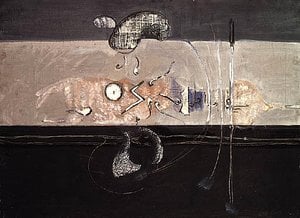
SI RO MA MAU: A Study in Atmospheric Perspective & Emotional Resonance
“SI RO MA MAU” stands as Keates’s most celebrated painting—a monumental landscape that embodies the Pre-Raphaelite commitment to capturing atmospheric perspective and conveying profound emotional resonance. The artwork is notable for its masterful depiction of a Tuscan hillside bathed in golden sunlight.
- Atmospheric Perspective: Keates skillfully employed atmospheric perspective—a technique pioneered by Leonardo da Vinci—to create an illusion of depth—rendering distant hills hazy and muted—while emphasizing the vibrancy of foreground elements. This meticulous attention to detail underscores the Pre-Raphaelite conviction that art should strive for realism.
Concluding Remarks: A Legacy of Quiet Elegance & Artistic Integrity
John Keates' artistic legacy endures as a testament to his unwavering dedication to craftsmanship, observation, and imaginative exploration. His paintings—characterized by understated elegance and profound emotional depth—continue to captivate audiences worldwide—affirming his place as one of the Pre-Raphaelite Brotherhood’s most distinguished practitioners.


 Предпросмотр
 Поделиться
 Поделиться
 Детали произведения
 Руководство

 Скачать
 Похожие предметы
 Рентгенография
 Слайд-шоу
 Вопросы и ответы
 Статистика просмотров
 Читать далее
 Перейти к печатным копиям





































 Вариант со стеклом доступен только для размеров менее 110 см