ПредпросмотрПредпросмотр Предпросмотр в ARПредпросмотр в AR Купить картину ручной работы Купить картину ручной работыПерейти к цифровым изображениям Перейти к цифровым изображениям ПоделитьсяПоделиться
Детали произведенияДетали произведения Добавить в избранное Добавить в избранное СкачатьСкачать Похожие работыПохожие работы РентгенографияРентгенография Слайд-шоуСлайд-шоу СтатистикаСтатистика

Madonna and Child

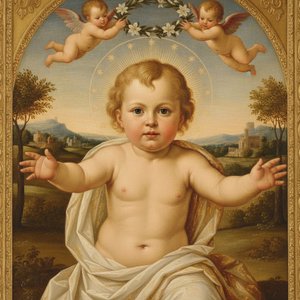
Explore Hans Baldung Grien's 'Madonna and Child' (1516). A poignant blend of Gothic & Renaissance styles, capturing motherhood’s vulnerability & divine grace with masterful detail.

Ханс Балдунг (1485-1545) – немецкий художник и гравер, мастер аллегорий и мистических сцен. Его работы сочетают реализм и экспрессию, отражая эпоху Реформации.

Жикле / Арт-принт

Печать (жикле) или холст музейного качества с быстрыми сроками изготовления и широким выбором вариантов отделки. (Купить картину ручной работы Купить картину ручной работыПерейти к цифровым изображениям Перейти к цифровым изображениям)

P118B $10
P118H $10
P118W $10
P438Z $10
P508JH $12
P508YH $12
P805H $10
P805Z $10
P919BZ $10
P919G $10
P919XJ $10
P959ZH $10
P968JZ $12
W106C $8
W218G $10
W218JH $8
W218Y $10
W307PJ $10
W316G $10
W316PJ $8
W316Y $10
W398PJ $8
W4111J $10
W500HY $15
W500JH $15
W692G $12
W849H $8
W940BG $15
W953PJ $8

Стандартный размер
на заказ
CM
INCH

Выберите один из наших стандартных размеров, соответствующих оригинальным пропорциям произведения искусства.

ширина
высота

Вы можете указать свои собственные размеры, чтобы репродукция идеально подошла под конкретную раму или пространство. Если выбранный вами размер не будет соответствовать пропорциям оригинала, мы либо обрежем произведение, либо дополним изображение зеркальным отражением краев или однотонной заливкой. Перед началом производства вам будет отправлен цифровой макет для утверждения.
Пожалуйста, обратите внимание, что предварительный просмотр на экране не отображает фактическую обрезку или расширение изображения. Только макет точно покажет финальную композицию.
Несмотря на возможность заказа индивидуальных размеров, мы рекомендуем выбирать размер из предопределенного списка, чтобы сохранить оригинальные пропорции.

Доставка по всему миру () за 2 недели вместо стандартных 4/5 недель. (14 Сентябрь)

why_choose_icon
Бесплатная экспресс-доставка по всему миру
why_choose_icon
Высококачественный льняной холст
why_choose_icon
Полное страхование доставки
why_choose_icon
Гарантия возмещения таможенных пошлин
why_choose_icon
Гарантия точного соответствия цветов
why_choose_icon
100-дневная политика возврата (только при обнаружении дефектов)
why_choose_icon
Гарантия возврата 100% средств
why_choose_icon
Предложение оптовых скидок

Общая стоимость

$ 68

reproduction

Madonna and Child

Жикле / Арт-принт

Размер репродукции

-

Итоговая стоимость

$ 68

Основные сведения

  • Movement: Northern Renaissance
  • Influences: Robert Campin
  • Subject or theme: Religious iconography
  • Title: Madonna and Child
  • Location: Staatliche Kunsthalle Düsseldorf
  • Artistic style: Late Gothic influence
  • Dimensions: 37 x 48 cm

Тест по искусству

В каждом вопросе только один правильный ответ.

Вопрос 1:
What artistic movement is most closely associated with Hans Baldung Grien’s style in ‘Madonna and Child’?
Вопрос 2:
The painting 'Madonna and Child' was created in which year?
Вопрос 3:
What is a key characteristic of Baldung’s portrayal of Mary compared to typical depictions of the Virgin in his era?
Вопрос 4:
What technique did Baldung primarily use in creating ‘Madonna and Child’?
Вопрос 5:
The painting includes several children. What does this detail suggest about the scene?

A Tender Encounter in the Heart of Bavaria

In the quiet, luminous depths of Hans Baldung Grien’s 1516 masterpiece, Madonna and Child, we encounter more than a mere religious icon; we enter a profound meditation on the sanctity of life and the vulnerability of love. Set against the backdrop of the burgeoning High Renaissance in Bavaria, this painting serves as a breathtaking bridge between the structured traditions of the Northern German Gothic and the expressive, psychological complexities of the emerging Mannerist movement. The scene is one of intimate devotion, where the Virgin Mary cradles her infant son with a tenderness that feels startlingly human. Unlike the distant, idealized figures often found in contemporary Italian works, Baldung presents a Mary whose presence is palpable, her maternal instinct rendered with an emotional resonance that transcends the boundaries of time and medium.

The composition draws the viewer into a nurturing sanctuary, where the central figures are surrounded by a soft, atmospheric warmth. As one gazes upon the painting, the eye is led through a delicate arrangement of figures—other children linger near the mother, their presence adding layers of familial depth to the divine narrative. Small, symbolic details are woven into the fabric of the scene, such as the subtle placement of an apple or a book, which serve as quiet reminders of the theological weight carried by the Christ child. These elements do not merely decorate; they anchor the spiritual significance of the moment, inviting collectors and enthusiasts to contemplate the intersection of the earthly and the divine.

Mastery of Light and Texture

Technically, Baldung’s work is a triumph of oil on panel, showcasing a level of meticulous craftsmanship that remains awe-inspiring centuries later. The artist utilized sophisticated layering and glazing techniques to achieve a remarkable luminosity, allowing light to seem as though it is emanating from within the skin of the holy figures themselves. This brilliance is particularly evident in the rendering of Mary’s drapery, where intricate folds and deep shadows create a sense of weight, movement, and tactile richness. The use of chiaroscuro—the dramatic interplay between light and shadow—is employed not just for structural depth, but to heighten the emotional impact of the scene, casting a soft glow upon the serene expression of the infant Jesus.

For the discerning interior designer or art lover, this painting offers an unparalleled sense of prestige and soulful elegance. The way Baldung manipulates texture—from the softness of a child's cheek to the heavy, woven quality of liturgical cloth—provides a visual feast that commands attention in any curated space. A high-quality reproduction of this work brings with it a sense of historical gravity and an atmosphere of peace, making it an ideal centerpiece for those seeking to infuse their surroundings with classical beauty and intellectual depth.

A Legacy of Expression and Emotion

To understand this painting is to understand the unique spirit of Hans Baldung Grien, an artist who dared to move beyond the polished perfection of his peers to embrace a more expressive, sometimes unsettling, psychological truth. His ability to blend the meticulous detail of the Northern tradition with the dramatic tension of Mannerism creates a work that is both comforting and deeply moving. The Madonna and Child stands as a testament to a period of immense cultural transformation, capturing the very essence of humanist thought through the lens of maternal grace.

Whether viewed as a historical artifact or a stunning piece of decorative art, the painting continues to resonate with its ability to evoke empathy. It invites the viewer to pause, to breathe, and to reconnect with the universal themes of protection, faith, and the enduring bond between parent and child. Owning a reproduction of such a significant work is not merely an acquisition of decor; it is an invitation to live alongside a masterpiece that celebrates the most profound aspects of the human experience.


Биография художника

A Swabian Enigma: The Life and Early Influences of Hans Baldung Grien

Hans Baldung Grien, a name synonymous with both brilliance and unsettling beauty, emerged from the rolling hills of Bavaria in 1485. Born in Schwäbisch Gmünd, a small Free Imperial City, he was an artist whose path diverged dramatically from the expected trajectory for his family—a lineage steeped in law and scholarship. Unlike many Renaissance artists who inherited their craft through generations of apprenticeship, Baldung’s father, Johann Baldung, a respected jurist serving the Bishopric of Strasbourg, envisioned a life of legal study for his son. Yet, young Hans chose the brush and burin, embarking on an artistic journey that would ultimately define him as one of the most distinctive and enigmatic figures of the German Renaissance. This decision wasn’t a rejection of his upbringing, but rather a redirection of intellectual curiosity—a characteristic that profoundly shaped his entire oeuvre. His early training commenced around 1500 in the Upper Rhineland with an artist from Strasbourg, laying the groundwork for his technical skills before he sought out more prominent masters to hone his craft. This initial period instilled within him a foundation of draftsmanship and composition, preparing him for the rigorous artistic environment that awaited him in Nuremberg.

Under Dürer’s Wing and Forging an Individual Style

The pivotal moment in Baldung's development arrived in 1503 when he became a workshop apprentice to Albrecht Dürer in Nuremberg. This period proved profoundly formative, exposing him to the meticulous detail, intellectual rigor, and innovative printmaking techniques that defined Dürer’s style. The two artists developed a close relationship; Baldung even managed Dürer's workshop during his master’s sojourn to Venice. However, while deeply influenced by Dürer—evident in early works showcasing precise draftsmanship and Northern realism—Baldung quickly began to forge his own artistic identity. He absorbed the lessons of the Renaissance masters but infused them with a uniquely German sensibility, characterized by expressive color, imaginative compositions, and an increasingly unsettling psychological depth. This divergence from Dürer’s more classical approach would become a hallmark of Baldung's mature style. His time in Venice, overseeing Dürer’s affairs, also exposed him to the burgeoning Italian Renaissance art scene, broadening his artistic horizons and subtly influencing his palette and compositional choices. He returned from Italy with a heightened sense of color and a willingness to experiment with spatial arrangements that set him apart from his contemporaries.

A Master of Many Mediums: Themes and Techniques

Hans Baldung Grien was an artist of remarkable versatility, proficient in painting, printmaking—particularly woodcuts and engravings—drawing, tapestry design, and even stained glass work. His paintings often feature small-scale works brimming with puzzling allegories and mythological narratives, rendered with a vibrant palette and a distinctive sense of spatial ambiguity. He excelled at portraiture, capturing the likenesses of his patrons with both realism and psychological insight. However, it is perhaps for his woodcuts that Baldung is most widely recognized today. These prints are characterized by their dramatic compositions, intricate detail, and often macabre subject matter. A recurring theme throughout his work is a fascination with witchcraft, death, and the supernatural—a reflection of the anxieties and beliefs prevalent in 16th-century Germany. His depictions of witches are particularly striking, portraying them not as stereotypical hags but as complex, even alluring figures, embodying both fear and fascination. *The Bewitched Groom*, for example, is a chillingly evocative work that encapsulates this preoccupation with the darker side of human experience. Baldung’s technique in woodcut was masterful; he exploited the medium's capacity for stark contrasts and intricate detail to create images that were both visually arresting and psychologically unsettling.

Reformation Currents and Lasting Legacy

Baldung’s career unfolded during a period of immense religious and political upheaval, marked by the rise of the Protestant Reformation. While not overtly aligned with any particular faction, his work often reflects the changing spiritual landscape of Germany. His monumental high altar for the city of Münster, completed in 1531, is a testament to this engagement, showcasing support for the reformation movement through its iconography and stylistic choices. In 1545, Baldung died in Strasbourg, leaving behind a body of work that continues to captivate and intrigue viewers today. His influence can be seen in the works of later German artists, and his unique blend of Renaissance technique, Northern expressionism, and allegorical complexity secures his place as a significant figure in art history. He remains an artist whose work invites contemplation, challenging us to confront the darker aspects of human nature and the mysteries of the unseen world. His exploration of themes like witchcraft and mortality continues to resonate with contemporary audiences, making him a timeless and compelling figure in the pantheon of Renaissance masters.

Museums and Collections

Baldung’s works can be found in prominent museums across Europe and North America:
  • Gemäldegalerie Alte Meister, Dresden, Germany: This renowned museum houses a significant collection of European paintings from the 15th to the 18th centuries, providing valuable context for understanding Baldung’s artistic milieu.
  • National Gallery of Art, Washington D.C.: The NGA holds several important woodcuts and drawings by Baldung, offering insights into his printmaking techniques and artistic process.
  • The J. Paul Getty Museum, Los Angeles: Features works that showcase the breadth of Baldung’s talent.
  • Kunstmuseum Basel, Switzerland: A museum with a rich collection spanning various periods, offering a broader understanding of Renaissance art in Europe.
These institutions provide opportunities to experience firsthand the captivating artistry and enduring legacy of Hans Baldung Grien.

Ханс Балдунг Гриен

Ханс Балдунг Гриен

1485 - 1545 , Германия

Основные сведения

  • Artistic Movement Or Style: Ренессанс, Маньеризм
  • Artists Or Movements Influenced By This Artist: ['Поздние немецкие художники']
  • Artists Who Influenced This Artist: ['Albrecht Dürer']
  • Date Of Birth: c. 1485
  • Date Of Death: 1545
  • Full Name: Hans Baldung Grien
  • Nationality: Германия
  • Notable Artworks:
    • Bewitched Groom
    • Death & Beauty
  • Place Of Birth: Schwäbisch Gmünd, Германия
Откройте для себя произведения искусства, подобранные по темам, стилям и характеристикам.