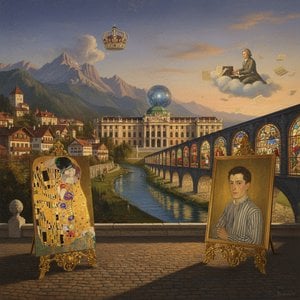
Ранние годы и формирование художника
Густав Климт, родившийся 14 июля 1862 года в Баумгартене близ Вены, вырос в семье, отмеченной как художественными наклонностями, так и финансовыми трудностями. Его отец, Эрнст Климт, был гравером по золоту – профессия, которая тонко, но глубоко повлияла на эстетические чувства молодого Густава: очарование золотым листом, скрупулезная детализация, сама роскошь. Семейные трудности привели к частым переездам в Вене, кочевой образ жизни, возможно, способствовал развитию у Климта острого наблюдения за окружающим миром и чувствительности к человеческому опыту. Уже в детстве его навыки рисования были замечательными, взращенными профессией отца и врожденным талантом, который быстро проявился. В 1876 году он поступил в Венскую школу прикладного искусства (Kunstgewerbeschule), начав формальное обучение архитектурной живописи под руководством Фердинанда Лауфбергера. Это дало ему прочную техническую основу, но также подвергло его воздействию преобладающим академическим стилям – стилям, которые Климт в конечном итоге бросил вызов и превзошел. Именно здесь он сформировал важное художественное партнерство со своим братом Эрнстом и Францем фон Матчем, сотрудничество, которое обеспечило первые заказы на декоративные фрески и потолки, заложив основу для его будущего успеха.
Восстание Венской сецессии
К 1890-м годам Климт все больше разочаровывался в консервативном художественном истеблишменте Вены. Он жаждал большей творческой свободы, пространства, где инновации могли процветать без ограничений традиции. Это стремление кульминировало в формировании Венской сецессии в 1897 году – поворотного момента в истории австрийского искусства. Климт был избран первым президентом движения, став лидером, который стремился порвать с жесткими академическими нормами и принять новые художественные течения, охватившие Европу – модерн (Art Nouveau), символизм и японизм. Собственное выставочное здание Сецессии, спроектированное Йозефом Марией Ольбрихом, стало символом этого бунта, храмом, посвященным современному искусству. Работа Климта была центральной для этики Сецессии, воплощая ее отказ от общепринятой эстетики и принятие декоративных элементов, смелых цветов и символических образов. Его картины начали исследовать темы любви, смерти и сексуальности с беспрецедентной откровенностью, бросая вызов социальным нормам и вызывая как восхищение, так и возмущение.
«Золотой период» и художественная зрелость
Около 1900 года Климт вошел в то, что теперь известно как его «золотой период», характеризующийся обильным использованием золотого листа, вдохновленным византийскими мозаиками и средневековыми иллюминированными рукописями. Эта техника превратила его картины в мерцающие, потусторонние видения, пронизанные чувством духовной глубины и чувственной привлекательности.
Поцелуй (1907-1908), возможно, его самая знаковая работа, является примером этого стиля – пара, заключенная в объятиях, окутанная золотым ореолом, их тела украшены замысловатыми узорами. В этот период Климт также создал серию потрясающих портретов, включая *Портрет Адели Блох-Бауэр I* (1907), который продемонстрировал его способность передать не только физическое сходство, но и психологическую сложность своих субъектов. Он все больше размывал границы между живописью и орнаментом, интегрируя декоративные элементы в свои композиции для создания гармоничного слияния формы и содержания. Влияние японского искусства – японизма – особенно заметно в его приплюснутой перспективе, акценте на линии и использовании декоративных узоров.
Споры, влияния и непреходящее наследие
Карьера Климта не обошлась без противоречий. В 1900 году он получил престижный заказ на роспись потолка Большого зала Венского университета, изображающий философию, юриспруденцию и теологию. Однако эти работы – особенно *Философия* – были признаны провокационными и даже порнографическими консервативными критиками, что привело к общественному возмущению и в конечном итоге побудило Климта отказаться от дальнейших государственных заказов. Этот инцидент стал поворотным моментом в его карьере, толкнув его к более частному покровительству и предоставив ему большую творческую свободу. На протяжении всей своей жизни Климт находился под влиянием разнообразных художников и стилей – от исторических картин Ганса Макарта до декоративного искусства Византии и Японии. Он также черпал вдохновение из символистского движения, исследуя темы мифологии, аллегории и бессознательного. Густав Климт продолжал активно писать до своей смерти 6 февраля 1918 года от инсульта во время пандемии испанского гриппа. Его более поздние работы исследовали более абстрактные формы и пейзажи, демонстрируя постоянную художественную эволюцию. Теперь он признан одной из самых важных фигур в истории австрийского искусства, ведущим представителем Венской сецессии и вечным символом элегантности модерна.
Его картины достигают высоких цен на аукционах, и его влияние продолжает ощущаться в современном искусстве и дизайне.
Ключевые характеристики & художественный стиль
- Символизм: Работа Климта глубоко символична, часто исследует темы любви, смерти, сексуальности и человеческого состояния.
- Модерн (Art Nouveau): Он был ведущей фигурой в движении модерн, характеризующемся органичными линиями, декоративными узорами и акцентом на красоту.
- «Золотой период» : Его использование золотого листа создало мерцающие, роскошные поверхности, которые стали его фирменным стилем.
- Декоративные элементы: Климт интегрировал декоративные элементы в свои композиции, размывая границы между живописью и орнаментом.
- Женская форма: Женское тело было центральным объектом в его работе, часто изображалось с чувственностью и психологической глубиной.



 Примерить в интерьере
 Заказать репродукцию ручной работы
 Отправить
 Поделиться
 Подробнее
 Руководство

 Скачать
 Похожие объекты
 Рентгенография
 Слайд-шоу
 Статистика
 Развернуть текст






































 Вариант со стеклом доступен только для размеров менее 110 см