БЕСПЛАТНАЯ КОНСУЛЬТАЦИЯ ПО ВОПРОСАМ ИСКУССТВА

x
Заказать принт Заказать принтЗаказать репродукцию Заказать репродукцию ПоделитьсяПоделиться
ПодробнееПодробнее Добавить в избранное Добавить в избранное СкачатьСкачать Похожие работыПохожие работы РентгенографияРентгенография Слайд-шоуСлайд-шоу

Pietà

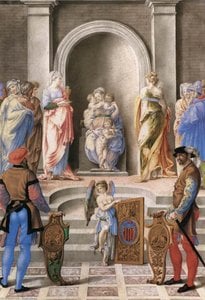
Experience the poignant beauty of Giulio Clovio's Pietà – a masterful Renaissance illumination showcasing Mary cradling Jesus after crucifixion, bathed in dramatic light and imbued with profound emotion.

Giulio Clovio (1498-1578) was the greatest High Renaissance illuminator, celebrated for his intricate miniatures & blending painting styles into manuscript art. Discover masterpieces like the Farnese Hours!

Приобретите цифровое изображение высокого разрешения в улучшенном качестве, которое значительно превосходит онлайн-превью.

Каждый файл тщательно подготавливается нашими специалистами с использованием передовых инструментов и экспертной ручной ретуши. Мы гарантируем исключительную четкость, точную цветопередачу и детальную проработку каждого изображения.

Финальный файл доставляется по электронной почте в течение 72 часов и оптимизирован для немедленного использования в профессиональной среде, при верстке и печати. Это тот же уровень качества, которому доверяют ведущие дизайнерские студии, издательства и галереи.

Цифровое изображение

Скачайте файл высокого разрешения для личного использования, печати и творческих проектов.

Итоговая стоимость

$9.99

Включено в каждый заказ цифровых изображений

Гарантия экспертной цифровой доставки

Выбирая WahooArt.com, вы получаете не просто изображение — вы приобретаете профессионально обработанное цифровое произведение искусства, созданное с безупречной точностью и под защитой гарантии качества. Вот всё, что автоматически входит в ваш заказ:

shipping_icon
Мгновенная доставка по e-mail

Ваш цифровой файл в высоком разрешении будет отправлен вам по электронной почте в течение 72 часов после оформления заказа — и сразу станет доступен для использования.

canvas_icon
Цифровой файл с ИИ-улучшением

Ваше произведение искусства проходит профессиональную оптимизацию с использованием передовых инструментов ИИ и ручной обработки, что гарантирует максимальную детализацию, четкость и точность цветопередачи.

insurance_icon
Бессрочная бесплатная повторная доставка

Случайно удалили или потеряли файл? Не беспокойтесь — мы отправим его вам повторно в любое время и совершенно бесплатно.

tax_icon
Без импортных пошлин — навсегда

Наслаждайтесь вашим произведением искусства мгновенно без таможенных пошлин, сборов или затрат на доставку — цифровые загрузки всегда не облагаются налогом.

color_icon
Гарантия точности цветопередачи

Мы гарантируем, что ваше цифровое изображение максимально точно передает оригинальные цвета благодаря использованию профессиональных инструментов и систем управления цветом.

return_icon
Гарантия удовлетворения в течение 60 дней

Если вы останетесь не удовлетворены покупкой цифрового изображения, мы внесем в него правки или вернем 100% стоимости в течение 60 дней — без лишних вопросов.

guarantee_icon
100% Гарантия возврата средств

Не удовлетворены покупкой? Мы гарантируем полный возврат средств в течение 60 дней после получения вашего цифрового файла — без лишних вопросов.

discount_icon
Скидки на оптовые заказы

Купите 3 изображения, сэкономьте 10% — Купите 5, сэкономьте 15% — Купите 10+, сэкономьте 20%. Отличное решение для творческих проектов, галерей и агентств.

Основные сведения

  • Year: 1550
  • Movement: Renaissance
  • Medium: Illumination
  • Notable elements or techniques: Dramatic chiaroscuro, meticulous detail
  • Artistic style: High Renaissance
  • Dimensions: 368 x 257 cm
  • Title: Pietà

Тест по искусству

В каждом вопросе только один правильный ответ.

Вопрос 1:
What artistic movement is Giulio Clovio’s Pietà primarily associated with?
Вопрос 2:
The painting utilizes dramatic lighting to emphasize Mary's face. What is the primary purpose of this technique?
Вопрос 3:
What is the symbolic significance of Mary wearing a blue cloak?
Вопрос 4:
The Pietà depicts Jesus Christ lying in Mary's lap. What is a key characteristic of Renaissance depictions of religious figures?
Вопрос 5:
Which saint is depicted standing behind Mary and Jesus in the painting?

Описание коллекции

A Testament to Sorrow and Divine Grace: Exploring Giulio Clovio’s Pietà

Giulio Clovio's Pietà stands as an unparalleled achievement in manuscript illumination, marking the final flourish of a tradition that had begun centuries earlier. Born Juraj Julije Klović in Grižane, Croatia, in 1498, Clovio ascended to artistic prominence amidst the vibrant currents of the Italian Renaissance, establishing himself as arguably the greatest illuminator of his time and securing his place as the last significant master within a lineage tracing back to Byzantine icon painting. His journey exemplifies unwavering dedication to elevating the humble miniature into an astonishingly sophisticated art form—a testament to both technical mastery and profound artistic vision. The Cardinal Grimani Commission: Shaping Artistic Destiny Clovio’s ascent began with his entry into the service of Cardinal Marino Grimani in Venice, a patronage that proved transformative. Recognizing Clovio's exceptional talent, Grimani entrusted him with the monumental task of adorning the Grimani Hours—a lavish liturgical manuscript destined for the Venetian Benedictine Monastery of San Giorgio Maggiore. This commission solidified Clovio’s reputation and propelled him to the forefront of artistic innovation, fostering a collaborative environment that encouraged experimentation and refined his distinctive style. Renaissance Innovation: Mastering Technique and Light Clovio's Pietà exemplifies the Renaissance preoccupation with realism and humanist ideals—a departure from the stylized conventions of Gothic art. He skillfully employed techniques honed over years of experience, meticulously layering translucent glazes onto gold leaf to achieve breathtaking luminosity and depth. The meticulous application of pigment—primarily ultramarine blue derived from lapis lazuli—demonstrates an astonishing understanding of color theory and contributes significantly to the painting’s ethereal quality. Furthermore, Clovio's masterful use of chiaroscuro—the dramatic interplay between light and shadow—captures the emotional core of the scene, conveying Mary’s profound grief and unwavering devotion with remarkable sensitivity. Symbolism Rooted in Faith: Decoding Visual Language Beyond its technical brilliance, the Pietà resonates deeply with Christian symbolism. The Virgin Mary cradles the lifeless body of Jesus Christ, embodying compassion and maternal sacrifice—themes central to medieval theology. The pyramidal composition reinforces stability and conveys a sense of solemn grandeur, reflecting the spiritual aspirations of the Renaissance era. The drapery folds are rendered with meticulous precision, mirroring classical sculptural forms and emphasizing the idealized beauty of human anatomy. Moreover, the subtle gestures of Mary and Jesus communicate unspoken emotions—a poignant reminder of humanity’s vulnerability in the face of divine judgment. Emotional Resonance: Capturing Sacred Sorrow The Pietà transcends mere visual representation; it evokes a powerful emotional response in viewers. Clovio's depiction of Mary’s sorrowful gaze compels contemplation on themes of loss, faith, and redemption—universal experiences that resonate across cultures and epochs. The painting’s subdued palette—dominated by blues and golds—creates an atmosphere of solemn reverence, inviting reflection on the mysteries of Christian belief. Ultimately, Clovio's Pietà remains a timeless masterpiece—a poignant celebration of divine grace expressed through exquisite artistry and unwavering devotion to preserving sacred tradition.
  • Provenance: Grimani Hours
  • Medium: Gold Leaf, Tempera Pigments
  • Dimensions: 368 x 257 cm

Похожие произведения


Биография художника

A Croatian Luminary of the Italian Renaissance

Giulio Clovio, born Juraj Julije Klović in 1498 amidst the rolling hills of Grižane, Croatia, stands as a pivotal figure bridging the late Gothic tradition of manuscript illumination with the burgeoning High Renaissance. Though his origins lay within the Kingdom of Croatia, it was in Italy that Clovio’s artistic genius truly blossomed, earning him renown as arguably the greatest illuminator of his era and the last significant master in a lineage stretching back centuries. His story is one of remarkable talent, astute patronage, and an unwavering dedication to transforming the miniature into a breathtakingly sophisticated art form.

The early years of Clovio’s life remain shrouded in some mystery. It's believed he may have received initial artistic training within monastic circles near Rijeka, but by the age of eighteen, his ambition led him to Italy. Entering the household of Cardinal Marino Grimani proved a turning point; here, under the cardinal’s guidance, Clovio honed his skills as a painter and began to develop the meticulous technique that would define his career. He absorbed influences from leading artists of the time—Giulio Romano and Girolamo dai Libri both played roles in shaping his style—but quickly forged his own path, demonstrating an exceptional aptitude for translating the grandeur of Renaissance painting onto a miniature scale.

The Art of Miniature: A Synthesis of Styles

Clovio’s artistry wasn't merely about replicating existing styles; it was about synthesizing them. He masterfully blended the delicate precision of Northern European illumination with the dynamic compositions and vibrant color palettes characteristic of Italian Renaissance masters like Raphael, Michelangelo, and Titian. This fusion is particularly evident in his illuminated manuscripts, where figures possess a sculptural quality, landscapes recede into atmospheric perspective, and every detail—from the folds of drapery to the glint of jewelry—is rendered with astonishing accuracy.

His work for Cardinal Domenico Grimani, including the exquisitely detailed commentary on St. Paul’s Epistle to the Romans (now housed in the Sir John Soane's Museum), showcased his burgeoning talent and secured his reputation. The miniatures within this manuscript are not simply illustrations; they are miniature paintings in their own right, brimming with narrative power and emotional depth. The conversion of Saint Paul is depicted with a dramatic intensity rarely seen in illuminated manuscripts.

Patronage, Travel, and Artistic Flourishing

Clovio’s career was inextricably linked to the powerful patrons who recognized his exceptional abilities. Following his time with the Grimani family, he served at the Hungarian court of King Louis II, creating works like “The Judgment of Paris” and “Lucretia.” The king's untimely death at the Battle of Mohács propelled Clovio back to Rome, where he continued to attract influential supporters.

His association with Cardinal Alessandro Farnese proved particularly fruitful. It was for Farnese that Clovio created his magnum opus: the Farnese Hours, a lavishly illuminated book of hours completed in 1546 after nine years of painstaking work. This masterpiece, now residing in the Morgan Library in New York, contains twenty-eight miniatures depicting scenes from both the Old and New Testaments, culminating in a spectacular double-page spread representing the Corpus Christi procession in Rome. The Farnese Hours is not only a testament to Clovio’s technical skill but also a reflection of his deep understanding of Renaissance iconography and theological themes.

A Legacy Illuminated

Clovio's influence extended beyond the realm of manuscript illumination. He was a respected figure in artistic circles, befriending artists like Pieter Bruegel the Elder—who even contributed a miniature to one of Clovio’s works—and El Greco, who painted several portraits of the master illuminator, placing him alongside Michelangelo, Raphael and Titian as his influences. These portraits serve as powerful visual statements about Clovio's standing within the artistic community.

Though he worked primarily in miniature, Clovio’s impact on Renaissance art was significant. He elevated the status of illumination from a craft to a fine art, demonstrating its potential for expressive power and technical virtuosity. His ability to capture the spirit of the High Renaissance within the confines of a small-scale format ensured his place as one of the most celebrated artists of his time—a Croatian luminary whose legacy continues to illuminate the world of art today.

Giulio Clovio

Giulio Clovio

1498 - 1578