x
ПредпросмотрПредпросмотр Предпросмотр в ARПредпросмотр в AR Купить картину ручной работы Купить картину ручной работыКупить изображение Купить изображение ПоделитьсяПоделиться
Детали произведенияДетали произведения Добавить в избранное Добавить в избранное СкачатьСкачать Похожие работыПохожие работы РентгенографияРентгенография Слайд-шоуСлайд-шоу

Perspective View (Stage design)

Discover Canaletto's 'Perspective View (Stage design)': A captivating capriccio depicting a fantastical Roman Capitol stage set, showcasing intricate details and masterful perspective.

"Russian_Meta_Description": "Джованни Антонио Каналетто – выдающийся художник-пейзажист Венеции XVIII века. Его точные и атмосферные виды города, особенно «Каналль Grande» и «Рейгата на Гранде Канале», стали символом венецианской живописи."

Жикле / Арт-принт

Печать (жикле) или холст музейного качества с быстрыми сроками изготовления и широким выбором вариантов отделки. (Купить картину ручной работы Купить картину ручной работыКупить изображение Купить изображение)

P118B $10
P118H $10
P118W $10
P438Z $10
P508JH $12
P508YH $12
P805H $10
P805Z $10
P919BZ $10
P919G $10
P919XJ $10
P959ZH $10
P968JZ $12
W106C $8
W218G $10
W218JH $8
W218Y $10
W307PJ $10
W316G $10
W316PJ $8
W316Y $10
W398PJ $8
W4111J $10
W500HY $15
W500JH $15
W692G $12
W849H $8
W940BG $15
W953PJ $8

Стандартный размер
на заказ
CM
INCH

Выберите один из наших стандартных размеров, соответствующих оригинальным пропорциям произведения искусства.

ширина
высота

Вы можете указать свои собственные размеры, чтобы репродукция идеально подошла под конкретную раму или пространство. Если выбранный вами размер не будет соответствовать пропорциям оригинала, мы либо обрежем произведение, либо дополним изображение зеркальным отражением краев или однотонной заливкой. Перед началом производства вам будет отправлен цифровой макет для утверждения.
Пожалуйста, обратите внимание, что предварительный просмотр на экране не отображает фактическую обрезку или расширение изображения. Только макет точно покажет финальную композицию.
Несмотря на возможность заказа индивидуальных размеров, мы рекомендуем выбирать размер из предопределенного списка, чтобы сохранить оригинальные пропорции.

Доставка по всему миру () за 2 недели вместо стандартных 4/5 недель. (2 Сентябрь)

why_choose_icon
Бесплатная экспресс-доставка по всему миру
why_choose_icon
Высококачественный льняной холст
why_choose_icon
Полное страхование доставки
why_choose_icon
Гарантия возмещения таможенных пошлин
why_choose_icon
Гарантия точного соответствия цветов
why_choose_icon
Политика возврата в течение 60 дней (только при наличии дефектов)
why_choose_icon
Гарантия возврата 100% средств
why_choose_icon
Предложение оптовых скидок

Общая стоимость

$ 68

reproduction

Perspective View (Stage design)

Жикле / Арт-принт

Размер репродукции

-

Итоговая стоимость

$ 68

Основные сведения

  • Movement: Venetian School
  • Title: Perspective View (Stage design)
  • Medium: Oil on canvas
  • Notable elements or techniques: Perspective, foreshortening
  • Artistic style: Veduta, Capriccio
  • Artist: giovanni antonio canal

Тест по искусству

В каждом вопросе только один правильный ответ.

Вопрос 1:
What is the primary subject depicted in ‘Perspective View (Stage design)’?
Вопрос 2:
The description mentions that the painting may have been created shortly after Canaletto’s stay in Rome. What does this suggest about its style?
Вопрос 3:
The painting features a prominent equestrian monument. What historical figure does it resemble?
Вопрос 4:
According to the description, what is a key characteristic of Canaletto’s style that has been debated by scholars?
Вопрос 5:
What type of perspective is prominently featured in ‘Perspective View (Stage design)’?

A Captivating Vision of Venetian Theatre

Canaletto’s “Perspective View (Stage Design)” is more than just a depiction of a bustling scene; it's a window into the vibrant theatrical culture of 18th-century Venice. Painted likely in the early 1720s, this capriccio – a term Canaletto himself employed for imaginary or idealized views – transports us to a fantastical Capitol, glimpsed through a grand loggia adorned with Corinthian columns and shimmering with golden ornamentation. The composition is anchored by an equestrian monument, reminiscent of Marcus Aurelius, rising majestically from the steps of a triumphal arch, creating a powerful sense of grandeur and historical resonance.

The painting’s genius lies not merely in its technical precision but also in its evocative atmosphere. Canaletto masterfully employs linear perspective to draw the viewer into this meticulously rendered space. The receding lines of the loggia, the diminishing scale of the statues, and the subtle shifts in light create a convincing illusion of depth, inviting us to step through the painted world and become part of the scene. Notice how he uses atmospheric perspective – distant elements are paler and less defined, contributing to the overall sense of vastness and theatrical spectacle.

The Artist’s Context: Canaletto and Venetian Topography

Giovanni Antonio Canal, known as Canaletto, was a pivotal figure in the development of topographical painting. Born in Venice in 1697, he initially trained under his father, Bernardo Canal, a stage designer for theatrical productions. This early experience instilled in him a deep understanding of perspective and spatial relationships – skills that would later define his remarkable career. Canaletto’s work was profoundly shaped by the bustling commercial activity of Venice, a city renowned for its trade and artistic patronage. He meticulously documented the city's canals, palaces, markets, and everyday life, creating a vast archive of visual records.

His approach differed significantly from earlier Venetian painters who focused primarily on religious or mythological subjects. Canaletto’s interest lay in capturing the tangible reality of Venice – its architecture, its people, and its atmosphere. This shift towards secular subject matter reflected a broader cultural trend during the 18th century, as artists increasingly sought to depict the world around them with greater accuracy and detail. The painting's attribution has been debated by scholars, but Stefano Susinno recognized it as a unique example in Canaletto’s oeuvre due to its drawing, points of light, and similarities to other capricci.

Symbolism and Theatrical Allusion

Beyond its technical brilliance, “Perspective View (Stage Design)” is rich in symbolic meaning. The equestrian monument, a reference to Roman emperors, suggests an ideal of leadership and power. The triumphal arch evokes the grandeur of ancient Rome, while the golden ornaments symbolize wealth and prestige. The inclusion of figures engaged in various activities – musicians, spectators, and performers – underscores the importance of theatre as a central element of Venetian society. It’s a scene brimming with life, energy, and the allure of entertainment.

Interestingly, scholars believe this painting may have been created shortly after Canaletto's stay in Rome (1718-1720), possibly inspired by the city’s ancient ruins and theatrical traditions. The presence of numerous architectural elements reminiscent of Roman antiquity suggests a deliberate attempt to evoke the spirit of the classical world.

A Legacy of Precision and Vision

“Perspective View (Stage Design)” stands as a testament to Canaletto's exceptional skill and artistic vision. It’s a captivating blend of realism, imagination, and theatricality – a painting that continues to delight and intrigue viewers centuries after its creation. Reproductions of this work offer a remarkable opportunity to experience the beauty and detail of Canaletto’s artistry in your own home or office, bringing a touch of Venetian elegance and historical grandeur to any space.


Биография художника

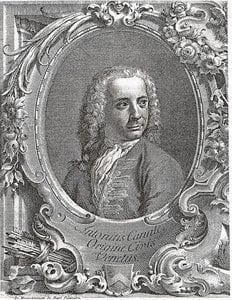
Giovanni Antonio Canal (Canaletto): The Painter of Venetian Light

Giovanni Antonio Canal, universally known as Canaletto, was more than just a painter; he was the chronicler of Venice itself. Born in 1697 into a family steeped in artistic tradition – his father, Bernardo Canal, specialized in theatrical scene painting – Canaletto’s journey led him to capture the vibrant essence of his beloved city with an unprecedented level of detail and atmospheric grace. His work isn't merely documentation; it’s a celebration of light, color, and the everyday rhythms of Venetian life, establishing him as one of the most influential Vedute painters of the 18th century.

Canaletto’s early training was primarily within his father’s workshop. However, he quickly developed an independent style, influenced by the pioneering work of Giovanni Paolo Pannini, a master of topographical views who meticulously documented Italian cities. This influence is evident in Canaletto's systematic approach – creating detailed preparatory drawings before embarking on larger canvases. These sketches weren’t simply studies; they were carefully considered compositions, reflecting his deep understanding of perspective and spatial relationships.

The Rise to Prominence: Rome and the Opera Stages

In 1718, Canaletto traveled to Rome, a pivotal moment in his artistic development. He found employment designing backdrops for two operas by Alessandro Scarlatti – a demanding but invaluable experience. This immersion in theatrical scenery honed his skills in color mixing, composition, and the creation of illusionistic space. Crucially, it exposed him to the techniques of stage lighting and the importance of capturing fleeting moments with dramatic effect. The vibrant colors and dynamic scenes he encountered in Rome undoubtedly shaped his later approach to Venetian landscapes.

A Master of the Veduta: Capturing Venice’s Soul

Upon returning to Venice, Canaletto swiftly established himself as a leading painter of Vedute – views of cities. Unlike earlier artists who often depicted buildings in an idealized or fantastical manner, Canaletto sought to represent Venice with remarkable accuracy and realism. He meticulously observed the city's architecture, canals, bridges, and bustling streets, capturing their intricate details and the play of light upon them. His most famous works, such as “The Stonemason’s Yard” (circa 1725) and “Regatta on the Grand Canal,” are not simply depictions of physical spaces; they are windows into a specific time and place, imbued with a sense of atmosphere and human activity.

Collaboration and Influence: Bellotto and Beyond

Canaletto’s artistic legacy extends beyond his own individual achievements. He maintained a close working relationship with his nephew, Bernardo Bellotto, who became an accomplished painter in his own right. Together, they produced a series of panoramic views of Venice, showcasing their shared style and techniques. Bellotto's work often served as a continuation or expansion of Canaletto’s vision, particularly in documenting the city’s architecture after significant changes.

Legacy and Enduring Appeal

Canaletto’s paintings are now celebrated for their technical brilliance, atmospheric depth, and intimate portrayal of Venetian life. His work is housed in major museums around the world, including the National Gallery in London and the Getty Museum in Los Angeles, testament to his enduring influence on art history. Canaletto's meticulous approach, combined with a keen eye for light and color, continues to captivate viewers today, offering a timeless glimpse into the beauty and complexity of Venice.

Каналлетто

Каналлетто

1697 - 1768 , Италия

Основные сведения

  • Artistic Movement Or Style: Ветюты Венеции
  • Artists Or Movements Influenced By This Artist: ['Бернардо Кано']
  • Artists Who Influenced This Artist: ['Джованни Паоло Паньни']
  • Date Of Birth: 18 октября 1697 г.
  • Date Of Death: 19 апреля 1768 г.
  • Full Name: Giovanni Antonio Canal
  • Nationality: Итальянец
  • Notable Artworks:
    • Двор каменщика
    • Регата на Гранд-канале
    • Этон
  • Place Of Birth: Венеция, Италия
Откройте для себя произведения искусства, подобранные по темам, стилям и характеристикам.