БЕСПЛАТНАЯ КОНСУЛЬТАЦИЯ ПО ВОПРОСАМ ИСКУССТВА

x
Заказать принт Заказать принтКупить цифровое изображение Купить цифровое изображение ПоделитьсяПоделиться
ПодробнееПодробнее Добавить в избранное Добавить в избранное СкачатьСкачать Похожие работыПохожие работы РентгенографияРентгенография Слайд-шоуСлайд-шоу

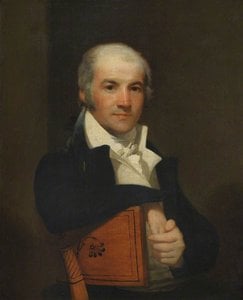
James Munroe

Experience Neoclassical dignity with Gilbert Stuart's 1821 portrait of James Monroe, capturing quiet reflection and American history's essence; discover this masterpiece today.

Джильберт Стюарт – американский художник, известный своими портретами, в том числе знаменитым изображением Джорджа Вашингтона на долларе! Его стиль – неоклассицизм, а работы отражают эпоху и судьбы выдающихся личностей Америки.

Масляная репродукция ручной работы

Картина маслом на холсте в выбранном вами размере и раме, написанная на заказ нашими художниками.

P118B $10
P118H $10
P118W $10
P438Z $10
P508JH $12
P508YH $12
P805H $10
P805Z $10
P919BZ $10
P919G $10
P919XJ $10
P959ZH $10
P968JZ $12
W106C $8
W218G $10
W218JH $8
W218Y $10
W307PJ $10
W316G $10
W316PJ $8
W316Y $10
W398PJ $8
W4111J $10
W500HY $15
W500JH $15
W692G $12
W849H $8
W940BG $15
W953PJ $8

Standard
custom
CM
INCH

Выберите один из наших стандартных размеров, соответствующих оригинальным пропорциям произведения искусства.

ширина
высота

Вы можете указать собственные размеры, чтобы картина идеально вписалась в выбранную раму или пространство. Если выбранный вами размер не соответствует пропорциям оригинала, мы либо обрежем полотно, либо расширим его за счет дополнительных элементов, написанных вручную. Цифровой макет будет отправлен вам на утверждение перед началом производства.
Обратите внимание, что предварительный просмотр на экране не отражает фактическую обрезку или расширение. Только макет точно покажет окончательную композицию.
Хотя доступны индивидуальные размеры, мы рекомендуем выбирать вариант из предопределенного списка, чтобы сохранить исходные пропорции.

Примеры того, что можно изменить: заменить лицо на фото клиента; добавить домашнее животное (например, заменить кошку на собаку); добавить скрытое послание на фон; изменить пейзаж или детали фона.
После оформления заказа команда WahooArt.com свяжется с клиентом по электронной почте для уточнения деталей и предоставит предварительный макет

Доставка по всему миру () за 3–4 недели вместо стандартных 5 недель. (2 Июль). Без компромиссов в качестве.

why_choose_icon
Бесплатная экспресс-доставка по всему миру
why_choose_icon
Высококачественный льняной холст
why_choose_icon
Полное страхование доставки
why_choose_icon
Гарантия возмещения таможенных пошлин
why_choose_icon
Гарантия точного соответствия цветов
why_choose_icon
Политика возврата в течение 60 дней (только при наличии дефектов)
why_choose_icon
Гарантия возврата 100% средств
why_choose_icon
Предложение оптовых скидок

Общая стоимость

-

reproduction

James Munroe

Техника репродукции

Размер репродукции

-

Итоговая стоимость

-

Основные сведения

  • Artist: Gilbert Stuart
  • Notable elements or techniques: Formal portraiture
  • Artistic style: Realistic
  • Location: Private Collection
  • Year: 1821
  • Title: James Munroe
  • Movement: Neoclassicism

Тест по искусству

В каждом вопросе только один правильный ответ.

Вопрос 1:
What is the primary subject of Gilbert Stuart’s painting, ‘James Munroe’?
Вопрос 2:
The painting utilizes a neoclassical style characterized by:
Вопрос 3:
According to the image description, what is James Munroe wearing?
Вопрос 4:
Where was Gilbert Stuart trained during his formative years?
Вопрос 5:
What is the significance of the red curtain in the background of the painting?

Описание произведения

A Portrait of Dignified Reflection: Gilbert Stuart’s James Monroe

Gilbert Stuart's depiction of James Monroe, completed in 1821, stands as a testament to the artist’s mastery of neoclassical portraiture and his ability to capture not just likeness but also an essence of character. This painting, housed in prominent collections like those of John Doggett and Abel Phillips, offers a glimpse into the intellectual landscape of early American history—a period defined by burgeoning republican ideals and ambitious aspirations for national identity.

Subject Matter and Composition

The portrait portrays Monroe seated at a table adorned with a crimson curtain backdrop – a deliberate choice that speaks to Stuart’s understanding of visual symbolism. Monroe himself is presented in formal attire, embodying the aristocratic elegance favored during Stuart's era while simultaneously conveying an air of quiet contemplation. His hands folded calmly on the tabletop suggest deliberation and seriousness, drawing the viewer’s gaze inward toward his inner thoughts. The inclusion of a book reinforces this impression, hinting at Monroe’s scholarly pursuits and intellectual engagement—a crucial aspect of his legacy as a diplomat and statesman. Stuart skillfully utilizes pyramidal composition to stabilize the figure and create a sense of balance, emphasizing Monroe's dignified posture and conveying an aura of composure.

Neoclassical Style and Technique

Stuart adhered rigorously to the principles of Neoclassicism, reflecting the artistic sensibilities prevalent in Europe during his time. This style prioritized clarity, restraint, and idealized beauty—characteristics evident in Stuart’s meticulous rendering of Monroe's features. He employed a glazing technique – applying thin layers of translucent paint over subsequent coats – to achieve luminous skin tones and subtle gradations of color. The artist meticulously observed anatomical accuracy, demonstrating an impressive understanding of human form. Furthermore, Stuart skillfully utilized chiaroscuro—the dramatic interplay between light and shadow—to sculpt Monroe’s face and drapery, enhancing the portrait's depth and creating a captivating visual experience for the viewer.

Historical Context and Symbolism

Painted during Monroe’s presidency (1813-1825), this portrait captures him at a pivotal moment in American history – as he navigated the complexities of westward expansion and solidified the nation’s position on the international stage. The crimson curtain symbolizes grandeur, nobility, and perhaps even ambition—qualities associated with Monroe's leadership. Stuart’s portrayal transcends mere representation; it aims to convey Monroe’s intellectual integrity and moral fortitude—traits considered essential for upholding republican virtue. By placing Monroe within a carefully constructed visual environment, Stuart subtly reinforces the artist’s belief in portraying subjects as embodiments of noble ideals.

Emotional Impact and Legacy

Gilbert Stuart's James Monroe transcends mere likeness, offering viewers an invitation to contemplate the character and intellect of one of America’s founding fathers. The painting’s serene composition and masterful technique evoke a sense of quiet dignity and contemplative reflection—qualities that resonate powerfully with audiences today. It serves as a reminder of Stuart’s enduring contribution to portraiture and his ability to transform visual art into a vehicle for conveying profound human qualities. As a beautifully executed reproduction, this artwork continues to inspire admiration for both artistic excellence and the spirit of intellectual curiosity.

Похожие произведения


Биография художника

Gilbert Stuart (1755–1828): America’s Foremost Portraitist

Gilbert Stuart, born December 3, 1755, in Saunderstown, Rhode Island, was undeniably one of the most celebrated portrait painters of his era and remains an icon of American artistic heritage. His legacy extends far beyond mere likenesses; he captured the spirit and character of his subjects with unparalleled skill, establishing a distinctive style that blended European refinement with uniquely American sensibilities. ### Early Life and Training Gilbert Stuart’s origins were rooted in Scottish ancestry—his father, Gilbert Stewart Sr., was an inventor who pioneered Rhode Island's first snuff mill. From a young age, Stuart demonstrated prodigious artistic talent, evident even as a child. At just fourteen, he completed “Dr. Hunter’s Spaniels,” showcasing early promise and establishing him as a gifted draftsman. Recognizing his potential, Cosmo Alexander, a Scottish artist, mentored Stuart around 1771, providing foundational training in technique and composition. Following Alexander's untimely death in 1775, Stuart continued his artistic education in London with Benjamin West, a prominent American painter residing there from 1775 to 1780—a period crucial for honing his style and gaining recognition within the Royal Academy. ### Artistic Career and Major Works Stuart’s career faced considerable challenges during the tumultuous years of the American Revolution, prompting him to relocate to England in 1775. Despite these difficulties, he swiftly achieved success with “The Skater” (1782), a portrait that cemented his reputation as a masterful artist. However, Stuart's magnum opus remains the unfinished portrait of George Washington, known universally as the Athenaeum Portrait—begun in 1796 and never completed. This image has transcended mere representation; it embodies the very essence of American leadership and identity, appearing on U.S. currency and postage stamps for over a century. Stuart produced numerous copies of this portrait for patrons across America and Europe, demonstrating his unwavering dedication to his craft. Beyond Washington, he painted portraits of John Adams, Thomas Jefferson, James Madison, and many influential figures from the Federalist elite—each piece reflecting Stuart’s meticulous observation and psychological insight. His style was characterized by a Neoclassical approach, emphasizing realism and utilizing dramatic chiaroscuro to heighten the impact of his compositions. ### Influences and Development Stuart's artistic development was shaped by several key influences. Cosmo Alexander instilled early technique and compositional principles, while Benjamin West’s guidance profoundly impacted Stuart’s understanding of portraiture and artistic ideals. Crucially, Stuart himself absorbed the atmosphere and intellectual currents of his time—particularly the burgeoning Neoclassical movement—which championed classical forms and values. He wasn't simply replicating appearances; he sought to convey inner character and intellect, striving for a level of psychological depth rarely achieved by his contemporaries. ### Historical Significance and Legacy Gilbert Stuart’s contribution to American art history is undeniable. He played an instrumental role in documenting the formative years of the United States through his portraits—capturing not only physical likenesses but also conveying the spirit of the era. The Athenaeum Portrait of George Washington stands as a timeless symbol of American identity and leadership, continuing to inspire awe and admiration generations later. Stuart established a distinctive American style of portraiture that blended European techniques with uniquely American sensibilities—a legacy preserved in museums across America and Europe where his masterpieces continue to captivate audiences today.
Джильберт Стюарт

Джильберт Стюарт

1755 - 1828 , Великобритания

Основные сведения

  • Artistic Movement Or Style: Неоклассицизм
  • Artists Who Influenced This Artist:
    • Космо Александр
    • Бенджамин Вест
  • Date Of Birth: 3 декабря 1755 г.
  • Date Of Death: 9 июля 1828 г.
  • Full Name: Gilbert Stuart
  • Nationality: Американский
  • Notable Artworks:
    • Портрет Д.Ханта и собак
    • Портрет Дж. Вашингтона (Атенеумский портрет)
    • Портреты Дж. Адамса и Т. Джефферсона
  • Place Of Birth: Новый Кингстоун, Род Истленд
Откройте для себя произведения искусства, подобранные по темам, стилям и характеристикам.